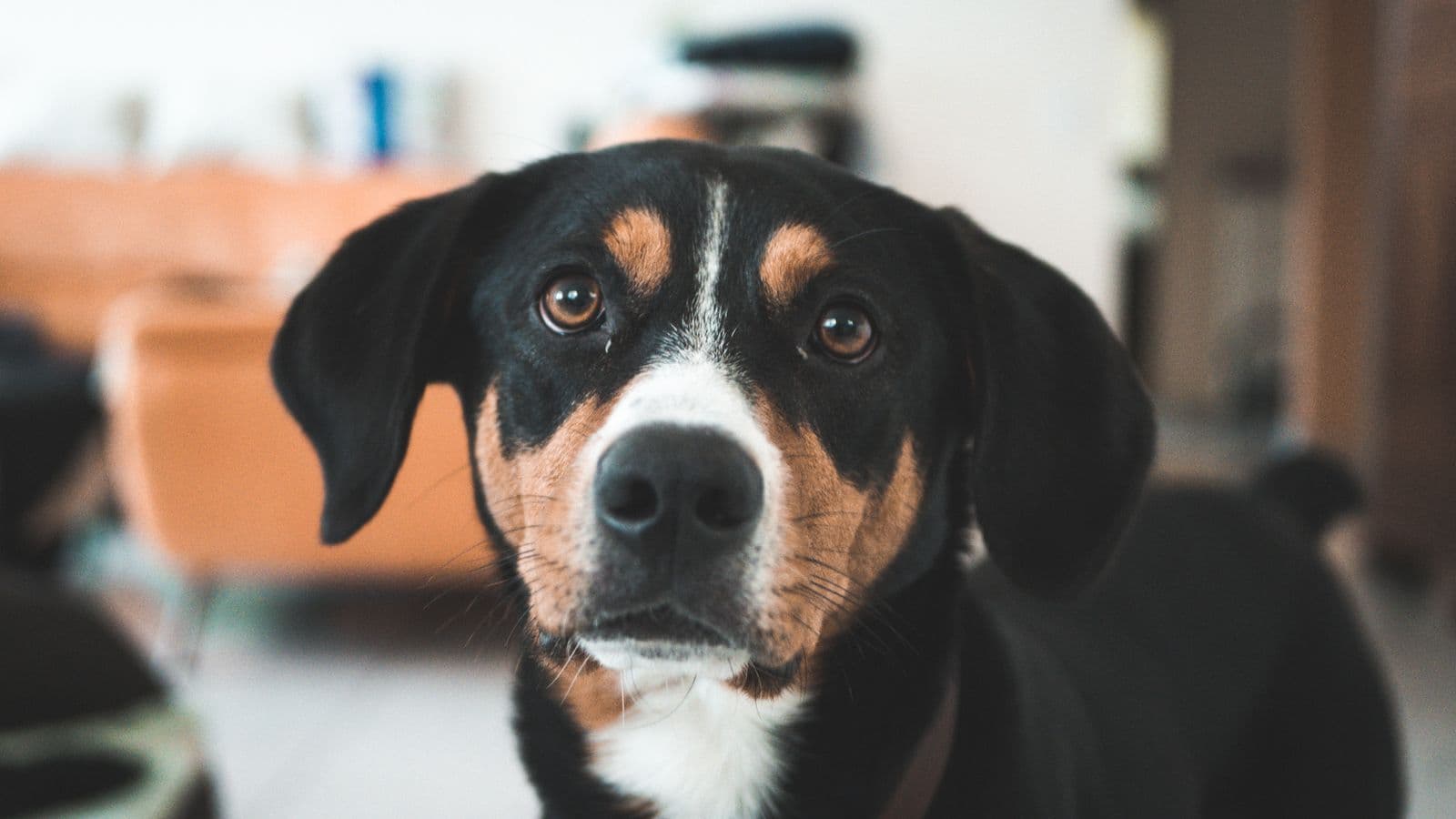
The Appenzeller Sennenhund is the second-smallest of the four Swiss mountain dog breeds and, by wide agreement, the most intense of them. Named for the Appenzell canton in northeastern Switzerland, it served as the all-purpose farm dog of the Alpine smallholding, driving cattle, pulling milk carts, and guarding the homestead. Weighing 22-32 kg in a compact, muscular, tricolor body, the Appenzeller combines remarkable strength and agility with a voice it is never shy about using.
That voice, and the energy behind it, define the training challenge. Among the Sennenhund breeds the Appenzeller is the loudest, the most driven, and the most confidently assertive, a dog that bays and barks with enthusiasm, demands a job, and will happily take charge of a household that fails to provide one. None of this makes the breed difficult in the hands of an active, engaged owner; on the contrary, it makes the Appenzeller one of the most capable and rewarding working companions in the group.
But it does make the breed thoroughly unsuited to anyone hoping for a calm, low-key family pet. Training an Appenzeller means meeting a serious working dog on its own terms: real exercise, real mental work, early and consistent bark management, and clear, confident leadership from the start.
The breed's rarity outside Switzerland compounds the challenge in a quiet way. Because few people have lived with an Appenzeller, new owners often have no realistic reference point and lean on the general reputation of "Swiss mountain dogs", gentle, calm, family-friendly giants, which fits the Bernese far better than it fits this dog. The result is a steady stream of Appenzellers placed with families expecting a mellow companion and discovering a high-octane working breed that needs a job and a voice.
None of this is the dog's fault, and none of it is a flaw; it is simply a mismatch between expectation and reality. The breed thrives with active owners, hikers, runners, dog-sport competitors, working farms, who see the energy and the alertness as assets to direct rather than problems to suppress. Setting expectations correctly from the start is half the battle, and it is the half most often skipped.
At a glance:
- Trainability: 8/10, intelligent and quick to learn, but needs confident, consistent handling to stay cooperative
- Biggest risk factor: excessive barking — the most vocal Swiss mountain dog, a habit that sets in fast if unaddressed
- Independent streak: bred to drive cattle with its own initiative, so it needs clear rules or it makes its own
- Example: left without a job, an Appenzeller will bark at every passerby and take charge of the household
- Not for: apartment dwellers or anyone hoping for a calm, low-key Swiss mountain dog
What Makes Training an Appenzeller Sennenhund Different
1. Very high energy paired with a strong voice. The Appenzeller is the most vocal of the Swiss mountain dogs, baying and barking readily, and the most physically driven. Active bark management belongs in the earliest weeks, because the habit sets quickly and becomes a serious neighbor problem if ignored.
2. Cattle-driving drive and independence. The breed was bred to move cattle with decisive, independent action, and that confidence carries into daily life. It needs equally confident handling, clear rules, consistently enforced, or it will make its own decisions about how the home should run.
3. Powerful and agile for its size. Pound for pound the Appenzeller is exceptionally strong and athletic, so physical containment and leash manners must be prioritized early, before that power is fully developed.
4. Devoted but not dependent. The Appenzeller forms strong bonds yet is confident enough in its own judgment to act independently. It is a partner rather than a follower, which means training is a negotiation built on trust and reward, not a matter of issuing orders.
Week-by-Week Training Plan for Your Appenzeller Sennenhund
Weeks 1 and 2 : Energy Outlet and Foundation
Provide a physical outlet before training, and install a "quiet" cue from the very first sessions. Our puppy basics guide covers the mechanics.
- Run short, upbeat sessions after exercise, with high-value rewards.
- Begin "quiet" work immediately; the vocal tendency forms fast.
- Socialize broadly with people, dogs, surfaces, and sounds.
- Set clear household rules and enforce them consistently.
Weeks 3 and 4 : Core Commands, Confident and Consistent
Sit, down, and stay come quickly to this intelligent breed when handling is clear.
- Lure sit and down, then add verbal and hand signals.
- Build stay from short durations, rewarding stillness.
- Ask once, enforce calmly, and reward.
Weeks 5 and 6 : Leash Control and Bark Management
Install loose-leash manners and proof "quiet" at trigger points.
- Use a front-clip harness and the stop-and-stand method.
- Reward every step on a slack leash.
- Apply "quiet" at the doorbell, at windows, and at passing movement.
Weeks 7 and 8 : Advanced Commands and Recall
Build recall and begin a structured sport foundation.
- Train recall on a long line with high-value rewards.
- Introduce agility or treibball foundations.
- Add leave it and a distance down.
Weeks 9 and 10 : Ongoing Challenge
The Appenzeller needs training goals or it grows bored and loud.
- Teach new tricks and skill chains regularly.
- Increase difficulty and add new environments.
- Keep the mind as busy as the body.
Weeks 11 and 12 : Sport and Proofing
Lock in the foundations and commit to a real outlet.
- Advance agility, herding, or schutzhund foundations as appropriate.
- Proof all cues, including "quiet," in busy environments.
- Establish a sustainable weekly rhythm of exercise plus mental work.
Common Appenzeller Sennenhund Training Mistakes
Mistake 1 : Expecting a calm Swiss mountain dog. The Appenzeller is not the Bernese. It has extreme energy and demands to be worked.
Mistake 2 : Allowing barking. The vocal tendency is strong and becomes a serious problem if not addressed from puppyhood.
Mistake 3 : Under-exercising. Sixty to ninety minutes of vigorous exercise daily is the minimum for this driven breed.
Mistake 4 : Inconsistent handling. The confident Appenzeller respects clear, consistent leadership. Full breakdown : Appenzeller training mistakes.
Frequently Asked Questions
How does the Appenzeller compare to the Bernese Mountain Dog ? Much higher energy, much louder, and more independent. Where the Bernese is a famously mellow gentle giant, the Appenzeller is an intense working dog that needs a job, structured exercise, and active management to thrive.
How much exercise does an Appenzeller need ? Sixty to ninety minutes of vigorous activity daily, plus mental work. This is an all-day Alpine working dog, and it will not settle without a genuine outlet for its drive.
Are Appenzellers good apartment dogs ? Generally no. The energy, the voice, and the need for space make apartment living a poor fit unless an owner can provide truly exceptional exercise and active bark management.
Are Appenzellers good family dogs ? With active families who meet the exercise and training needs, yes, they are devoted, protective, and playful. They are not suited to sedentary households or owners hoping for a quiet companion.
Are Appenzellers rare ? Outside Switzerland and specialist mountain-dog communities, yes. Finding a reputable breeder typically requires research and patience.
Do Appenzellers shed ? Moderately. The dense tricolor double coat sheds year-round and blows seasonally, and it is easy to maintain with regular brushing.
How long do Appenzellers live ? Typically twelve to fourteen years, with good general hardiness for a working breed.
Why TailorPup Was Built for Appenzeller Sennenhunds
A generic plan treats the Appenzeller as a calm Swiss mountain dog and gets blindsided by the energy, the drive, and above all the voice. TailorPup's Appenzeller plan matches the breed's exceptional energy with structured work, installs bark management from the first week, and gives the confident, athletic mind the challenge it needs to settle.
Daily 12-minute training sessions plus weekly adjustments. Plans from $9.99/month, no trial; annual starts at $2 for 7 days. Cancel anytime.
Related: Appenzeller Training Mistakes · Barking Solutions · Leash Pulling · Puppy Training Basics