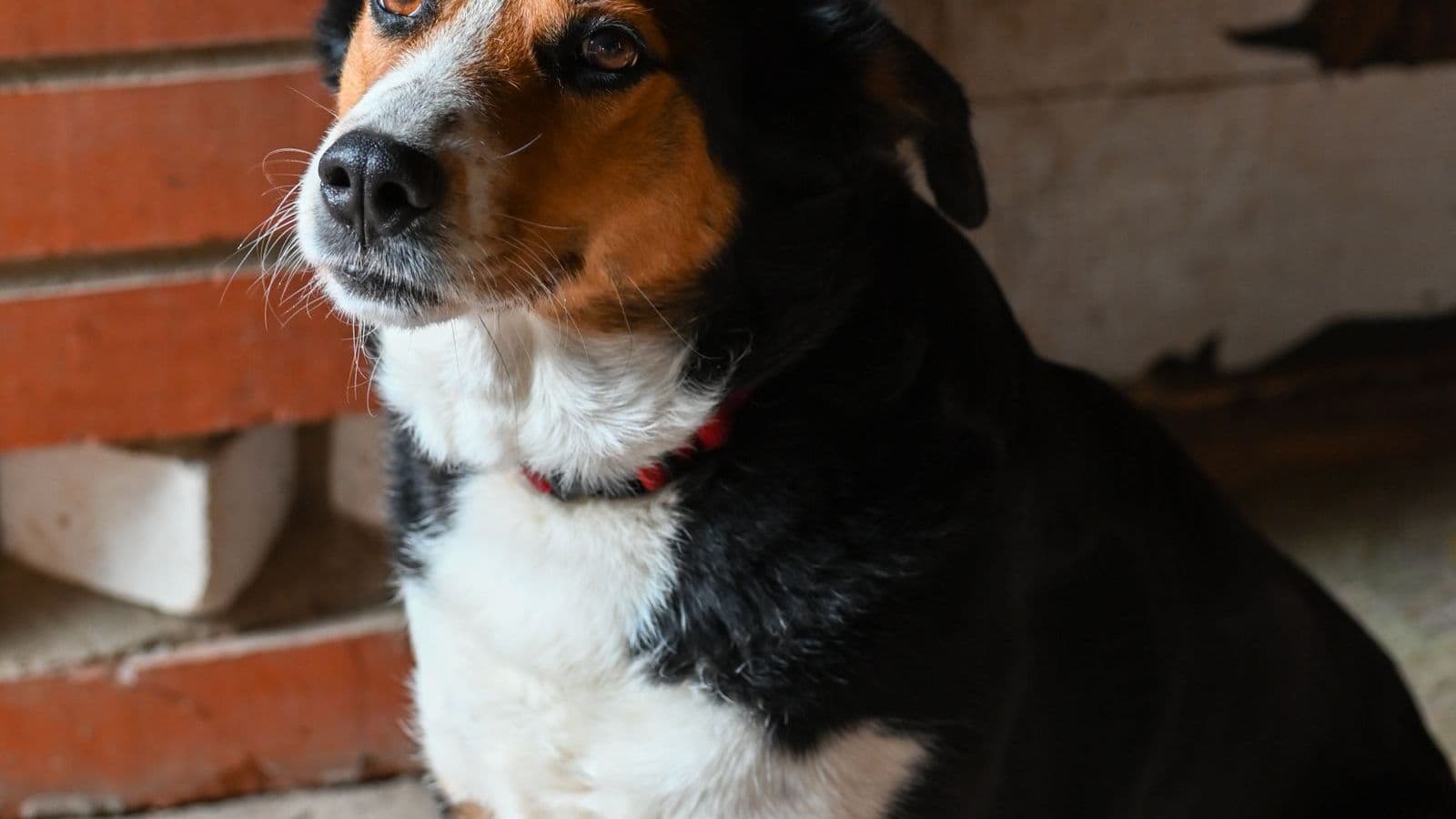
The Entlebucher Mountain Dog is the smallest of the four Swiss Sennenhund breeds, and in many ways the most intense. Named for the Entlebuch valley in the cantons of Lucerne and Bern, it was developed as a cattle drover, a dog quick and agile enough to move stubborn cattle across steep Alpine terrain by darting in, nipping a heel, and dashing clear of the kick. That job demanded a compact, powerful, fearless, and tireless dog, and 20-30 kg of exactly that is what the breed delivers today.
The single most common mistake prospective owners make is assuming that the smallest Swiss mountain dog must be the most manageable one. The opposite is true. The Entlebucher is more energetic per kilogram than the Bernese, the Greater Swiss, or the Appenzeller, and its working drive is relentless. This is a dog that needs a genuine job, daily vigorous exercise, and an engaged owner who will channel its considerable intelligence into something productive.
Given all of that, the Entlebucher is a brilliant, devoted, endlessly capable partner. Denied it, the breed reorganizes the household on its own terms, herding the children, guarding the doorways, and inventing work that no one asked for. Training is about getting ahead of that drive and pointing it somewhere good.
It is worth pausing on why the size confusion is so persistent, because it is the root of most failed Entlebucher placements. Prospective owners research the four Swiss Sennenhund breeds, see the Entlebucher listed as the smallest, and reasonably assume a gentler version of the famously mellow Bernese. The Bernese, however, was a draft and farm companion bred for a steady, easygoing temperament, while the Entlebucher was the agile cattle-driver, the dog that did the fast, hard, dangerous work of moving livestock.
Selecting for that job produced a fundamentally different animal: quicker, more driven, more reactive, and far more demanding of engagement. Reading the two breeds as points on a single size-and-mellowness scale is exactly the mistake that lands energetic Entlebuchers in rescue. The size shrank from the Greater Swiss; the working intensity did not. Going in with clear eyes about that distinction is the single best predictor of success with the breed.
At a glance:
- Trainability: 8/10, intelligent and bores fast, enjoys getting it right when sessions are varied and challenging
- Biggest risk factor: unspent drive turns into destruction, noise, and restlessness without 60-90 minutes of daily exercise
- Bonding style: strong herding instinct toward the family, will nip heels of children, pets, and joggers if not redirected
- Example: Skip the daily job, and the Entlebucher starts herding the kids and guarding doorways on its own initiative.
- Not for: owners expecting a mellow small dog, or anyone who can't meet serious daily exercise and mental-work needs
What Makes Training an Entlebucher Mountain Dog Different
1. Very high energy in a compact frame. The Entlebucher needs far more daily exercise than its size suggests, sixty to ninety minutes of vigorous activity is a floor, not a ceiling. An under-exercised Entlebucher is one of the more frustrating dogs to live with, because the unspent drive turns into destruction, noise, and restlessness.
2. Strong herding instinct toward the family. The cattle-driving heritage means the breed will try to move whatever moves, children, other pets, joggers, often with a nip to the heels. The instinct is genetic and escalates if rewarded by attention, so it needs consistent redirection from the first occurrence.
3. Confident and assertive. The Entlebucher is not a naturally deferential dog. It has opinions and expresses them, and it will test inconsistent rules. Clear, confident, consistent handling produces a well-mannered dog; wishy-washy handling produces a pushy one.
4. Velcro to its person, with separation risk. The breed bonds intensely to its primary handler and can develop genuine separation anxiety without preparation. Independence conditioning belongs in the earliest weeks, before being left alone becomes a crisis.
Week-by-Week Training Plan for Your Entlebucher Mountain Dog
Weeks 1 and 2 : Energy Management and Foundation
Get physical exercise in before training so the dog can focus, and start independence work at once. Our puppy basics guide covers the mechanics.
- Run short, upbeat sessions after a physical outlet, with high-value rewards.
- Begin broad socialization with people, dogs, livestock if relevant, and noise.
- Start micro-absences to build alone-time tolerance from day one.
- Set clear household rules and enforce them consistently.
Weeks 3 and 4 : Core Commands With Challenge
The Entlebucher is intelligent and bores fast, so add complexity quickly.
- Teach sit, down, stay, and leave it, then layer in distance and duration.
- Keep sessions short, varied, and twice daily.
- Reward speed and precision; this breed enjoys getting it right.
Weeks 5 and 6 : Herding Redirect and Leash Work
Channel the drive and install solid leash manners.
- Redirect any heel-nipping or herding to a toy or task immediately.
- Use a front-clip harness and the stop-and-stand method.
- Reward focus and check-ins on walks.
Weeks 7 and 8 : Recall and Sport Introduction
Build recall and give the working drive a real outlet.
- Train recall on a long line with high-value rewards.
- Introduce agility, treibball, or herding as a structured job.
- Proof recall around movement, the breed's biggest distraction.
Weeks 9 and 10 : Independence Conditioning
Extend alone-time deliberately to prevent separation anxiety.
- Build absences gradually, always below the distress threshold.
- Provide a settle spot and a long-lasting chew for downtime.
- Keep departures and arrivals calm and low-key.
Weeks 11 and 12 : Advanced Work and Proofing
Keep advancing and lock in the foundations.
- Add sport progressions and new skill chains.
- Proof all cues in busy, distracting environments.
- Establish a sustainable weekly rhythm of exercise plus mental work.
Common Entlebucher Mountain Dog Training Mistakes
Mistake 1 : Expecting smaller to mean less demanding. The Entlebucher is more energetic per kilogram than any larger Swiss mountain dog. Match the commitment.
Mistake 2 : Allowing herding behavior. Heel-nipping and child-herding must be redirected consistently from the first occurrence.
Mistake 3 : Insufficient exercise and mental work. An unworked Entlebucher produces its own stimulation, usually destructive. Provide a real job.
Mistake 4 : Inconsistent leadership. The assertive breed tests unclear rules. Be calm, clear, and consistent. Full breakdown : Entlebucher training mistakes.
Frequently Asked Questions
Are Entlebuchers good for first-time owners ? Only for committed first-timers who will genuinely meet the exercise and mental-stimulation needs. The breed is trainable and devoted, but its energy and assertiveness can overwhelm an owner expecting an easygoing family pet.
How much exercise does an Entlebucher need ? Sixty to ninety minutes of vigorous activity daily as a minimum, plus mental work. This is a working cattle dog, and walks alone will not satisfy it.
Are Entlebuchers good apartment dogs ? Not ideally. With exceptional exercise commitment and access to outdoor space some owners manage it, but the breed's energy and drive are far better suited to a house with a yard.
Are Entlebuchers good with children ? Yes, with socialization and management of the herding instinct, which can target small children with heel-nipping. Once that is handled, they are devoted, playful, and protective family dogs.
Are Entlebuchers rare ? Outside Switzerland and parts of Europe and North America, yes, relatively uncommon. Finding a reputable breeder usually takes some research and patience.
Do Entlebuchers shed ? Moderately. The short, dense tricolor coat sheds year-round and is easy to maintain with regular brushing, but it is not a low-shedding breed.
How long do Entlebuchers live ? Typically eleven to thirteen years. Responsible breeders screen for hip dysplasia and progressive retinal atrophy, both seen in the breed.
Why TailorPup Was Built for Entlebucher Mountain Dogs
A generic companion-dog plan badly underestimates this breed, treating a tireless cattle dog as if it were a moderate-energy pet and ignoring both the herding drive and the separation risk. TailorPup's Entlebucher plan matches the dog's real energy, front-loads independence and herding redirection, and gives the working mind the structured job it needs to be calm at home.
Daily 12-minute training sessions plus weekly adjustments. Plans from $9.99/month, no trial; annual starts at $2 for 7 days. Cancel anytime.
Related: Entlebucher Training Mistakes · Leash Pulling · Recall Training · Puppy Training Basics