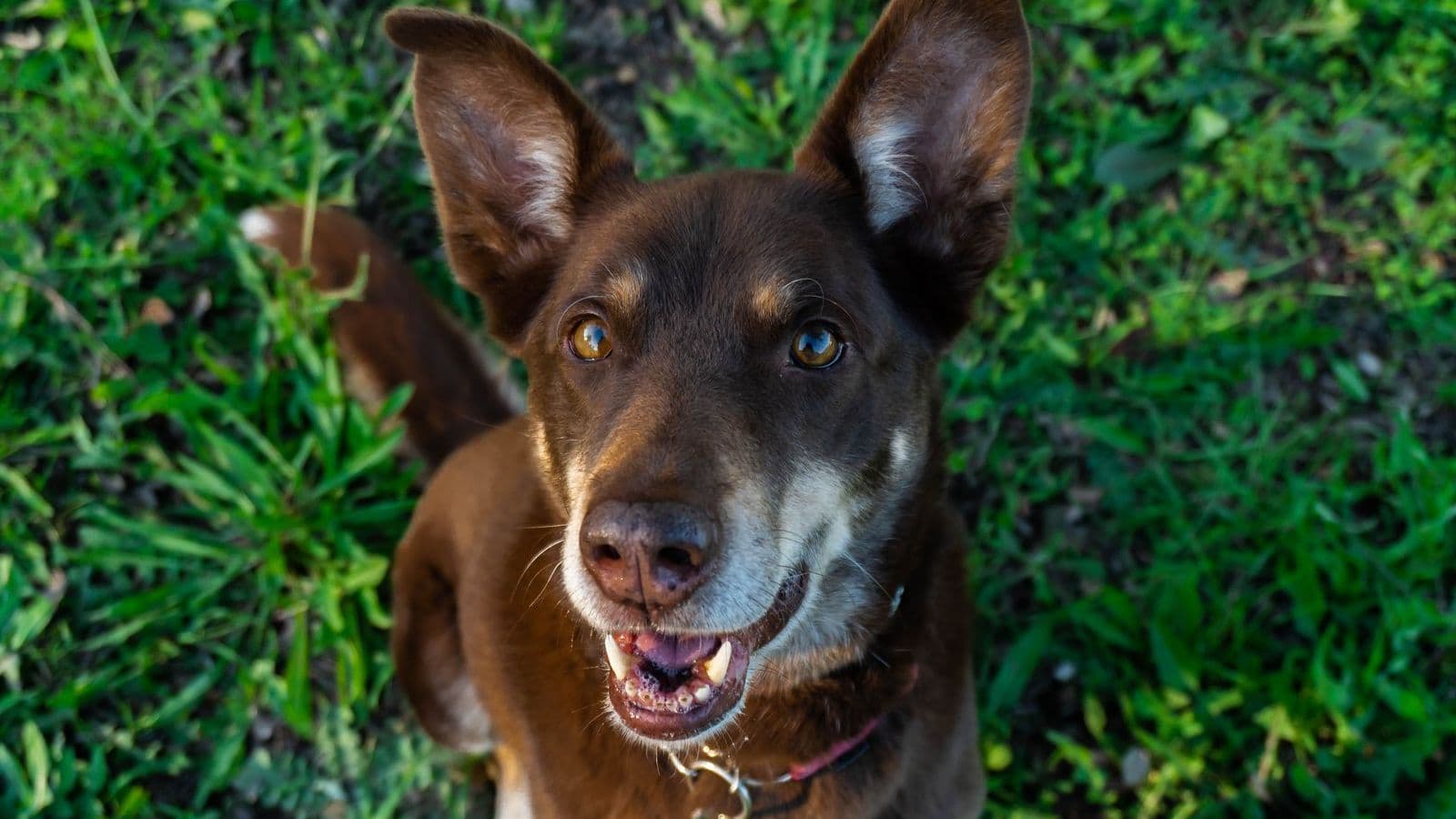
The Australian Kelpie is one of the hardest-working dogs on earth, developed in the late nineteenth century from British collies to manage vast flocks of sheep across the brutal heat and enormous distances of the Australian outback. The work was extraordinary: a single Kelpie might move thousands of sheep across open country in punishing conditions, running tens of kilometres a day, even famously running across the backs of packed sheep to reach the front of a mob. Generations of that selection produced a dog of near-compulsive work drive, remarkable stamina, sharp intelligence, and an off-switch that, in many working lines, barely exists.
Weighing 14-20 kg, the Kelpie is a lean, athletic, alert dog in a range of solid colors, built entirely for function. It comes in working lines, bred purely for stock work, and show lines, somewhat calmer but still high-energy, and across both it carries the breed's defining trait: a relentless drive to work that does not switch off just because there are no sheep around. This is a dog that needs a job the way other dogs need food.
For an owner, the Australian Kelpie is a brilliant but genuinely demanding dog that is unsuited to most homes. Its work drive is relentless, so without vigorous daily exercise plus a real job and mental work, it becomes one of the most destructive and difficult dogs to live with; its herding instinct targets children, pets, bikes, and anything that moves; its intelligence bores fast; and its recall competes with a powerful chase instinct. Given a working role or serious dog sport, an active owner, and reward-based training, the Kelpie is an astonishingly capable, focused, and rewarding partner, but it is emphatically not a casual pet.
At a glance:
- Trainability: 9/10, exceptionally intelligent and eager to work, but bores fast without variety and challenge
- Biggest risk factor: herding instinct that targets children, pets, and cyclists, often with nipping
- Work drive: relentless and near-compulsive — without a real job it becomes one of the most destructive dogs to own
- Example: a bored Kelpie left in a yard all day will dig, bark, and herd anything that moves
- Not for: casual or sedentary owners; this is a working dog, not a pet
What Makes Training an Australian Kelpie Different
1. A relentless, near-compulsive work drive. The Kelpie was bred for all-day herding in harsh conditions, and that drive is relentless. Without vigorous daily exercise plus a real job and mental work, it becomes one of the most destructive dogs you can own, this is the single most important fact of ownership.
2. A herding instinct that targets the household. The gather-and-control instinct is intense and will be directed at children, other pets, cyclists, and anything that moves, often with nipping. Consistent redirection to appropriate outlets from the first occurrence is essential.
3. High intelligence that bores fast. The Kelpie is highly intelligent and disengages quickly from repetition, so training must stay varied and progressive, and the mind needs as much work as the body.
4. A strong chase instinct that competes with recall. The herding and prey drive compete hard with recall, so off-leash reliability requires significant investment on a long line before it can be trusted.
Week-by-Week Training Plan for Your Australian Kelpie
Weeks 1 and 2 : Foundation and Energy Management
Provide a physical outlet, build engagement, and set consistent rules. Our puppy basics guide covers the mechanics.
- Provide a physical outlet before training so the dog can focus.
- Pair short, upbeat sessions with high-value food or toy rewards.
- Socialize broadly with people, dogs, surfaces, and sounds.
- Reward voluntary attention to build strong engagement.
Weeks 3 and 4 : Core Commands With Challenge
Sit, down, stay, and leave it come fast; add complexity quickly.
- Teach the core cues and progress to distance and duration rapidly.
- Keep sessions short, varied, and twice daily.
- Reward speed, precision, and engagement.
Weeks 5 and 6 : Herding Redirect and Recall
Channel the herding instinct and build recall.
- Redirect any herding or nipping of people or pets to a toy or task.
- Train recall on a long line with high-value rewards before off-leash freedom.
- Reward focus on you around movement, the breed's biggest distraction.
Weeks 7 and 8 : A Real Job
Give the relentless drive a genuine outlet.
- Introduce herding, agility, treibball, or another demanding dog sport.
- Build structured drive-channeling exercises.
- Reward controlled, focused work over frantic activity.
Weeks 9 and 10 : Advanced Work and Mental Stimulation
Engage the sharp mind with real challenge.
- Advance the chosen sport and add skill chains.
- Use puzzle feeders and nose work for daily mental fatigue.
- Reward deliberate, precise work.
Weeks 11 and 12 : Proofing
Consolidate the foundations with ongoing challenge.
- Proof all cues, including recall, in highly distracting environments.
- Maintain a consistent, demanding daily routine.
- Establish a sustainable rhythm of vigorous exercise, work, and mental challenge.
Common Australian Kelpie Training Mistakes
Mistake 1 : Under-exercising. A Kelpie needs vigorous daily exercise plus mental work and ideally a job; an under-exercised one is among the most destructive dogs you can own.
Mistake 2 : No job or structured work. The work drive is relentless. Without herding, agility, or nose work, the Kelpie invents its own job, usually a problem.
Mistake 3 : Allowing herding of people and pets. The instinct targets children, cyclists, and other animals. Redirect it consistently from the first occurrence.
Mistake 4 : Repetitive, boring training. The Kelpie is highly intelligent and bores fast. Keep sessions varied and progressive. Full breakdown : Australian Kelpie training mistakes.
Frequently Asked Questions
Are Australian Kelpies easy to train ? For an experienced, active owner, yes, they are highly intelligent, eager to work, and quick to learn, which makes reward-based training very effective. The challenge is meeting the relentless work drive and exercise needs and channeling the herding instinct, not overcoming any difficulty learning; they overwhelm most casual owners.
How much exercise does an Australian Kelpie need ? Considerably more than most breeds, vigorous daily exercise plus a real job and mental work, often two or more hours of genuine activity. Bred to run tens of kilometres a day herding sheep, the Kelpie is not satisfied by ordinary walks.
Are Australian Kelpies good family dogs ? Only for genuinely active families prepared to meet the breed's enormous needs and manage the herding instinct around children. For active, committed owners they are devoted and capable; for typical households they are too intense and driven.
Are Australian Kelpies good apartment dogs ? Generally not, unless the owner provides exceptional daily exercise, a real job, and mental work. The breed's relentless drive is very difficult to satisfy in an apartment, and an under-stimulated Kelpie becomes destructive.
Do Australian Kelpies get along with children ? With socialization and consistent herding-redirection management, yes, but the strong instinct to herd and nip at moving children must be actively managed. Once that is handled, they are devoted, energetic family dogs.
Are there different types of Kelpie ? Yes, working lines, bred purely for stock work and extremely high in drive, and show lines, somewhat calmer but still high-energy. Prospective owners should match the line to their lifestyle, as a working-line Kelpie in a pet home is a common source of problems.
How long do Australian Kelpies live ? Typically twelve to fifteen years, a hardy, sound working breed with few hereditary problems. Responsible breeders screen for hip dysplasia and eye conditions, and a well-exercised, well-worked Kelpie stays athletic and capable well into old age.
Why TailorPup Was Built for Australian Kelpies
A generic plan badly underestimates the Kelpie, treating a relentless working dog as an ordinary pet and skipping the job, exercise, and herding redirection it desperately needs. TailorPup's Australian Kelpie plan matches the breed's extraordinary drive with structured work, channels the herding instinct, and builds recall against a powerful chase drive.
Daily 12-minute training sessions plus weekly adjustments. Plans from $9.99/month, no trial; annual starts at $2 for 7 days. Cancel anytime.
Related: Australian Kelpie Training Mistakes · Recall Training · Puppy Training Basics