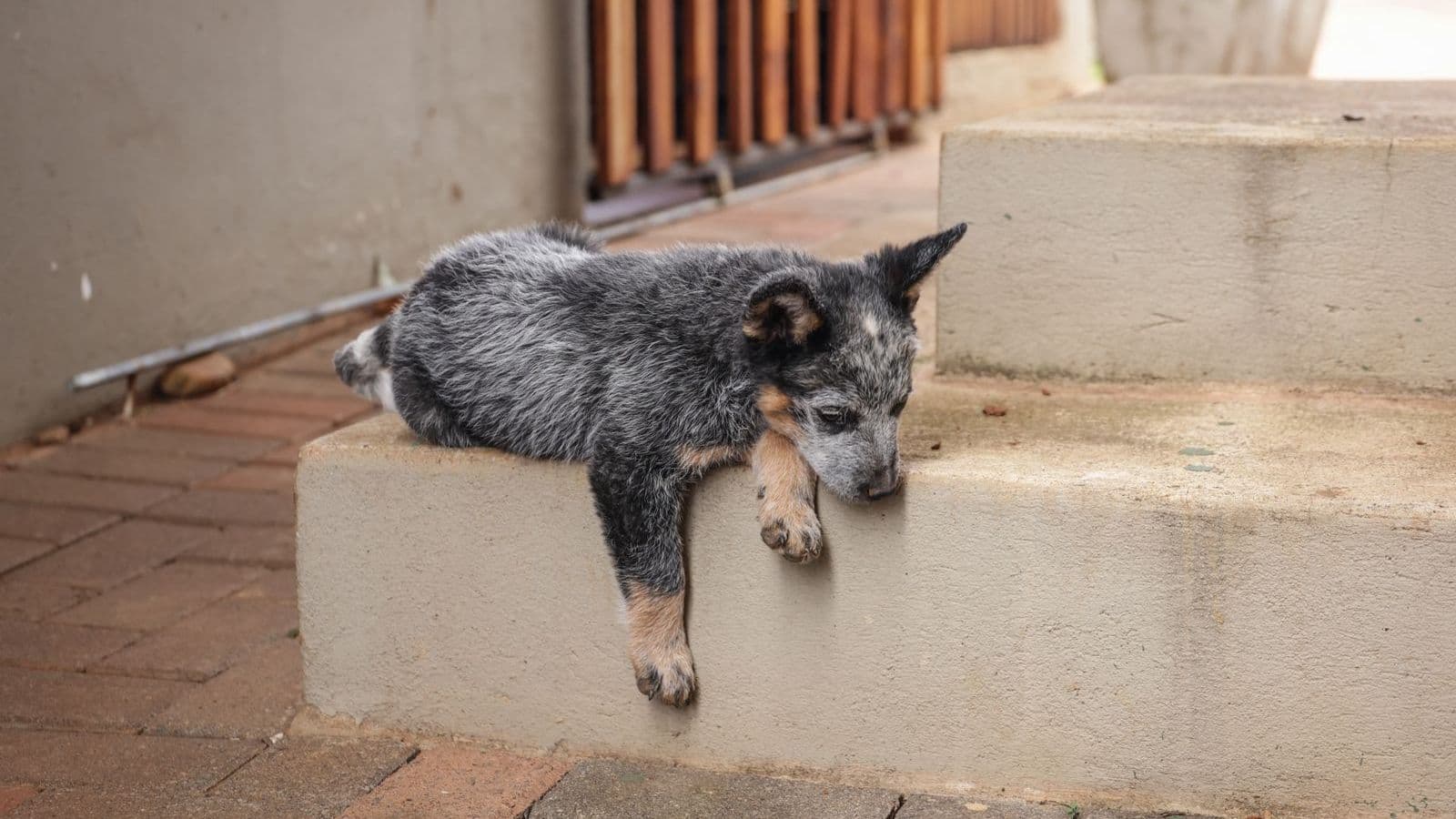
The Australian Cattle Dog, widely known as the Blue Heeler, is one of the toughest, most driven herding breeds in the world, developed in the Australian outback to move stubborn cattle across vast, harsh distances. Compact, muscular, and tireless, the Cattle Dog combines extreme intelligence, boundless stamina, and an intense work ethic with a fierce loyalty to its person. It is an extraordinary working dog and a demanding companion, the kind of breed that thrives with a job and unravels without one. The name "Heeler" tells you its method: it drives cattle by nipping at their heels, and that instinct comes home with the dog.
That intense, high-drive herding nature is the key to training one. The Cattle Dog is brilliant and highly trainable, so reward-based training is powerful, but the breed needs enormous exercise and mental work, channels its herding drive into heel-nipping, can be reserved or reactive without socialization, and bonds so closely it can be a one-person dog. Meet the substantial exercise and mental needs, manage the nipping early, socialize thoroughly, and give the breed a job, and you get a phenomenal, devoted partner. Under-stimulate it, and that drive and intelligence turn into nipping, destruction, and reactivity fast.
This guide covers what works with a Cattle Dog, week by week, built around how an intense, brilliant herding breed actually learns.
At a glance:
- Trainability: 9/10, brilliant, but needs a real job to stay stable
- Biggest risk factor: under-stimulation, unspent drive turns into nipping and destruction fast
- Heeler instinct: nips at heels to herd, lands on kids, joggers, and other pets without redirection
- Example: a bored Cattle Dog left in the yard all day will often nip at anything that moves, that's herding drive with nowhere to go
- Not for: sedentary households or first-time owners without time for real daily work
What Makes Training a Cattle Dog Different
Four breed traits shape your approach.
1. Extreme energy and drive. This is the defining reality. The Cattle Dog is a tireless working breed that needs hours of vigorous exercise plus serious mental work daily. Under-stimulated, it becomes destructive, nippy, and reactive, and no amount of obedience compensates for the missing outlet. A job is essentially required.
2. Heel-nipping herding drive. The breed drives cattle by nipping heels, and that instinct lands on running children, joggers, cyclists, and other pets. This is herding, not aggression, but it must be managed from the start by teaching that nipping is never rewarded and giving the drive a legal outlet.
3. Brilliant and intense. The Cattle Dog learns with remarkable speed, which makes reward-based training effective but also means it needs constant mental challenge, and a bored one becomes obsessive and difficult. It also bonds intensely, often to one person.
4. Reserved and potentially reactive. The breed can be wary of strangers and reactive with other dogs without thorough socialization. Early, broad, positive exposure is essential to keep the intensity channeled into a stable, discerning adult.
Week-by-Week Training Plan for Your Cattle Dog
Below is the framework we use at TailorPup for a Cattle Dog-specific 12-week plan. Run it at home; the order and emphasis are the point.
Weeks 1 and 2 : Foundation, Socialization, and Exercise
Engagement is easy with this brilliant breed. Run three to four five-minute sessions a day with high-value rewards, socialize broadly and positively, and establish a serious exercise routine from day one, because an under-exercised Cattle Dog cannot focus. From the start, teach that nipping never earns a reaction or a game, redirecting onto a toy.
Weeks 3 and 4 : Core Commands and Impulse Control
Cattle Dogs learn extremely fast. Lure sit and down, mark, reward, and add cues once reliable, then move quickly to duration, stays, and impulse-control work. This intense breed needs heavy mental challenge and a real "off switch" alongside the drive.
Weeks 5 and 6 : Leash Work and Herding Redirection
Use stop-and-stand for pulling and a harness. Work hard on redirecting the herding and nipping response: reward your dog for noticing movement and looking back at you, building a calm default around running children, bikes, and other animals. Begin counter-conditioning if it reacts. Our reactivity guide lays out the method.
Weeks 7 and 8 : Recall and Drive Control
Build a strong recall on a long line, jackpot every success, and never call the dog for anything it dislikes, proofing around the herding drive. Keep working impulse control and settling, the skills that balance a Cattle Dog's intensity, and continue careful socialization with people and dogs.
Weeks 9 and 10 : Channeling Energy with a Job
Give this working brain a real job: herding, agility, advanced obedience, flyball, scent work, and long, vigorous exercise all suit the breed. A Cattle Dog with serious daily work and a job is a calm, settled, satisfied dog. Physical exercise alone never suffices; the mind must work too.
Weeks 11 and 12 : Generalization
Prove the skills in the real world: loose-leash walking past distractions, recall around movement and temptation, calm responses to strangers and dogs, and a genuine off switch at home. A Cattle Dog that performs in training but cannot settle in life is only partly trained, and these last two weeks finish the job.
Common Cattle Dog Training Mistakes
Three mistakes show up over and over with this breed.
Mistake 1 : Underestimating the exercise and mental needs. This is by far the biggest one. A Cattle Dog given too little exercise and no job becomes destructive, nippy, obsessive, and reactive. The breed needs hours of activity plus serious mental work daily, and ideally a real job.
Mistake 2 : Letting heel-nipping slide. Allowing a puppy to nip heels, even in play, rehearses the exact behavior you do not want around children and guests. Address it early and consistently, redirecting to a sanctioned game every time.
Mistake 3 : Skipping socialization. The breed's reserve and reactivity potential mean thorough, positive early socialization is essential to a stable adult. The full list is in our Australian Cattle Dog training mistakes guide.
Frequently Asked Questions
Are Australian Cattle Dogs easy to train ? For an active, committed owner, yes; they are among the most intelligent and trainable breeds. But their extreme energy, intensity, and herding drive overwhelm many owners, so they are easy to train and hard to satisfy unless you can meet their needs and give them a job.
Why does my Blue Heeler nip at heels ? Because it was bred to drive cattle by nipping heels, so it is herding instinct, not aggression. Never reward it; redirect to chase-and-tug games and manage situations with running children until the dog has a reliable alternative.
How much exercise does an Australian Cattle Dog need ? A great deal: well over an hour of vigorous daily activity plus serious mental work and ideally a job. Under-exercised Cattle Dogs become destructive, nippy, and reactive. The breed is a poor fit for sedentary or casual homes.
Are Australian Cattle Dogs good for first-time owners ? Generally not. The extreme drive, intensity, herding nipping, and need for serious work and socialization make the breed best suited to experienced, very active owners who can keep it genuinely busy.
Is positive reinforcement effective for Cattle Dogs ? Yes, ideally. The brilliant breed thrives on reward-based training and a job, and harsh handling can worsen reactivity and damage the close bond. Pair rewards with structure and an off switch.
Can I let my Cattle Dog off-leash ? With a strong trained recall and in appropriate areas, often yes, since the breed is so trainable, but the herding drive means recall must be well proofed first, and you should manage chasing of movement.
Are Australian Cattle Dogs good family dogs ? Yes, for active, experienced families. They are devoted and loyal, often bonding closely with one person, but the energy, intensity, herding nipping, and need for a job mean they suit homes that can meet those demands.
Why TailorPup Was Built for Australian Cattle Dogs
A generic plan ignores what defines this breed: the extreme drive, the brilliance, the heel-nipping, and the need for a job. That mismatch is why standard advice leaves Cattle Dog owners with a nippy, destructive, reactive dog.
TailorPup builds a 12-week plan around your specific dog: its intense herding nature, its age, and the behaviors you are seeing. For a Cattle Dog that means an exercise-and-job-first structure, early nipping redirection, heavy impulse-control and off-switch work, thorough socialization, counter-conditioning, and reward-based methods that match its brains.
Daily 12-minute sessions plus weekly adjustments based on your dog's progress. Plans from $9.99/month, no trial; annual starts at $2 for 7 days. Cancel anytime.
Related: Australian Cattle Dog Training Mistakes · Recall Training · Reactivity Training · Leash Pulling