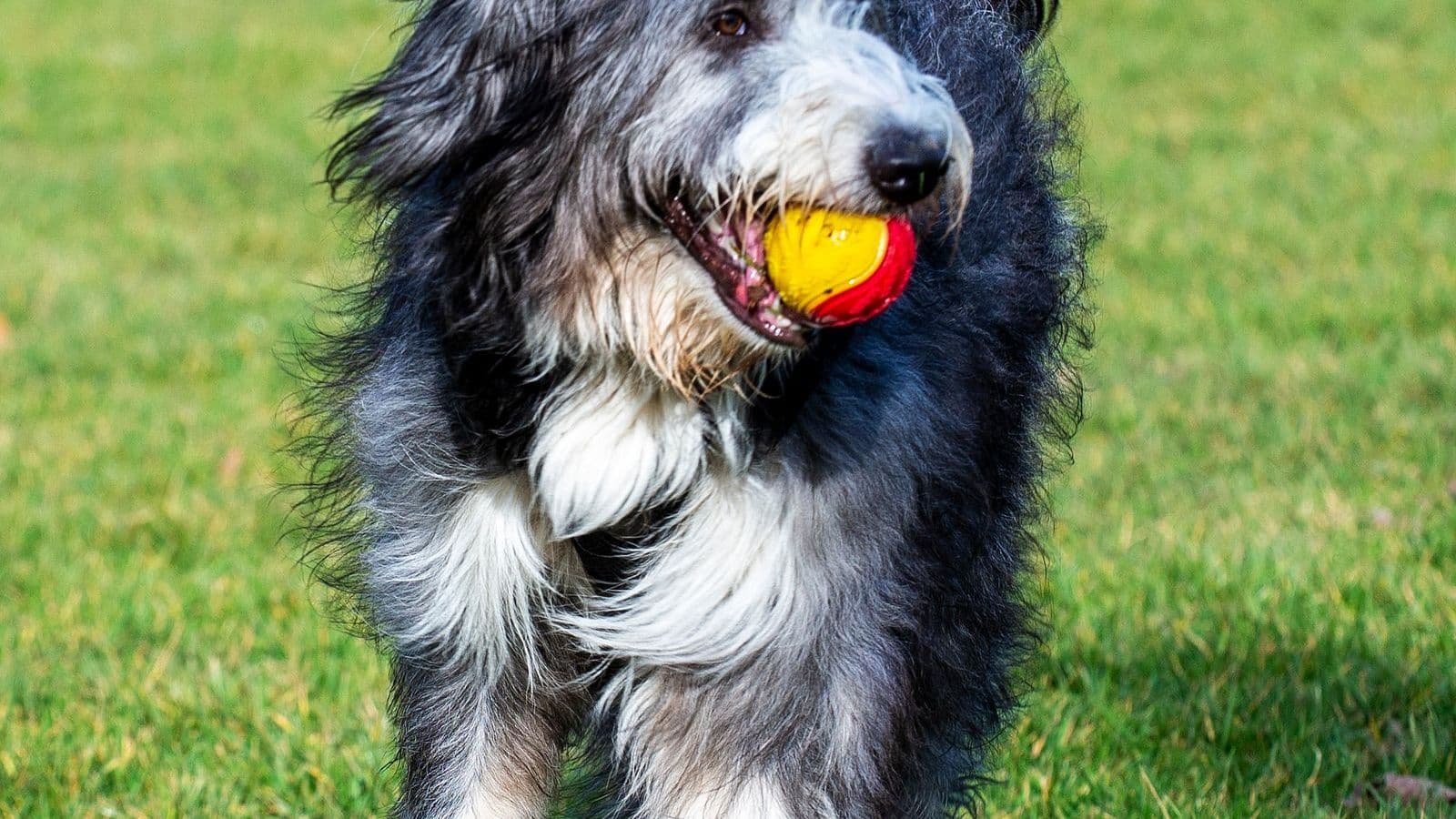
The Bearded Collie, affectionately known as the Beardie, is a bouncy, shaggy Scottish herding breed bred to drive sheep and cattle over the rough, misty hills of the Highlands. Working far from the shepherd in tough conditions, the Beardie developed into an independent, hardy, exuberant dog with boundless energy and an irrepressibly joyful outlook. The breed is sometimes called the "bouncing Beardie" for good reason: it greets life at a gallop, bounding and vocalizing its way through the day with infectious enthusiasm.
That joyful, energetic herding nature is the key to training one. The Beardie is highly intelligent and trainable, but it is also high-energy, independent-minded, and sensitive, with a real herding drive and a tendency to bark. It needs a great deal of exercise and mental work, and it responds to upbeat, reward-based training and not at all to heavy-handedness. Channel the energy and the drive, keep training fun, and you get a brilliant, devoted, endlessly entertaining companion. Under-exercise it or try to drill it into submission, and you get a barking, bouncing, frustrated dog that herds the children and bounces off the walls.
This guide covers what works with a Beardie, week by week, built around how a joyful, energetic herding breed actually learns.
At a glance:
- Trainability: 8/10, intelligent and eager but independent-minded — cooperates for engaging, rewarding training, resists drilling
- Biggest risk factor: herding drive that chases and bounces at children, cyclists, and other animals
- Sensitivity: wilts under harsh handling — corrections produce a worried, shut-down dog, not compliance
- Example: an under-exercised Beardie left idle will bark, bounce, and herd the kids around the yard
- Not for: owners seeking a low-energy companion or using correction-based methods
What Makes Training a Beardie Different
Four breed traits shape your approach.
1. Intelligent but independent. The Beardie learns quickly and enjoys working, but as a breed bred to make its own decisions out on the hills, it has an independent streak and its own opinions. It cooperates beautifully for engaging, rewarding training and resists rote drilling and pressure.
2. High energy and exuberance. This is a genuinely high-energy working dog with a bouncy, enthusiastic style. It needs substantial daily exercise plus mental work, and an under-exercised Beardie becomes a barking, bouncing, mischievous handful. The energy is the breed's defining practical challenge.
3. A strong herding drive. The Beardie may chase, gather, and bounce at moving things, including children, cyclists, and other animals, and it often uses its voice while working. Given a legal outlet and a reliable interrupter, this becomes an asset; unmanaged, it leaks out as nuisance herding and barking.
4. Sensitive under the bounce. For all its exuberance, the Beardie is a sensitive dog that wilts under harsh handling. Corrections and pressure produce a worried or shut-down dog. Upbeat, reward-based training brings out its joyful, willing best.
Week-by-Week Training Plan for Your Beardie
Below is the framework we use at TailorPup for a Beardie-specific 12-week plan. Run it at home; the order and emphasis are the point.
Weeks 1 and 2 : Foundation and Socialization
Build engagement with high-value rewards and socialize broadly. Run three to four five-minute sessions a day: name, mark eye contact, reward. Establish an exercise routine from the start, because a Beardie with unspent energy cannot focus, and begin handling for the heavy coat. Keep the tone upbeat to suit this joyful breed.
Weeks 3 and 4 : Core Commands
Beardies learn fast when engaged. Lure sit and down, mark, reward, and add cues once reliable. Build duration on stay, which counters the bounciness, and add tricks to give this clever, energetic dog the mental work it needs.
Weeks 5 and 6 : Leash Work and Herding Redirection
Use stop-and-stand for pulling and a harness. Crucially, work on redirecting the herding and bouncing response: reward your Beardie for noticing movement and then looking back at you, and begin gentle counter-conditioning if it reacts to dogs, bikes, or running children. Our reactivity guide lays out the method.
Weeks 7 and 8 : Recall and Barking
Build recall on a long line in low-distraction areas, paying every success well, since the herding drive can pull the dog toward movement. In parallel, manage barking: reward calm, manage triggers, and teach a "quiet" cue, since the breed is naturally vocal while excited and working.
Weeks 9 and 10 : Channeling Energy
Give the herding brain and bouncy body serious outlets: herding, agility, flyball, long walks and runs, fetch, and scent games all suit the breed. A Beardie that gets to run, think, and work daily is a calmer, more settled dog. This is the phase where exercise and channeling truly pay off.
Weeks 11 and 12 : Generalization
Prove the skills in the real world: loose-leash walking past distractions, recall in a fenced area with temptation present, calm responses to movement, and settling after exercise. A Beardie that listens at home but bounces off in public is only partly trained, and these last two weeks finish the job.
Common Beardie Training Mistakes
Three mistakes show up repeatedly with this breed.
Mistake 1 : Underestimating the exercise and mental needs. The shaggy, friendly looks fool people into treating the Beardie as a low-key companion. Under-exercised, it becomes a barking, bouncing, destructive handful. This is a high-energy working dog that needs a real outlet daily.
Mistake 2 : Suppressing the herding and bounce instead of channeling it. Punishing a Beardie for chasing or bouncing at movement just creates a stressed, confused dog. Give the drive a legal outlet and teach a reliable interrupter, and the instinct stops landing on the kids and the cat.
Mistake 3 : Using harsh handling. The exuberant Beardie is sensitive underneath and shuts down under corrections. Keep training upbeat and reward-based. The full list is in our Bearded Collie training mistakes guide.
Frequently Asked Questions
Are Bearded Collies easy to train ? Yes, with the right approach. They are intelligent and enjoy training, so reward-based methods work well. The challenges are the high energy, the independent streak, the herding drive, and the barking rather than the learning itself.
How much exercise does a Bearded Collie need ? A lot: at least an hour or more of vigorous daily activity plus mental work. This is a high-energy working herder, and under-exercised Beardies become barky, bouncy, and destructive. The breed suits active homes.
Why does my Beardie bounce and bark so much ? Both are part of the breed's exuberant herding heritage; it gathers and moves stock with energy and voice. Channel the energy with real exercise and a job, redirect the herding, and manage the barking, and the bounciness becomes manageable joy rather than chaos.
Can I let my Beardie off-leash ? In a securely fenced area, yes. In open spaces, build a solid recall first, because the herding drive can pull the dog toward movement. Use a long line until recall is reliable.
Do Bearded Collies need a lot of grooming ? Yes. The long, shaggy double coat needs regular, thorough brushing to prevent matting, especially during coat changes. Building grooming tolerance early is an important part of training the breed.
Is positive reinforcement effective for Beardies ? Yes, ideally. The intelligent, sensitive breed thrives on upbeat, reward-based training and shuts down under harshness, which is both unnecessary and counterproductive.
Are Bearded Collies good family dogs ? Yes, for active families. They are joyful, affectionate, and great with children, but the energy and herding drive mean they do best where they get plenty of exercise and where chasing and bouncing at running kids is managed.
Why TailorPup Was Built for Bearded Collies
A generic plan ignores what defines this breed: the high energy, the herding drive, the bounciness, and the sensitivity. That mismatch is why standard advice leaves Beardie owners with a barking, bouncing, frustrated dog.
TailorPup builds a 12-week plan around your specific dog: its herding instincts, its age, and the behaviors you are seeing. For a Beardie that means an exercise-first structure, herding redirection, a barking protocol, upbeat reward-based methods, and plenty of mental work to satisfy a joyful working brain.
Daily 12-minute sessions plus weekly adjustments based on your dog's progress. Plans from $9.99/month, no trial; annual starts at $2 for 7 days. Cancel anytime.
Related: Bearded Collie Training Mistakes · Recall Training · Reactivity Training · Leash Pulling