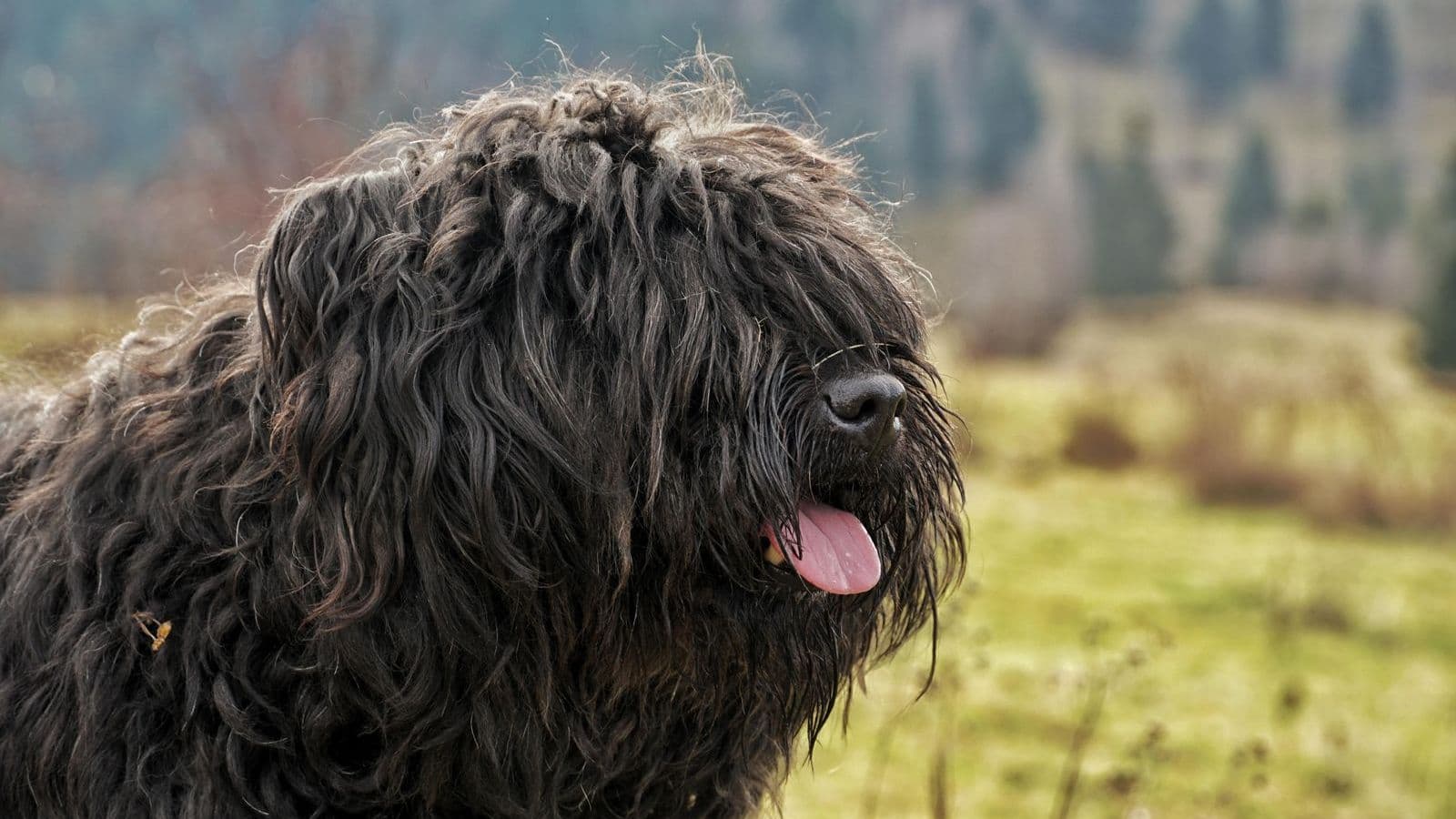
The Bouvier des Flandres is a powerful, intelligent cattle dog from the farmland of Belgium and northern France, where it was an all-purpose farm worker: driving cattle, pulling carts, and guarding the property. Big, rugged, and tousled, with a famous beard and eyebrows, the Bouvier later proved so capable that it became a respected police, military, and service dog. This is a serious working breed, confident and steady, deeply devoted to its family, and naturally protective, with the brains and drive to do almost any job you teach it well.
That working heritage is the key to training one. The Bouvier is highly intelligent and trainable and thrives on having a job, but it is also large, strong, and confident, with a protective streak and enough independence to test an inconsistent owner. It needs early socialization to keep its natural watchfulness sound, calm and fair leadership it can respect, and real mental and physical work. Provide those and you get a magnificent, versatile, dependable companion. Skip the socialization, the structure, or the exercise, and you get a powerful, pushy, sometimes reactive dog that is a lot to handle.
This guide covers what works with a Bouvier, week by week, built around how a powerful, intelligent working breed actually learns.
At a glance:
- Trainability: 8/10, highly intelligent and work-driven, genuinely wants a job
- Biggest risk factor: under-socialization, it turns natural protectiveness into reactivity
- Size urgency: manners must be installed while the dog is still small enough to manage
- Example: a Bouvier puppy that pulls hard on leash becomes a serious handling problem once it's full-grown and powerful
- Not for: first-time owners or anyone without time for daily mental and physical work
What Makes Training a Bouvier Different
Four breed traits shape your approach.
1. Highly intelligent and work-driven. The Bouvier learns quickly and genuinely wants a job, which makes reward-based training efficient and rewarding. The flip side is that this clever, capable dog needs real mental work and purpose, or it becomes bored, frustrated, and destructive.
2. Confident and protective. The breed is naturally watchful and protective of its family and territory. Early, thorough socialization is essential to shape that instinct into sound judgment rather than reactivity, especially given the dog's size and strength.
3. Large, strong, and a little independent. A Bouvier needs manners and leash control installed early, while it is still manageable, and it respects calm, fair, consistent leadership. It will test an inconsistent owner, so structure matters as much as obedience.
4. High energy under the shaggy coat. This is an athletic working dog that needs substantial daily exercise plus a job. Under-exercised, even a steady Bouvier becomes restless and difficult. The heavy coat also needs regular grooming.
Week-by-Week Training Plan for Your Bouvier
Below is the framework we use at TailorPup for a Bouvier-specific 12-week plan. Run it at home; the order and emphasis are the point.
Weeks 1 and 2 : Foundation and Socialization
Build engagement with high-value rewards and make socialization a priority, since the protective heritage makes early, positive exposure essential. Run three to four five-minute sessions a day: name, mark eye contact, reward. Introduce the puppy calmly to many people, dogs, and situations, and begin grooming handling for the coat.
Weeks 3 and 4 : Core Commands
Bouviers learn fast. Lure sit and down, mark, reward, and add cues once reliable. Build duration on stay, and keep sessions varied and mentally engaging, because this intelligent breed needs to think, not just repeat. Start light impulse-control work.
Weeks 5 and 6 : Leash Work (While It Is Manageable)
A strong adult Bouvier must walk politely, so teach it early. Use stop-and-stand for pulling and a front-clip harness for control. Practice daily so loose-leash walking is solid before the dog reaches full size and strength.
Weeks 7 and 8 : Recall and Counter-Conditioning
Build recall on a long line, paying every success generously, and never call the dog for anything it dislikes. Begin counter-conditioning to strangers and dogs so the protective instinct stays discerning rather than reactive. Our reactivity guide lays out the method.
Weeks 9 and 10 : Channeling Energy and a Job
Give this working brain a real job: herding, advanced obedience, tracking, protection sport with a qualified club, or carting all suit the breed. A Bouvier with meaningful work is a calm, fulfilled dog. Pair daily exercise with genuine mental challenges.
Weeks 11 and 12 : Generalization
Prove the skills in the real world: loose-leash walking past distractions, recall in a fenced area with temptation present, calm responses to strangers, and settling in busier places. These last two weeks are about consistency and proofing the recall, calm, and manners around real life.
Common Bouvier Training Mistakes
Three mistakes show up repeatedly with this breed.
Mistake 1 : Skipping socialization. Without thorough, ongoing socialization, the Bouvier's natural protectiveness becomes reactivity and suspicion, a serious matter in a powerful dog. Socialization is the most important early investment you make.
Mistake 2 : Inconsistent or harsh leadership. The Bouvier needs calm, fair, consistent structure; inconsistency invites boundary-testing, while harsh handling damages trust in a confident, sensitive-to-relationship dog. Steady, reward-based leadership is what works.
Mistake 3 : Failing to provide a job or enough exercise. A bored, under-worked Bouvier becomes destructive and difficult. Give the breed real physical and mental work. The full list is in our Bouvier des Flandres training mistakes guide.
Frequently Asked Questions
Are Bouviers des Flandres easy to train ? For an engaged, experienced owner, yes; they are highly intelligent and work-driven. But they are large, confident, and protective, so they need early socialization, calm consistent leadership, and a real job rather than rote drilling.
Are Bouviers good for first-time owners ? Not the easiest choice. The size, strength, protectiveness, and exercise and grooming needs suit owners with some dog experience who can commit to socialization, structure, and daily mental and physical work.
How much exercise does a Bouvier need ? A lot: an hour or more of daily activity plus real mental work and ideally a job. As a working breed, it needs purpose, not just walks, and under-stimulated Bouviers become restless and destructive.
Why is my Bouvier protective of the house ? Because it was bred to guard the farm, so watchfulness toward strangers is instinct. Thorough, positive socialization shapes it into sound judgment, letting the dog tell a guest from a real threat. Never encourage the guarding; channel it through training.
Do Bouviers need a lot of grooming ? Yes. The rough, dense double coat needs regular brushing plus tidying or trimming to prevent matting. Building grooming tolerance early is an important part of training the breed.
Is positive reinforcement effective for Bouviers ? Yes, paired with calm, consistent leadership. The intelligent breed responds well to reward-based training and a job, and resents harsh, confrontational handling, which undermines the trust a working relationship needs.
Are Bouviers good family dogs ? Yes, for active, committed families. They are devoted, steady, and protective of their people, including children, but they need the socialization, leadership, exercise, and work that a powerful working breed requires.
Why TailorPup Was Built for the Bouvier des Flandres
A generic plan ignores what defines this breed: the intelligence, the protectiveness, the size, and the need for a job. That mismatch is why standard advice leaves Bouvier owners with a powerful, under-worked, sometimes reactive dog.
TailorPup builds a 12-week plan around your specific dog: its working-herding instincts, its age, and the behaviors you are seeing. For a Bouvier that means front-loaded socialization, early manners and leash work while the dog is manageable, calm consistent reward-based leadership, counter-conditioning, and a real job for its working brain.
Daily 12-minute sessions plus weekly adjustments based on your dog's progress. Plans from $9.99/month, no trial; annual starts at $2 for 7 days. Cancel anytime.
Related: Bouvier des Flandres Training Mistakes · Recall Training · Reactivity Training · Leash Pulling