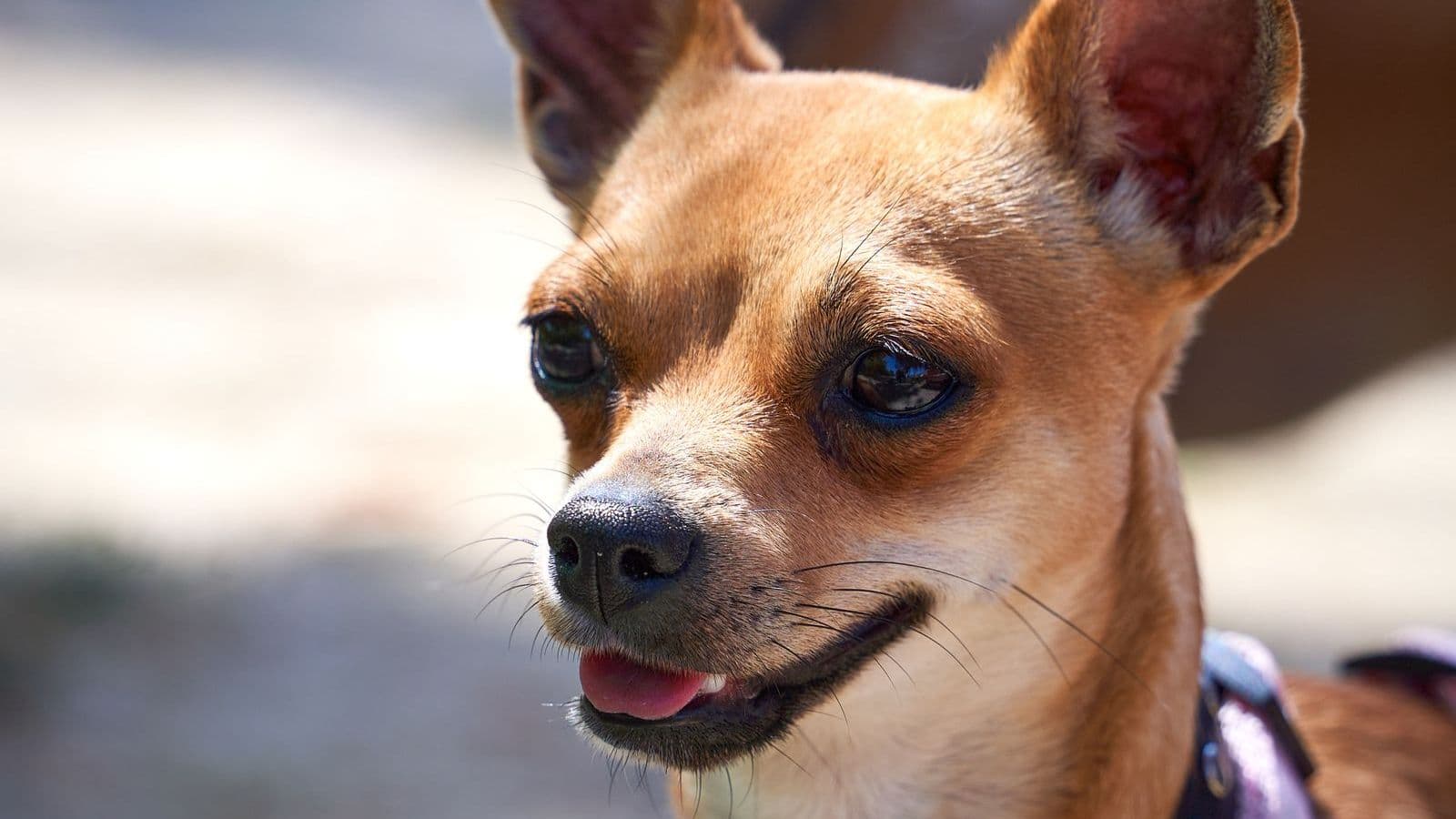
The "mean Chihuahua" stereotype is real, you have met that dog, but it is not the breed's fault. It is the predictable output of eight specific mistakes people make with very small dogs, mistakes almost nobody makes with a Labrador, because a Labrador's size forces you to take training seriously from day one.
Here is the uncomfortable truth behind the stereotype : a four-pound dog gets four pounds of training, and then lives a whole life defending itself with the only tools it has left. Avoid the eight errors below and the same genetics produce what Chihuahua people actually know : a confident, hilarious, fiercely devoted companion that happens to fit in a tote bag.
1. Carrying them everywhere
When a Chihuahua is always carried, it never learns to navigate the world on its own four feet, and a dog that never explores at ground level stays perpetually afraid of the giant environment it only ever sees from your arms. That fear matures into defensive aggression, the lunge-and-snap at ankles and other dogs. Let your Chihuahua walk. Let it sniff, approach, retreat, and solve small problems with its own legs while you manage the genuine risks (large off-leash dogs, crowds, freezing pavement). Every walked meter is a confidence deposit, and confidence is exactly what the stereotype dog is missing.
2. Allowing aggression because it is "harmless"
A snapping, growling Chihuahua is practicing aggression, full stop. The behavior sequence, freeze, growl, snap, bite, is identical to a Rottweiler's; the only difference is the damage radius, and that difference is why owners laugh instead of train. Every laughed-off snap rehearses and reinforces the pattern. Address it exactly as you would in a big dog :
- Identify the trigger : handling, resource, stranger reaching, dog approaching.
- Counter-condition at a distance the dog can tolerate, trigger predicts treats.
- Never reward the display with retreat, pickup cuddles, or attention.
- Manage exposure while the emotional response is rebuilt.
Small aggression is still aggression. Treat it seriously and it resolves; indulge it and you own the stereotype.
3. Skipping socialization
This is the root system of most Chihuahua problems. Owners shelter the tiny puppy, too fragile for puppy class, too small for the park, carried past every dog, and manufacture an adult that is genuinely terrified of the world. Fear then drives the defensive behavior the breed is famous for. During the 8-to-16-week window a Chihuahua needs the same exposure program as any breed, scaled for safety : calm people of every kind, gentle dogs of sensible size, surfaces, sounds, traffic at a distance, handling of paws and mouth. A Chihuahua that has met the world calmly has nothing to scream at. The stereotype is an unsocialized dog, nothing more.
4. Using collars instead of harnesses
Chihuahua tracheas are fragile and prone to collapse, and leash pressure on a flat collar can cause injury or trigger a permanent collapsing-trachea condition, the honking, goose-like cough Chihuahua owners learn to dread. On a four-pound dog, even a mild lunge loads serious force onto the windpipe. The rule is absolute : leash clips to a well-fitted Y-shaped harness, always, and the collar exists only to carry the ID tag. This is not equipment preference, it is preventive medicine for a known structural weakness of the breed.
5. Inconsistent house training
House training a Chihuahua is genuinely harder than average, and pretending otherwise sets owners up to fail. The bladder is tiny, so the schedule must be tight. The dog hates cold and rain, so outdoor trips get refused in winter. And the accidents are so small that owners miss them, which un-trains the schedule silently. The protocol that works :
- Out on a strict clock : after waking, meals, play, and every 2 to 3 hours at first.
- A party-grade reward at the spot, within two seconds.
- Supervision or a cozy confinement zone between trips.
- Calm, enzymatic cleanup of accidents, never punishment.
- Realistic expectations : 4 to 6 months to full reliability is normal for this breed.
Consistency wins here, and nothing else does.
6. Treating fear as stubbornness
A Chihuahua that refuses to walk on a cold sidewalk, hides from strangers, or freezes in new places is not being stubborn, it is scared, and the distinction decides everything you do next. Punishing or forcing a frightened four-pound dog confirms that the world is exactly as dangerous as it feared, and buys you escalation. Read the freeze as information : this is too much, too close, too fast. Back up to a distance the dog can handle, pay generously for brave steps, and let confidence compound at the dog's pace. Almost everything labeled "stubborn" in this breed is fear wearing a trench coat.
7. Allowing demand behaviors
Chihuahuas are sharp, and a sharp dog with an indulgent owner installs demands at speed : bark until looked at, paw until picked up, stare until fed from the plate. Each success wires the behavior deeper, and within months the household orbits a four-pound dictator, which, notably, is also an anxious dog, because dogs that control everything feel responsible for everything. Flip the economy : demands earn nothing, not even annoyed eye contact, while calm, quiet behavior makes attention, laps, and treats appear. Ask for a sit before anything the dog wants. The Chihuahua relearns in days, calm is the currency here.
8. Using harsh methods
The breed is tiny, sensitive, and entirely aware that everyone around it is twenty times its size. Yelling, grabbing, or physical corrections read as genuine threat at that scale, and threatened Chihuahuas go defensive, the growling, the air-snapping, the bite reports at the groomer. Owners who set out to show the little dog who is boss create the exact dog they were trying to prevent. Reward-based training with deliberate confidence-building is the only approach that produces a stable, friendly adult : soft tone, high-value rewards, short sessions, and the dog discovering that cooperation, not defense, is what works on the giants.
What works with Chihuahuas
The "mean Chihuahua" is a manufactured product, and you now know the factory : carrying instead of walking, laughed-off aggression, skipped socialization, collar pressure, sloppy house training, fear read as defiance, funded demands, and harsh corrections.
Run the opposite program, ground time, real socialization, a harness, patient house training, fear treated as fear, calm as the only paying behavior, gentle methods throughout, and the breed shows you what it actually is : one of the most confident, entertaining, devoted small dogs in existence, with a lifespan long enough to enjoy it for 15+ years.
TailorPup's Chihuahua plan front-loads socialization and confidence-building, includes a dedicated small-dog house-training protocol, and runs on the gentle, reward-based sessions the breed's sensitivity requires.
Frequently Asked Questions
Why are Chihuahuas so aggressive?
They are not, by design. The defensive snapping the breed is known for is produced by under-socialization, constant carrying, and laughed-off early aggression. Chihuahuas raised like real dogs, socialized, walked, trained, are confident and friendly.
Are Chihuahuas hard to potty train?
Harder than average : tiny bladder, cold-weather refusal, and accidents small enough to miss. With a strict schedule and heavy rewards, expect solid reliability in 4 to 6 months, and treat that timeline as normal, not as failure.
Should a Chihuahua wear a collar or a harness?
Harness, always, for anything on-leash. The breed's trachea is fragile and collar pressure risks a permanent collapsing-trachea condition. Keep the collar as an ID-tag holder only.
Why does my Chihuahua shake?
Often cold, this is a single-coat, low-fat breed that genuinely gets chilly, and often arousal or stress. Shaking in new situations is usually fear : increase distance from the trigger and build confidence gradually rather than forcing exposure.
Start your Chihuahua's plan at tailorpup.com →
Related: How to Train a Chihuahua · Barking Solutions · Recall Training