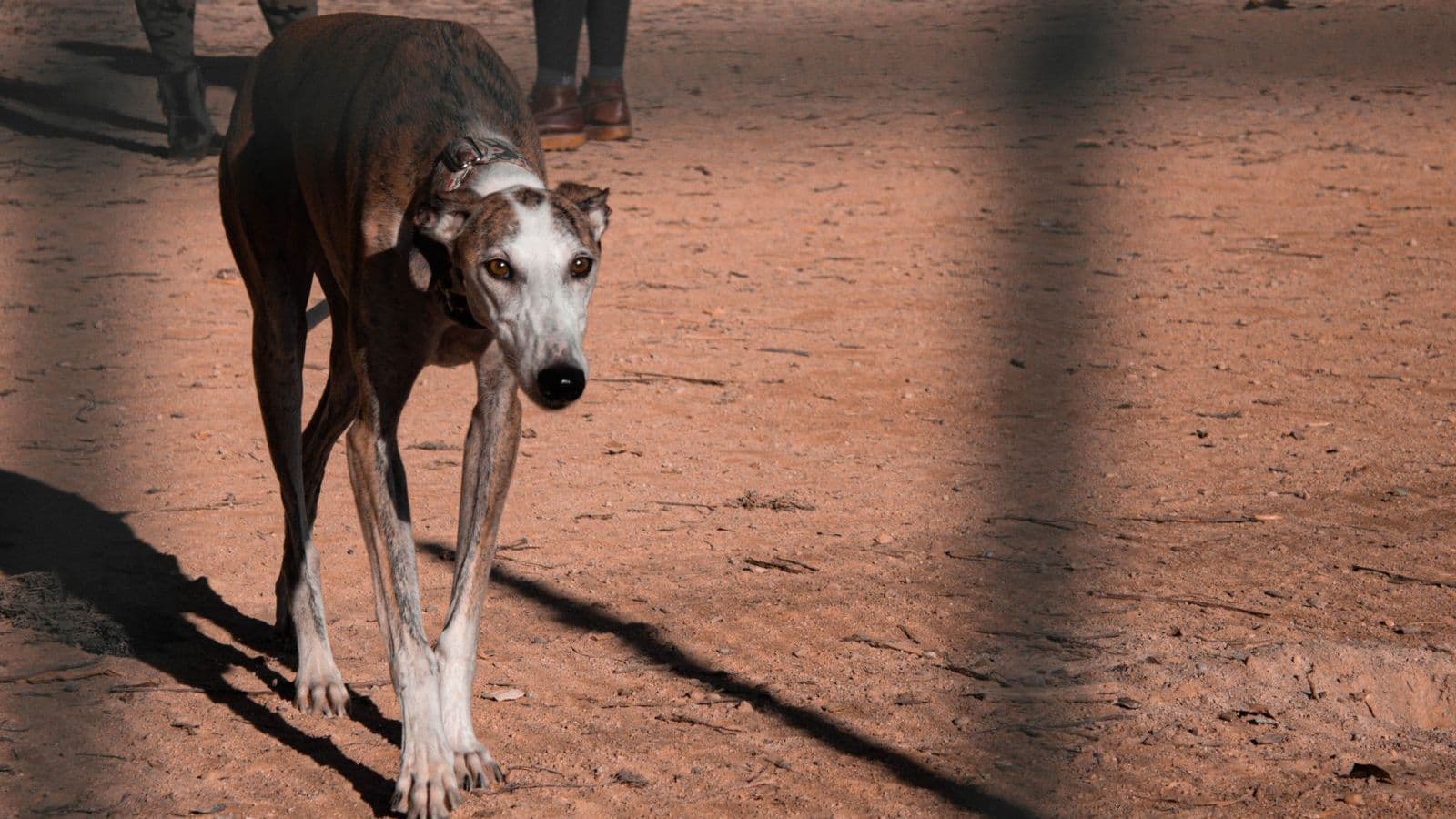
The Spanish Greyhound, or Galgo Español, is one of the oldest sighthound breeds in Europe, descended from coursing hounds that reached the Iberian Peninsula in antiquity. Lighter-boned than the English Greyhound but built on the same blueprint, the Galgo has a longer, narrower head, a more flexible spine, and the same explosive speed, reaching 60-65 km/h after the hare across the open Spanish plateau. For centuries it has been the hound of rural Spain, and it remains deeply tied to the country's hunting tradition.
That tradition has a dark side that shapes how many people meet the breed. Tens of thousands of Galgos are abandoned, surrendered, or worse in Spain every year at the close of the hunting season, and a network of international rescues works to rehome them abroad. As a result, a great many Galgos arrive in their new homes not as puppies but as adult rescue dogs, often with unknown histories and the wariness that comes from neglect. Understanding that context is part of understanding the breed.
What unites Galgos, whether raised from puppyhood or adopted as adults, is a temperament of remarkable gentleness. Beneath the coursing athleticism is one of the softest, calmest, most sensitive of all breeds, a dog that spends most of its day resting quietly and asks only for kindness, a soft bed, and the occasional chance to run. It cannot tolerate harshness, and it cannot be trusted off-leash near prey, but for an owner who offers patience and security, the Galgo is a serene, devoted, and quietly grateful companion.
At a glance:
- Trainability: 5/10, gentle and cooperative but recall vanishes once a chase triggers
- Biggest risk factor: an explosive chase drive that overrides recall near hares or rabbits
- Adult-rescue context: many arrive as adults with unknown pasts and need weeks to decompress
- Example: a Galgo off-leash near open fields spots a hare and is gone in seconds, no recall possible.
- Not for: owners who use harsh corrections or can't provide secure fencing and a patient settling-in period
What Makes Training a Spanish Greyhound Different
1. An explosive chase that overrides training. At full speed the Galgo outpaces any chance of interception, and recall vanishes the moment a hare or rabbit triggers the chase. Off-leash freedom belongs only in securely fenced areas; everywhere else, the leash is a permanent safety measure.
2. Profound gentleness and sensitivity. The Galgo is among the most sensitive of all breeds, and harshness genuinely damages it, producing fear and shutdown that heal slowly. Every interaction must be calm, kind, and reward-based, which suits the breed's soft nature perfectly.
3. Calm indoors, the original couch dog. Despite the speed, the Galgo rests for most of the day and is one of the quietest, most peaceful breeds in the home. The athleticism and the serenity coexist easily: short bursts of intense running, long hours of contented stillness.
4. The adult-rescue context. Many Galgos enter homes as adults with unknown pasts, and they need weeks to decompress before their real character emerges. Patience during that settling period, with no pressure and no rush, is essential to building trust with a previously neglected dog.
Week-by-Week Training Plan for Your Spanish Greyhound
Weeks 1 and 2 : Safety, Trust, and Decompression
Whether puppy or adult rescue, the first priority is a calm, safe, low-pressure home. Our puppy basics guide covers the mechanics.
- For an adult rescue, allow two to four weeks of decompression with no training demands at all.
- For a puppy, build gentle foundations and broad, positive socialization.
- Pair every new experience with high-value food so the world predicts good things.
- Provide a soft, quiet resting place where the dog feels completely secure.
Weeks 3 and 4 : Core Commands, Gentle and Patient
Sit, down, and stay are taught softly, always ending on a positive note.
- Lure the behaviors gently and reward the instant they happen.
- Keep sessions short and calm, never applying pressure.
- Be patient with the deliberate, sensitive pace of a sighthound.
Weeks 5 and 6 : Containment and Leash Safety
Set up the equipment and boundaries that keep a fast hound safe.
- Fit a martingale collar, which the narrow head cannot slip out of.
- Confirm all fencing is at least 1.8 m, as the Galgo can jump considerable heights.
- Introduce loose-leash walking gently, rewarding a slack line.
Weeks 7 and 8 : Recall and Its Limits
Build the best recall you can while respecting what the breed cannot do.
- Train recall on a long line in a securely fenced area with high-value rewards.
- Accept that recall near prey is not achievable and manage accordingly.
- Use fenced areas exclusively for off-leash running.
Weeks 9 and 10 : Public Confidence
Gradually widen the gentle dog's comfort in the world.
- Take short, calm outings into quiet public spaces.
- Build confidence slowly, retreating before the dog feels overwhelmed.
- Reward relaxed, curious behavior in new environments.
Weeks 11 and 12 : Lure Coursing
Give the coursing drive a safe and satisfying outlet.
- Introduce chasing a mechanical lure to channel the chase instinct harmlessly.
- Let the Galgo run flat-out in a controlled setting to meet a deep need.
- Use the activity to build a confident, contented companion.
Common Spanish Greyhound Training Mistakes
Mistake 1 : Any harshness. The Galgo is undone by harshness and recovers slowly. Positive reinforcement is the only appropriate method.
Mistake 2 : Off-leash in unfenced areas. One hare and the dog is gone. Fenced areas only for off-leash freedom.
Mistake 3 : Rushing the adult rescue. Galgos need weeks to decompress before showing their true character. Do not push training in the first weeks.
Mistake 4 : Using a standard collar. The narrow head slips ordinary collars. Use a martingale. Full breakdown : Spanish Greyhound training mistakes.
Frequently Asked Questions
Are Spanish Greyhounds easy to train ? Basic commands with patient, gentle methods, yes, but the breed is sensitive and independent, and off-leash reliability near prey is not achievable. Success looks like a calm, trusting, cooperative dog rather than a precise obedience performer.
Are Spanish Greyhounds good apartment dogs ? Excellent. They are quiet and calm indoors, resting for most of the day, and need only daily exercise and a soft bed to be content in a small space.
How much exercise does a Galgo need ? Two or three short, explosive runs in fenced areas each day, plus calm leashed walks. The breed needs to stretch out at speed regularly, but it is otherwise a low-energy, restful companion.
Are Spanish Greyhounds good with cats ? It varies. Prey drive differs between individuals, some Galgos become cat-safe after careful introduction, while others cannot be trusted with small, fast-moving animals at all.
Are Spanish Greyhounds good family dogs ? Yes, with their own people they are gentle, devoted, and wonderfully calm, and they make tender companions. Their sensitivity means children must be respectful and interactions supervised.
Where can I adopt a Galgo ? Numerous international rescue organizations specialize in rehoming Galgos out of Spain, and adopting an adult is the most common way owners outside Spain come to the breed.
How long do Spanish Greyhounds live ? Typically twelve to fifteen years, with the general soundness common to functional coursing breeds.
Why TailorPup Was Built for Spanish Greyhounds
A generic plan ignores the Galgo's sensitivity, its prey-drive limits, and the decompression an adult rescue needs, applying pressure and expectations that set the dog back. TailorPup's Spanish Greyhound plan meets the dog where it actually is, gentle, often a rescue, deeply sensitive, building trust first, managing the chase drive with secure containment, and keeping every step kind.
Daily 12-minute training sessions plus weekly adjustments. Plans from $9.99/month, no trial; annual starts at $2 for 7 days. Cancel anytime.
Related: Spanish Greyhound Training Mistakes · Recall Training · Leash Pulling · Puppy Training Basics