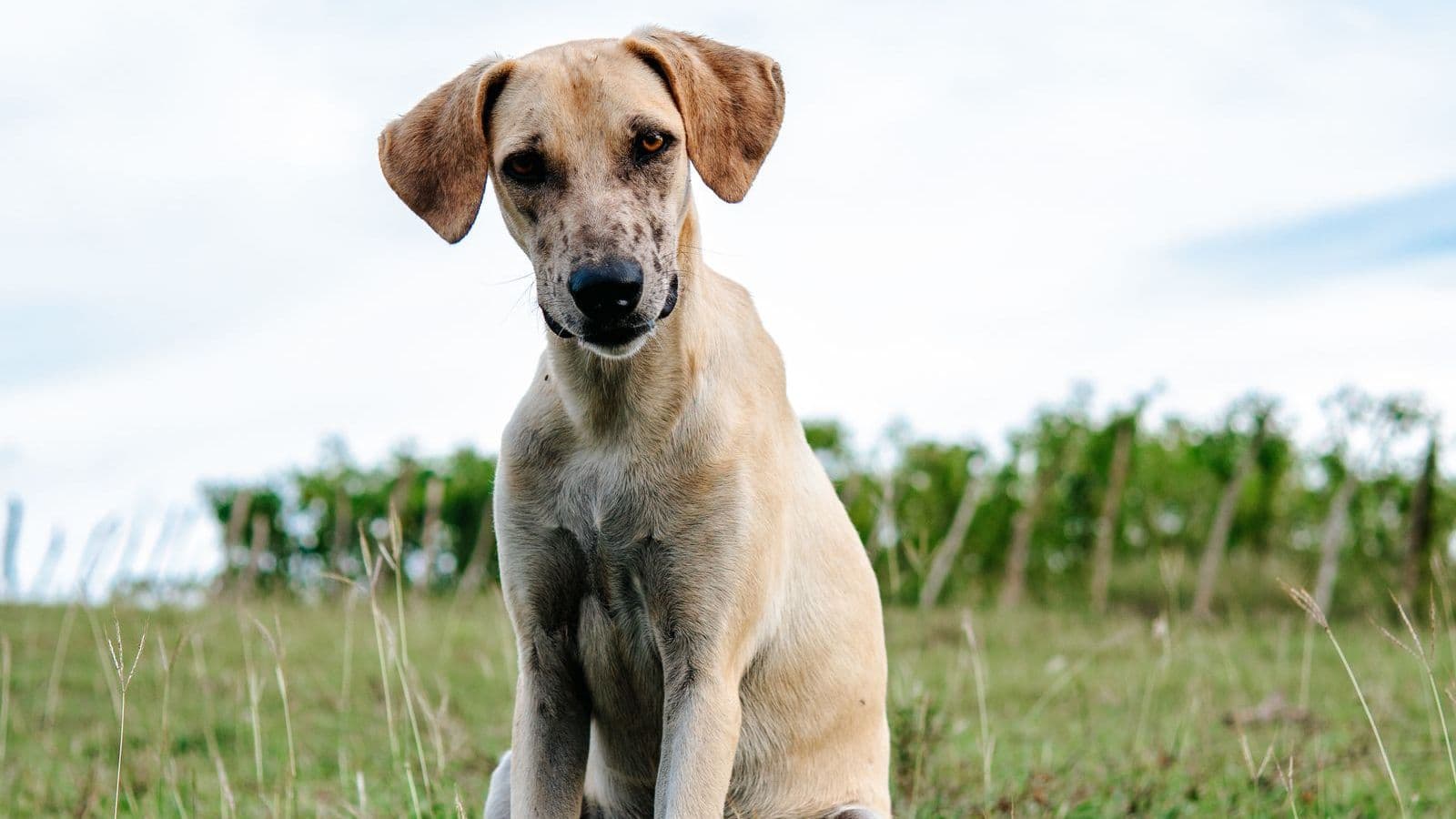
The Sloughi is one of the most ancient sighthounds in the world, the smooth-coated coursing hound of North Africa, Morocco, Algeria, Tunisia, and Libya, where it has hunted alongside Berber and Bedouin peoples for thousands of years. It appears in ancient art and is woven deep into the cultural life of its homeland, where it was traditionally treated not as livestock or a tool but as a member of the family, sleeping in the tent and mourned at its death. That bond, and the breed's extraordinary refinement, set the Sloughi apart from the Saluki of the Middle East and from every other coursing hound.
Physically the Sloughi is the picture of spare, functional elegance: 18-27 kg of dry muscle over fine bone, built for explosive speed across open desert. It can reach 60-65 km/h in pursuit, and that ability sits at the center of how the breed must be managed. Emotionally it is the opposite of its athletic ferocity, sensitive, gentle, deeply attached to its own people, and markedly reserved with everyone else.
For an owner, those two facts define everything. The Sloughi cannot be trusted off-leash in open country, because a single prey animal can trigger a chase no recall will interrupt; and it cannot be trained with any harshness, because pressure produces a shut-down, fearful dog that recovers only slowly. This is not a breed for everyone. But for an owner who understands sighthounds, builds trust patiently, and manages the prey drive with secure fencing rather than wishful thinking, the Sloughi is a devoted, dignified, and quietly affectionate companion.
At a glance:
- Trainability: 5/10, sighthound independence, not bred to look to a handler for instruction
- Biggest risk factor: an uninterruptible chase once prey drive engages, recall does not exist
- Sensitivity: profoundly reads tone and pressure; harsh handling causes weeks-long shutdown
- Example: a Sloughi off-leash in an open field spots a rabbit and vanishes at 60 km/h, deaf to any recall.
- Not for: owners who use corrections or expect an outgoing, friendly-with-everyone temperament
What Makes Training a Sloughi Different
1. Extreme speed and an uninterruptible chase. A running Sloughi covers ground faster than any human can react, and when the prey drive engages, recall simply does not exist. Off-leash freedom in an unfenced area is not a training goal to work toward; it is a permanent safety line that should never be crossed.
2. Profound emotional sensitivity. The Sloughi reads tone, atmosphere, and body language acutely, and it cannot absorb harshness the way a tougher breed might. A raised voice or a leash correction does not motivate it, it frightens it, and the resulting withdrawal can take weeks to repair. Reward-based, gentle handling is the only approach that works.
3. Aloofness with strangers is breed character, not a fault. The Sloughi chooses its people carefully and remains reserved with outsiders for life. Early socialization keeps that reserve from tipping into fear, but no amount of it will produce a gregarious, everybody's-friend dog, and trying to force friendliness only undermines trust.
4. Sighthound independence. Bred to make split-second coursing decisions alone at full speed, the Sloughi carries that self-direction into daily life. It is not defiant; it simply does not look to a handler for instruction the way a herding or working breed does, so cooperation must be built on relationship and reward.
Week-by-Week Training Plan for Your Sloughi
Weeks 1 and 2 : Gentle Foundation and Trust Building
The whole relationship rests on the Sloughi feeling completely safe with you, so trust comes before any command. Our puppy basics guide covers the mechanics.
- Spend the first weeks building a calm, positive association between you and good things, without pressure of any kind.
- Socialize gently with kind, low-key people, always letting the dog approach on its own terms.
- Pair every new experience with high-value food so novelty predicts reward.
- Keep the home environment calm and predictable while the puppy settles.
Weeks 3 and 4 : Core Commands, Asked Gently
Sit, down, and stay are taught as quiet invitations, never as demands.
- Lure sit and down softly, rewarding the moment the dog offers the behavior.
- Build stay in seconds, rewarding stillness before adding any duration.
- Never repeat a cue impatiently or raise your voice; the sensitivity will not tolerate it.
Weeks 5 and 6 : Leash Management and Containment Awareness
A sighthound's safety depends on the right equipment and secure boundaries.
- Fit a martingale collar, which tightens just enough that the narrow head cannot slip free.
- Introduce loose-leash walking patiently, rewarding a slack line in calm settings.
- Verify that every fence the dog can access is at least 1.8 m, since the breed can jump remarkable heights.
Weeks 7 and 8 : Recall and Understanding Its Limits
Build the best recall you can while accepting what it cannot do.
- Train recall on a long line in a securely fenced area, paying with the highest-value rewards.
- Accept that recall near live prey is not achievable and plan management around that fact.
- Use fenced areas exclusively for any off-leash running.
Weeks 9 and 10 : Lure Coursing
The breed's prey drive needs a safe, satisfying outlet, and lure coursing is the natural one.
- Introduce chasing a mechanically driven lure, which channels the chase instinct harmlessly.
- Let the Sloughi run at full stretch in a controlled setting to satisfy a deep need.
- Use the activity to build confidence and a contented, settled dog at home.
Weeks 11 and 12 : Advanced Work and Generalization
Consolidate the foundations in familiar, low-pressure settings.
- Proof cues in calm, familiar environments where the dog feels secure.
- Recognize that performance varies with the Sloughi's emotional state, so keep things relaxed.
- Maintain trust and gentle socialization as ongoing, lifelong work.
Common Sloughi Training Mistakes
Mistake 1 : Any harshness. A raised voice, a leash correction, or frustrated repetition produces a shut-down, fearful Sloughi that recovers slowly. Reward-based training only.
Mistake 2 : Off-leash in unfenced areas. A single pursuit can end with the dog lost, injured, or killed. Fenced areas only for off-leash freedom.
Mistake 3 : Expecting gregariousness. The Sloughi will not warm to strangers on command. Respect its reserved nature rather than forcing contact.
Mistake 4 : Using a standard collar. The narrow sighthound head slips ordinary collars. Use a martingale. Full breakdown : Sloughi training mistakes.
Frequently Asked Questions
Are Sloughis easy to train ? Basic commands with gentle, positive methods, yes, but the Sloughi's independence and sensitivity mean it is not a snappy obedience performer, and off-leash reliability near prey is simply not achievable. Success is measured in trust and calm cooperation, not precision.
How much exercise does a Sloughi need ? Sixty to ninety minutes of activity daily, including regular opportunities to run flat-out in securely fenced areas or at lure coursing. Despite the athleticism, the breed is calm and quiet indoors between outings.
Are Sloughis good apartment dogs ? Yes, surprisingly so. With adequate daily exercise and a calm home, sighthounds are among the most peaceful indoor companions, content to rest for much of the day on a soft bed.
Are Sloughis good with other dogs and cats ? Generally good with other sighthounds; introductions with small dogs and cats require care because of the prey drive, and some Sloughis can never be trusted with small, fast-moving animals.
Are Sloughis good with children ? With socialization and respectful, calm children, yes, but the breed's sensitivity means rough handling is not tolerated, and interactions should be supervised and gentle.
Are Sloughis rare ? Yes, uncommon outside North Africa and specialist sighthound circles. Finding a reputable breeder usually requires research and patience.
How long do Sloughis live ? Typically twelve to fourteen years, with the general soundness common to ancient functional coursing breeds.
Why TailorPup Was Built for Sloughis
A generic plan designed for eager working breeds gets a Sloughi exactly wrong, applying pressure that frightens a sensitive dog and assuming a recall the breed cannot offer near prey. TailorPup's Sloughi plan starts with trust, keeps every session gentle and reward-based, and centers the prey-drive management and secure containment this ancient desert hound genuinely requires.
Daily 12-minute training sessions plus weekly adjustments. Plans from $9.99/month, no trial; annual starts at $2 for 7 days. Cancel anytime.
Related: Sloughi Training Mistakes · Recall Training · Leash Pulling · Puppy Training Basics