Socializing an Adult Dog: What to Expect
The ideal socialization window is in puppyhood, but adult dogs can still become more comfortable with the world. The goal is not to make an adult dog love everyone. It is to help it feel safe and relaxed around the things it will meet. This guide gives a realistic protocol.
Written by the TailorPup team, updated October 2026. See our editorial approach.
In this article · 11 sections+
01
Why adult socialization is different, not impossible
Adult dogs have established habits and sometimes fears. Change is slower, and the aim is comfort rather than friendship with everyone. Many adult dogs improve a lot with patient, structured exposure.
02
Start below the dog's threshold
Find the distance at which your dog notices a trigger but stays relaxed.
- Stand at that distance and let the dog watch.
- Give treats for calm looks, then move away.
- Reduce the distance in small steps across sessions.
- Stop if the dog tenses, stares or stops eating.
03
Managing exposure to people
Ask visitors to ignore the dog and let it approach. Hand over treats to toss on the floor, and keep greetings short.
- No leaning over or reaching for the head.
- No forced hugs.
- Let the dog retreat if it wants.
- Keep first meetings short and positive.
04
Managing exposure to other dogs
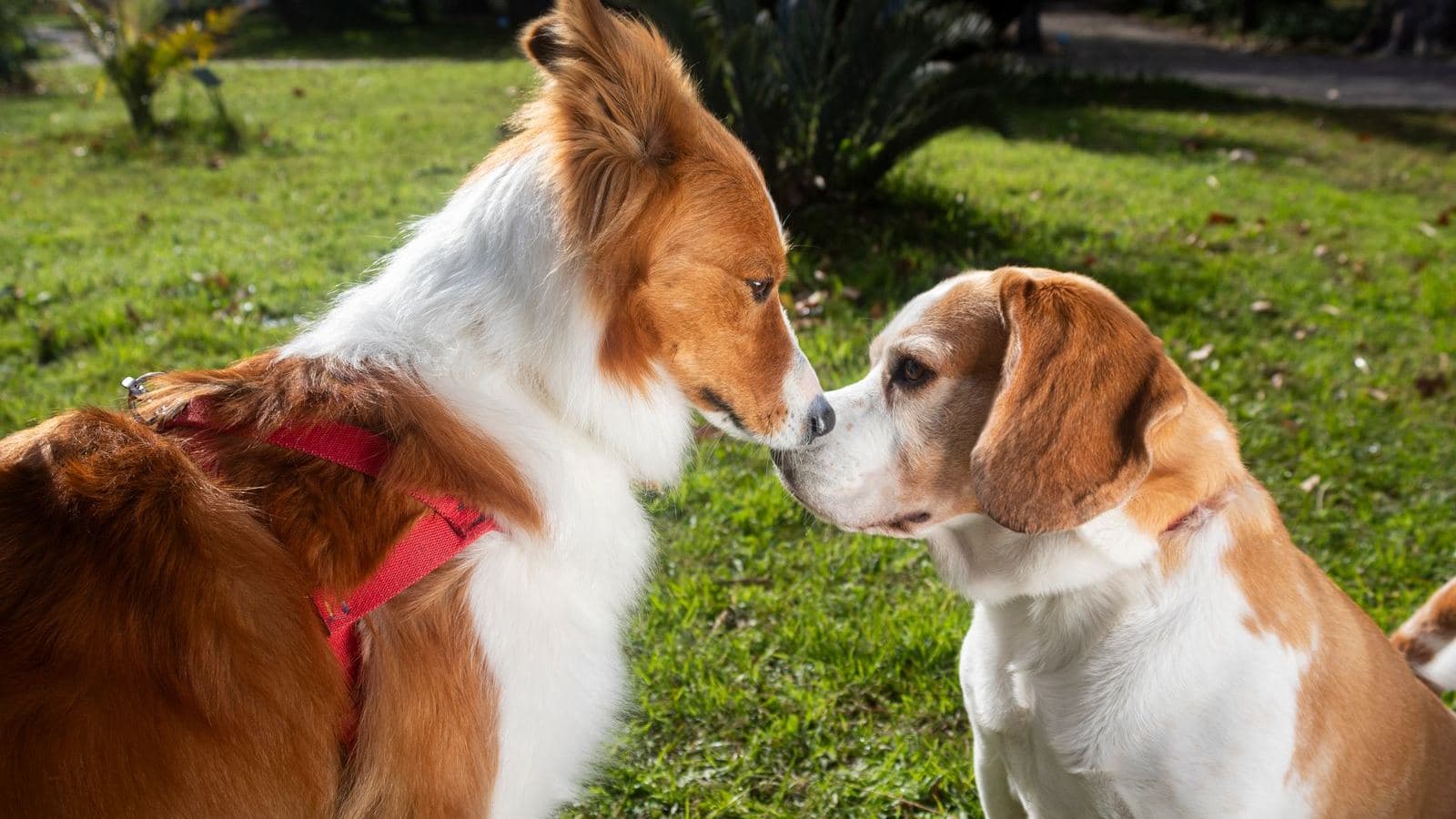
Start with parallel walks at a distance with a calm, friendly dog. Avoid dog parks, where the pressure and unpredictability are high.
- Walk at a distance with a calm dog, in the same direction.
- Reduce the distance slowly over several walks.
- Allow a brief sniff on a loose leash, only if both dogs are relaxed.
- End on a good note, before either dog gets tense.
05
Environments and sounds
Socialization also covers places and noises. Visit new environments at quiet times, and pair each new thing with food.
- Quiet cafes or parks.
- Different floors and surfaces.
- Vehicles, bikes and umbrellas at a distance.
- Household noises, played at low volume.
06
When to bring in a professional
If your dog shows fear that does not improve, snaps, lunges or bites, speak to a qualified behavior professional. Early help can prevent the problem from growing.
EXAMPLE
A worked example: Nora, a nervous rescue
Nora was afraid of strangers and other dogs. Her owner started by walking at a distance of about 20 meters from a calm dog, giving treats for calm looks. Over several weeks, she reduced the distance by a few meters each time.
Nora learned to watch other dogs without reacting, and later enjoyed parallel walks. She never became a dog-park dog, and that was fine. The goal was comfort, not friendship with everyone, and the progress was real.
IF IT STALLS
Troubleshooting
What to do when progress stalls.
- The dog reacts at the usual distance: increase it and try again.
- The dog will not take treats: you are too close. Move away.
- The dog is fine in one place but not another: treat each new place as a fresh start.
- The dog shows aggression: stop and contact a qualified behavior professional.
09
What socialization really means
Socialization is about helping a dog feel safe in the world. For adult dogs, it is not about meeting as many people and dogs as possible, but about building positive associations with the things the dog will meet in daily life.
Some adult dogs will become friendly and outgoing. Others will simply become calm and neutral, and that is a good result too.
10
An eight-week plan
Adjust the pace to your dog and repeat any week that feels hard.
- Weeks 1 to 2: practice in a quiet place. Reward calm looks at distant people and dogs.
- Weeks 3 to 4: reduce the distance in small steps, with treats for calm behavior.
- Weeks 5 to 6: practice parallel walks with a calm, friendly dog at a comfortable distance.
- Weeks 7 to 8: add new environments, such as a quiet cafe patio, at quiet times.
11
Red flags that need professional help
Seek help from a qualified behavior professional if you see these.
- Lunging, growling or snapping at people or dogs.
- Extreme fear that does not improve with distance.
- Freezing or shutting down in new places.
- A bite or near-bite.
- Fear that is getting worse over time.
FAQ
Common follow-ups.
Is it too late to socialize an adult dog?+
No. Progress is slower than in puppyhood, but many adult dogs improve with patient work.
How long does it take?+
It varies. Many dogs show progress in weeks, but real change can take months.
Should I take my adult dog to a dog park?+
Usually not, especially if the dog is fearful. Choose calm, controlled meetings instead.
What if my dog is afraid of everything?+
Go back to a very quiet environment, use high-value treats and seek professional help.
Glossary
Terms used in this article.
Socialization
Structured, positive exposure to new people, animals, environments, and experiences.
Threshold
The point at which a dog becomes too aroused, fearful, or reactive to think clearly or respond to known cues.
High-Value Reward
A reward strong enough to compete with whatever is distracting the dog in that moment.
Critical Period
A specific developmental window, roughly 3 to 14 weeks of age in puppies, when the brain is unusually receptive to forming lasting associations with new experiences.