How to Introduce a New Dog to Your Resident Dog
Most dog-to-dog introductions that go wrong go wrong in the first ten minutes, usually because they happen in the resident dog's territory with both dogs on tight leashes. A slower, more deliberate process in the first two weeks makes the difference between two dogs that tolerate each other and two that actually become companions.
Written by the TailorPup team, updated October 2026. See our editorial approach.
In this article · 7 sections+
01
Meet on neutral ground first
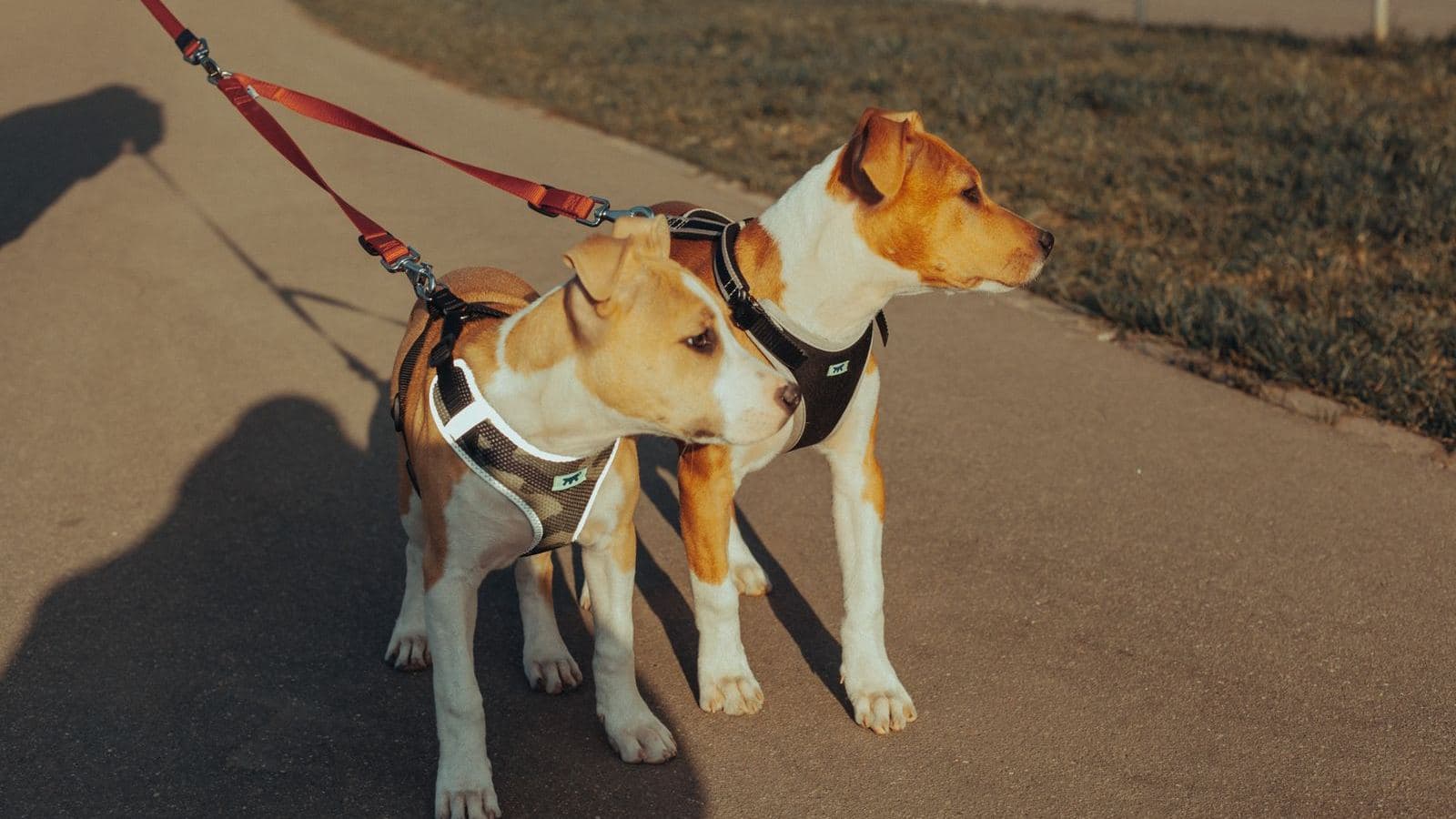
The single biggest factor in a good first meeting is location. A dog's home, yard, or usual walking route already belongs to them in their own mind, and a new dog appearing there reads as an intrusion worth defending. A neutral space neither dog has claimed, a quiet parking lot, an unfamiliar park, a friend's yard, removes that trigger entirely.
Keep leashes loose. A tight leash transmits your own tension down the line and physically restricts the normal greeting behaviors dogs use to read each other, which can make a nervous dog look more defensive than it actually is.
02
Read the body language, not just the behavior
Loose, wiggly bodies, play bows, and soft eyes are good signs. Stiff bodies, raised hackles, a fixed stare, or a tucked tail are signs to increase distance and slow down, not necessarily signs to abort, dogs communicate a lot of information before anything escalates. A brief stiffening followed by a relaxed shake-off is normal social calibration; a stiffening that doesn't resolve is the moment to create space.
Parallel walking, walking both dogs side by side at a distance where neither reacts, then gradually closing the gap over the walk, is often a better first interaction than a face-to-face greeting, since it lets them get used to each other's presence without the pressure of a direct approach.
03
The first two weeks at home
Once dogs are living together, manage resources deliberately: separate food bowls, separate beds, and enough of everything (toys, water bowls, resting spots) that there is nothing to compete over during the adjustment period. Resource guarding between unfamiliar dogs is common early on and mostly resolves once trust builds, but only if you remove the reasons to compete in the first place.
Supervise all interactions for at least the first week, and separate the dogs (different rooms, crates, or a baby gate) any time you can't actively watch them. This isn't about distrust, it's about preventing a single bad unsupervised moment from setting the relationship back weeks.
Keep the resident dog's routine as normal as possible. Walks, feeding times, and one-on-one attention shouldn't disappear because a new dog arrived; a resident dog whose life visibly gets worse when the new dog shows up is more likely to resent that dog specifically.
04
Signs the introduction needs to slow down
Repeated growling that doesn't de-escalate, snapping, or one dog consistently avoiding the other are signs to add more distance and more time before the next attempt, not signs to force more exposure. Genuine incompatibility exists, but far more often, what looks like incompatibility on day one is just two dogs that needed a slower process than they were given.
05
A two-week plan
Go at the pace of the more nervous dog.
- Day 1: meet on neutral ground, on loose leashes, parallel walking at a distance.
- Day 1 to 2: walk home together, with the resident dog going in first.
- Day 2 to 4: keep separate spaces and rotate who has access to the house.
- Day 5 to 7: short, supervised sessions together with the leash dragging.
- Week 2: increase time together, and keep feeding and rest areas separate.
06
Resources to manage
Many conflicts start over valued things.
- Pick up toys, bones and chews during the first weeks.
- Feed in separate rooms.
- Give each dog its own bed and rest area.
- Avoid giving attention to one dog in front of the other in a way that causes tension.
07
Signs the introduction needs to slow down
If you see these signs, give the dogs more space and time.
- Stiff bodies, hard stares or freezing.
- Growling or snapping.
- One dog hiding or trying to escape.
- Over-excited behavior that is hard to interrupt.
FAQ
Common follow-ups.
How long does it take for two dogs to get along?+
Some pairs are comfortable within days; others take several weeks of gradual, supervised exposure before settling into a real relationship. A realistic expectation is tolerance within the first week or two, with genuine ease and play developing over the following month.
Should I introduce puppies to adult dogs differently?+
The same neutral-ground, gradual-exposure principles apply, but adult dogs (especially seniors or dogs with limited puppy experience) may need more breaks from a puppy's persistent energy. Give the adult dog an escape route (a gate, a crate, an elevated bed) they can retreat to.
What if one dog is much more dominant?+
Dogs sort out a social dynamic between themselves far more often than owners expect, and it isn't always the bigger or older dog that takes the lead. Intervene for genuine aggression, not for normal posturing, since interrupting every minor disagreement can actually prevent dogs from learning to communicate with each other.
How long until the dogs get along?+
It varies, from days to months. Many pairs settle in a few weeks if introduced carefully.
Should I let them work it out?+
Not if there are signs of tension. Calmly interrupt and give space instead.
Glossary