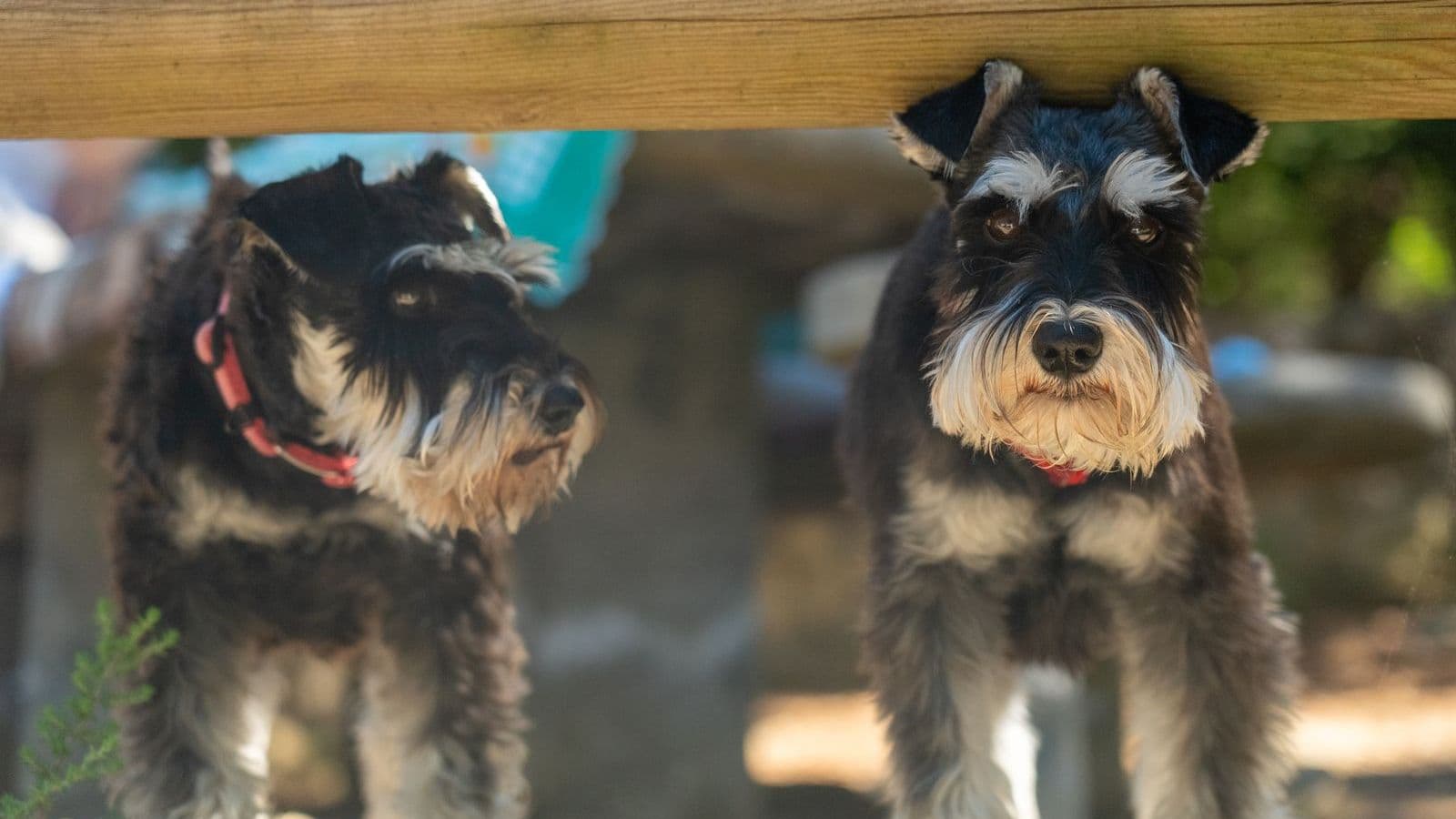
Mini Schnauzers are bright, biddable terriers, noticeably more trainable than most of their British terrier cousins thanks to a continental working heritage : these were German farm ratters bred to work with people, not despite them. They are clever, eager, and food-motivated, which makes the actual training easy.
Most problems with the breed come from two genetic traits that surprise owners who expected a simple, bearded little companion : a strong, factory-installed tendency to alert-bark, and a real terrier prey drive that switches the ears off the moment a squirrel moves. Neither is a defect, both are manageable, and both punish owners who ignore them. Here are the seven mistakes that cause the most trouble, and what to do instead.
1. Ignoring barking until it is a habit
The Mini Schnauzer was bred to alert farmers to intruders and vermin, and the modern dog still files hourly reports : the mail carrier, a car door, a leaf with suspicious intentions. Owners who find the puppy's alarm cute end up, six months later, with a dog that barks at everything, because the habit sets fast and rewards itself. Work it from week one :
- Reward quiet proactively, catch and pay silence near known triggers.
- Teach a "quiet" cue by marking and rewarding the pause after an alert.
- Manage the environment : block the window patrol post, mask street sounds.
- Never pay demand barking with attention, even irritated attention counts.
An alert bark or two is the breed doing its job. The 40-bark editorial is a habit you either prevent cheaply now or fix expensively later. See our barking guide.
2. Underestimating exercise and mental needs
The beard and the size suggest a decorative lapdog, and the genetics say otherwise : this is an active working terrier needing a solid 60 minutes of daily activity plus real mental work. Under-stimulated Mini Schnauzers bark more, dig, shred, and invent patrol routes, and their owners usually diagnose a behavior problem when the actual issue is an empty schedule.
Give the dog its working budget : brisk walks, play sessions, and above all scent games, hide-and-seek with treats, find-the-toy, snuffle mats, which tap directly into the ratter heritage. Ten minutes of nose work settles this breed like nothing else. A busy Schnauzer is a quiet Schnauzer.
3. Trusting it off-leash with prey around
The terrier prey drive is intact and non-negotiable : squirrels, cats, rabbits, and skittering leaves flip a switch, and a locked-on Mini Schnauzer does not hear recall, it hears ancestry. Owners lulled by the breed's friendly, biddable nature discover this at the worst possible moment, near a road. Treat off-leash freedom as a certification, not a default :
- Build recall with the highest-value rewards you own, reserved for that cue only.
- Hundreds of successful reps on a 30-foot long line in open areas first.
- Layer distractions gradually : boring field, then birds, then the squirrel zone.
- Reserve true off-leash time for securely fenced spaces until recall survives fur.
The friendliness is real. So is the prey drive. Plan for both.
4. Harsh handling
Spirited and confident as it is, the Mini Schnauzer responds far better to rewards than corrections, and harsh methods reliably backfire : the bold ones get reactive and bark harder, the softer ones get fearful and stop offering behavior. Either way you lose the biddable, eager partner the continental heritage built. This breed is famously food-motivated, use it. Upbeat tone, real treats, short lively sessions, and cooperation that visibly pays. A Mini Schnauzer trained with rewards learns fast and works with enthusiasm; one trained with corrections spends its cleverness on avoidance instead.
5. Skipping socialization
Alertness plus under-socialization equals the suspicious, noisy little dog nobody enjoys walking past. Un-exposed Mini Schnauzers become wary and reactive toward strangers and other dogs, and the natural watchdog streak hardens into blanket suspicion. Owners assume a small companion breed needs little exposure, and the breed proves them wrong loudly.
During the 8-to-16-week window, bank calm positive experiences : varied people, polite dogs, town environments, sounds, surfaces, and grooming-style handling, useful for a breed that will see a groomer its whole life. A well-socialized Mini Schnauzer keeps the watchfulness and drops the paranoia : it alerts once and lets it go.
6. Not channeling the terrier energy
Beyond raw exercise, the Mini Schnauzer carries working drive that needs a job, and if you do not assign one, the dog freelances : digging the flowerbed, patrolling the fence line, barking at the boulevard. Owners who provide only walks miss what the breed actually craves, purposeful work. Give the drive legal outlets :
- Flirt-pole sessions with start and stop cues, chase with an off switch.
- A digging box or sand pit where excavation is legal and rewarded.
- Scent work games, the ratter nose is the breed's superpower.
- Trick training and fetch-with-rules for the brain-body combo.
The same energy that fuels the problems becomes the thing that settles the dog. Terrier drive never disappears; it just changes employers.
7. Inconsistent rules
Mini Schnauzers are sharp, and sharp dogs audit their households. A rule enforced sometimes, no sofa on weekdays, sofa when you are tired, no begging except when it is adorable, is not a rule to this breed, it is a slot machine, and terriers love slot machines. Every household member must apply the same rules with the same cues, the same way, every time. Given clear, consistent structure, the clever Schnauzer relaxes into it, the auditing stops when the books always balance. Given exceptions, it probes them daily, and it is more persistent than you are.
What works with Mini Schnauzers
Address the barking from day one, fund the real exercise and mental-work budget, respect the prey drive with a long line and a built recall, keep every method reward-based, socialize early and broadly, give the terrier drive a legal job, and hold rules that never wobble.
The common thread is taking the small working terrier seriously as a working terrier : manage the voice, feed the nose, channel the drive, and lead consistently. Do that, and the Mini Schnauzer delivers the whole package the breed's fans brag about, smart, lively, portable, devoted, and genuinely fun to train.
TailorPup's Mini Schnauzer plan includes a dedicated barking protocol from the first weeks, channels the ratter instincts into scent work, and schedules the breed's real working-dog needs.
Frequently Asked Questions
Do Miniature Schnauzers bark a lot?
The alert instinct is genetic, so yes, untrained. With early quiet-cue work, trigger management, and a refusal to pay demand barking, the breed settles into a reasonable watchdog that alerts once instead of filing a report.
Are Mini Schnauzers easy to train?
Among terriers, the easiest : the German farm-dog heritage made them genuinely cooperative, and they are strongly food-motivated. Reward-based methods produce fast, willing progress.
Can a Miniature Schnauzer be trusted off-leash?
Only after a seriously built recall, and even then not near roads or wildlife. The prey drive can override a good recall mid-chase. Long line in open areas, fenced spaces for free running, is the safe default.
Why does my Mini Schnauzer dig?
Terrier genetics : the breed was designed to pursue vermin underground. Suppressing it rarely works; a digging box where excavation is legal, plus more scent work and exercise, redirects the instinct harmlessly.
Start your Mini Schnauzer's plan at tailorpup.com →
Related: How to Train a Miniature Schnauzer · Barking Solutions · Recall Training