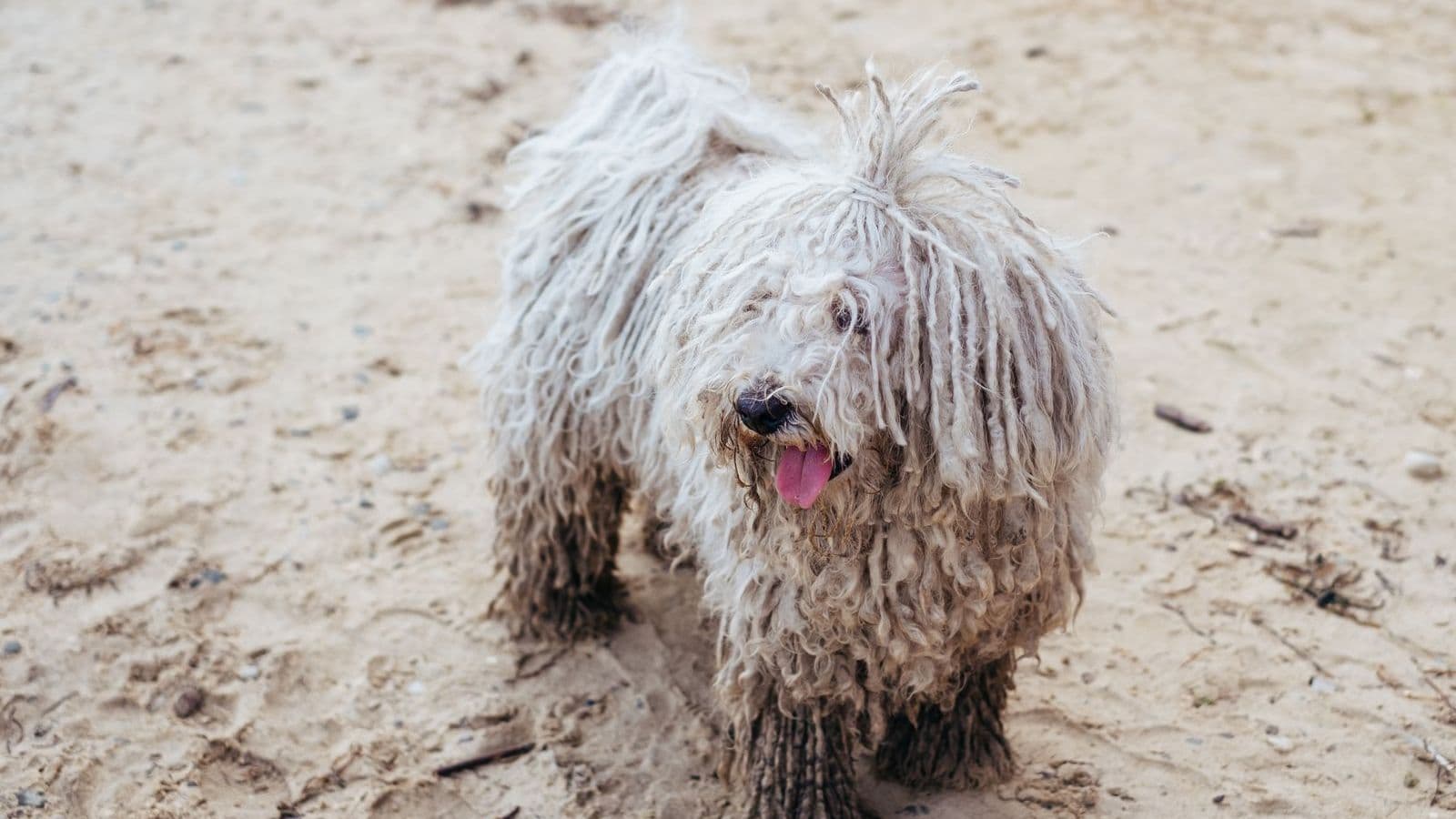
The Komondor is unmistakable: a powerful Hungarian livestock guardian wrapped in heavy white cords, bred to live with the flock and fend off wolves on its own judgment. That independence, the whole point of a guardian, is exactly what frustrates owners expecting an obedient pet. Most problems come from misreading a guardian as a companion dog. Here are the five mistakes that cause the most trouble, and what to do instead.
1. Expecting obedience like a companion breed
The Komondor was bred to guard alone, make its own decisions, and act without a handler, so it weighs requests rather than obeying reflexively. Owners expecting prompt, eager obedience read this as defiance and grow frustrated. Adjust expectations dramatically, use genuinely high-value motivation, and value reliability on the things that matter over snappy obedience.
2. Under-socializing the guardian instinct
A powerful guardian that is not heavily socialized becomes dangerously suspicious of everyone and everything outside its flock. Owners who isolate the puppy create a serious liability. Socialize broadly and positively from puppyhood and keep it up for life, so the protective instinct stays discerning rather than indiscriminate. Our reactivity guide covers counter-conditioning.
3. Weak fencing and trusting off-leash
The Komondor patrols and expands its territory, and a half-built recall will not bring it back from a perceived threat. Owners who rely on light fencing or off-leash trust lose the dog or face a roaming guardian. Use secure, tall fencing and a long line in open areas; reliable containment is not optional with this breed.
4. Harsh handling
The independent Komondor ignores or actively resents heavy-handed correction, and harshness erodes the trust a stable guardian depends on. Owners who try to force compliance get a more stubborn, wary dog. Use patient, reward-based motivation and a calm, consistent relationship; the Komondor cooperates with a leader it respects, not one it fears.
5. Neglecting the corded coat
The Komondor's cords must be separated by hand and carefully maintained, and a dog that was never conditioned to accept handling makes coat care a battle. Owners who skip this end up with a matted dog and stressful grooming. From puppyhood, pair handling and coat work with treats in short, frequent sessions, so the lifelong job of separating and drying the cords stays a calm, cooperative routine rather than a wrestling match with a 50 kg dog.
What works with Komondors
Adjust your expectations to the guardian mindset, socialize heavily and continuously, contain the dog securely, motivate with rewards rather than force, and condition coat handling early. The throughline is accepting the Komondor for what it is, an independent protector rather than an obedience dog, and on those terms it is a calm, dignified, devoted guardian.
TailorPup's Komondor plan front-loads intensive socialization, uses guardian-appropriate motivation, sets realistic expectations, and includes coat-handling desensitization.
Start your Komondor's plan at tailorpup.com →
Related: How to Train a Komondor · Reactivity Training · Recall Training