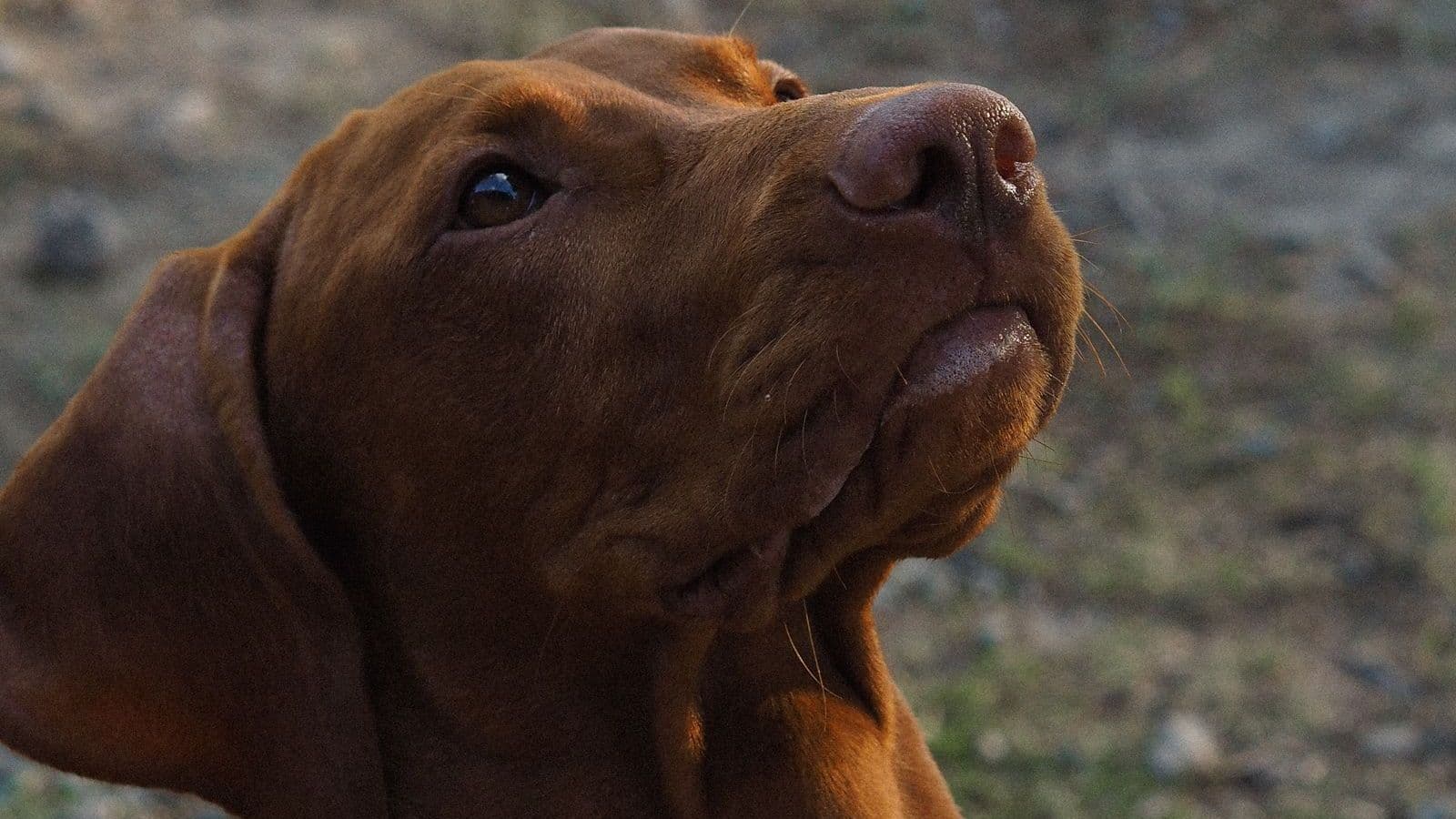
Vizslas are athletic, affectionate, intensely bonded dogs, the famous "velcro" breed, and they occupy a strange position in dog ownership : with the right owner they are close to the perfect companion, and with the wrong one they fall apart more dramatically than almost any breed. There is very little middle ground.
Almost every Vizsla problem traces to two unmet needs : enormous exercise and near-constant companionship. This is a serious Hungarian hunting dog, built to run all day in the field, wrapped in one of the most deeply attached, emotionally soft temperaments in the sporting group. When either need goes unmet, the results are dramatic and fast. Here are the seven mistakes that produce an anxious, destructive Vizsla, and what to do instead.
1. Ignoring separation anxiety until it is severe
Vizslas bond more intensely than almost any breed, they follow you to the bathroom, sleep against you, and rest a paw on your foot while you cook, and that same intensity makes them highly prone to separation anxiety. Owners who never train independence often end up with an adult that panics, destroys, and in bad cases self-harms when alone. The devotion tips into distress quickly, and the window to prevent it is early :
- Calm alone-time sessions from week one, starting at a minute or two.
- A high-value chew reserved exclusively for solitude.
- Extensions kept below the distress threshold, always.
- Departures and returns kept completely boring.
Prevention is a daily ten-minute habit. Treating an established case in this breed is a months-long project that often needs professional support. Start in week one.
2. Underestimating the exercise needs
Vizslas need one to two hours of vigorous daily exercise, one of the highest requirements of any breed, because the genetics assume all-day fieldwork. That number is not aspirational, it is the maintenance dose. Under-exercised Vizslas become frantic, destructive, and anxious, and the anxiety piece matters : in this breed, surplus energy converts directly into emotional instability, not just chewed furniture.
A long leash walk does not count as vigorous, this dog needs running, sprinting fetch, swimming, bikejoring, or field work. The honest version : owners who cannot provide this workload should choose another breed, because no training plan substitutes for the miles a Vizsla was built to cover.
3. Long daily isolation
The velcro Vizsla genuinely cannot cope with being alone all day, and this is a lifestyle fact to solve before acquiring the breed, not a training problem to fix after. Nine hours of daily solitude fights the dog's core design and reliably triggers the anxiety cascade : barking, destruction, house soiling, escape attempts. Households that suit the breed have someone home much of the day, or a real plan, doggy daycare, a midday walker, staggered schedules.
A useful reframe when diagnosing any Vizsla issue : many "behavior problems" in this breed are too-much-alone-time problems wearing a disguise. Fix the schedule before touching the training plan.
4. Harsh handling of an emotionally soft athlete
The Vizsla's drive and athleticism mislead owners into handling it like a hard working dog, and it is anything but. Underneath the engine is one of the softest temperaments in the sporting group : harsh corrections, raised voices, or leash pops visibly wound a Vizsla, damage the trust the whole relationship runs on, and pour fuel on the breed's baseline anxiety. Firmness does not create calm in this dog, it creates worry. Reward-based, gentle, clear training is essential : calm cues, generous payment, short sessions that end in play. A Vizsla that trusts its handler will try anything for you. One that fears its handler cannot think at all.
5. Exercising the body but not the mind
Owners who run their Vizsla ten miles and still come home to a restless, pacing dog have discovered the breed's second fuel tank : the brain. This is an intelligent, problem-solving hunting dog, and physical exhaustion without mental work leaves it wired. Add a daily cognitive budget alongside the miles :
- Scent games, hide treats or a scented toy and let the pointer nose work.
- Training sessions that teach genuinely new skills.
- Puzzle feeders for at least one meal a day.
- Field-style games, directional casts, sit-at-distance, retrieve chains.
Fifteen minutes of nose work calms a Vizsla in a way an extra hour of running never does. Body plus brain is the formula; either alone is half a program.
6. Not managing the prey drive
Vizslas are pointing dogs, and birds, rabbits, and squirrels flip a genetic switch that can carry the dog hundreds of meters before it thinks to check in. Owners seduced by the breed's constant attachment assume the velcro dog will never leave, and then watch it vanish across a field after a pheasant. Recall against prey drive must be built, not assumed : highest-value rewards reserved for the recall cue, hundreds of reps on a 30-foot long line in open country, distractions layered from boring to feathered, over several months.
Off-leash freedom is a certification the dog earns, not a birthright of friendliness. Until then, the long line is your best friend.
7. Skipping crate or safe-space training
For an anxiety-prone breed, a positively conditioned safe space is core infrastructure, not an accessory. A crate or gated den that the Vizsla loves gives it somewhere to regulate when alone, prevents destruction during the independence-building months, and makes travel and vet stays dramatically less stressful. Owners who skip it leave the dog to manage its feelings loose in a hallway, which usually ends in drywall repairs.
Build it early and positively : meals in the crate, special chews only there, door open at first, never used as punishment. Done right, the crate becomes where the Vizsla parks itself voluntarily, which is exactly the coping skill the breed needs.
What works with Vizslas
Independence training from the first week, one to two hours of real daily exercise plus mental work, a household schedule that does not isolate the dog, unfailingly gentle methods, a recall built against prey drive on a long line, and a safe space the dog loves.
The common thread : meet the intensely bonded athlete's two non-negotiables, company and work, and everything else about the breed is easy, no guarding instinct to manage, no stubbornness to negotiate, just an affectionate, biddable, spectacular companion. Fail those two needs, and the same genetics produce one of the most anxious, destructive dogs around. The breed does not do middle ground, so the program cannot either.
TailorPup's Vizsla plan front-loads independence training, schedules the substantial exercise the breed genuinely requires, adds daily brain work, and runs entirely on gentle reward-based methods.
Frequently Asked Questions
Why is my Vizsla so clingy?
It is not a flaw, it is the breed. Vizslas were bred to hunt in constant contact with their handler, and the "velcro" attachment is genetic. The goal of training is not to remove the attachment but to build enough independence that alone time is tolerable.
How much exercise does a Vizsla really need?
One to two hours of vigorous activity daily, running, not strolling, plus mental work. Adolescents often sit at the high end. If that budget is not sustainable for years, this is not your breed.
Can a Vizsla be left alone for 8 hours?
Routinely, no. Even well-trained Vizslas struggle with all-day isolation. Daycare, a midday visitor, or a mostly-home household is part of responsible Vizsla ownership.
Are Vizslas easy to train?
Very, for an owner using gentle methods. They are intelligent, eager, and handler-focused. The difficulty is never the learning, it is meeting the exercise and companionship needs that keep the dog emotionally regulated enough to learn.
Start your Vizsla's plan at tailorpup.com →
Related: How to Train a Vizsla · Recall Training · Leash Pulling