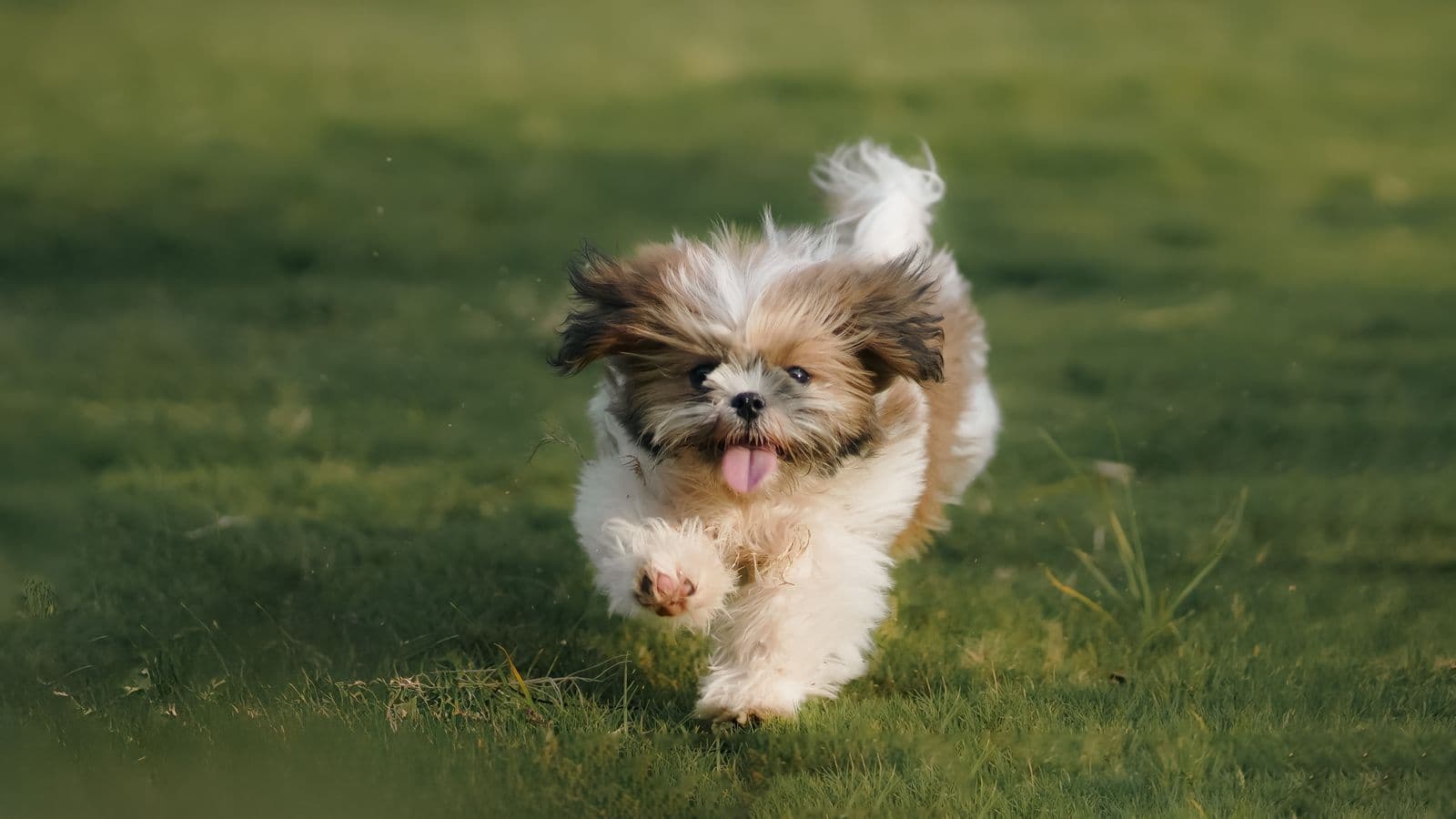
Shih Tzus are affectionate, confident little dogs who genuinely seem to believe they are royalty, which, as ancient Chinese palace companions, they once literally were. A thousand years of being carried through palaces leaves a mark on a breed's expectations.
Most training problems with the Shih Tzu come from exactly two sources : the genuinely difficult house training, which defeats owners who expected an easy small dog, and the pampering trap, where the adorable face buys the dog out of all structure until it has quietly become the household's smallest tyrant. Treat a Shih Tzu like a real dog and it is a delight. Spoil it without boundaries and it will govern you. Here are the seven mistakes that cause the most trouble, and what to do instead.
1. Giving up on house training
This is the breed's hardest skill and the number-one owner complaint. Small bladder, a picky streak about weather and surfaces, and accidents tiny enough to miss behind furniture combine to make Shih Tzus among the slower breeds to house-train, and many owners quietly conclude around month two that it is impossible. It is not. It is a consistency problem with a longer timeline :
- Out on a strict clock : after waking, after meals, after play, every 2 to 3 hours at first.
- A jackpot reward at the spot, within two seconds of finishing.
- Supervision or a cozy confinement zone between trips.
- Four to six months of patience to full reliability, that is normal, not failure.
- Indoor pads as a legitimate backup for apartments and bad-weather refusers.
The owners who hold the protocol get a house-trained Shih Tzu. The ones who improvise do not.
2. Treating them as accessories
The Shih Tzu's whole design invites pampering, the flowing coat, the portable size, the face engineered for forgiveness, and a dog that is carried everywhere, excused from every rule, and never asked for anything becomes demanding, bratty, and sometimes reactive. The dog underneath the hairstyle is a real dog with real behavioral needs : walking on its own feet, learning cues, earning privileges, meeting the world. Give it daily ground time, short training sessions, and actual boundaries alongside the affection. The royalty attitude is charming precisely when it is an attitude, not an administrative reality.
3. Punishing house-training accidents
Scolding a Shih Tzu for an accident does not teach it to hold on, it teaches it that eliminating in front of you is dangerous, so the dog starts going behind the couch, under the bed, in the guest room. Hidden accidents are how house training goes from slow to genuinely broken, because now you cannot even supervise the pattern. However deep the frustration, the rule holds : clean up calmly with an enzymatic cleaner, say nothing, and pour every ounce of drama into celebrating successes at the right spot. In house training, punishment buys concealment. Reward buys repetition. Choose what you are buying.
4. Using harsh methods
The confident strut misleads people : under the attitude, Shih Tzus are soft, sensitive dogs that shut down under pressure. Harsh corrections produce one of two failure modes, a fearful dog that stops offering anything, or the famous "stubborn" Shih Tzu that plants its feet and simply declines to participate, and both are the method's fault, not the dog's. What unlocks this breed is warmth and payment : gentle tone, genuinely good treats (the breed is unimpressed by kibble-grade wages), short cheerful sessions, and cooperation that reliably pays. A Shih Tzu that trusts the game plays it willingly, and the stubbornness evaporates.
5. Over-exercising in heat
The Shih Tzu's shortened face means some real breathing restriction and genuine heat sensitivity, milder than a Pug's, but present. The airway cannot cool the body efficiently, so warm-weather exertion, or enthusiastic play in a hot apartment, risks overheating in a dog that will not stop on its own. Keep the rules simple : moderate activity in cool conditions, walks in the early morning and evening during warm seasons, water always available, and an eye on heavy panting as the early warning. The full coat adds to the heat load, keeping it trimmed in summer or well-maintained helps. On hot days, swap the walk for indoor games.
6. Allowing demand behaviors
A thousand years of palace service produced a breed with strong opinions about prompt service, and modern Shih Tzus will demand attention, food, and lap access with barking, pawing, and theatrical whining, if any of it works. Each success installs the demand deeper, and the affectionate companion slides into bossiness. Flip the economy without ever being harsh :
- Demands earn nothing : no eye contact, no talking, no touch.
- Calm, settled behavior is what makes laps, treats, and attention appear.
- A simple sit becomes the please-and-thank-you before anything the dog wants.
- Everyone in the household enforces the same rules, guests included.
The affection stays fully intact. Only the entitlement goes.
7. Skipping socialization
Under-socialized Shih Tzus become wary, bark excessively at strangers and dogs, and can turn snappy at the groomer, a serious issue for a breed that will spend its life being professionally handled. Owners shelter the small puppy assuming a lapdog needs little exposure, and manufacture the defensive adult. During the 8-to-16-week window, bank calm positive experiences : varied people, gentle dogs, town noise, surfaces, and above all handling, paws, ears, muzzle, brushing, because this coat means a lifetime of grooming appointments. A Shih Tzu that learned early that hands and clippers predict treats is a joy to maintain for fifteen years.
What works with Shih Tzus
Commit to the house-training schedule for the months it actually takes, give the dog structure alongside the adoration, never punish accidents, keep methods gentle and wages high, respect the airway in warm weather, refuse to fund demands, and socialize early, with extra credit for grooming-handling practice.
The common thread is one idea : treat the pampered companion as a real dog. Do that, and the royal attitude becomes what it should be, a running joke between you and one of the most charming, affectionate companion breeds ever created.
TailorPup's Shih Tzu plan includes the dedicated house-training protocol the breed needs, balances structure with its companion nature, and runs on gentle, well-paid, reward-based sessions.
Frequently Asked Questions
Why are Shih Tzus so hard to potty train?
Small bladder, weather pickiness, and easily missed small accidents, plus owners who relax the protocol too early. With a strict schedule and heavy rewards, expect reliability in 4 to 6 months. Pads are a legitimate backup, not a failure.
Are Shih Tzus stubborn?
What reads as stubbornness is usually a soft dog declining unpleasant terms : boring sessions, weak rewards, or pressure. Raise the wages, shorten the sessions, keep it warm and fun, and the "stubborn" Shih Tzu becomes a willing student.
Do Shih Tzus bark a lot?
They can, especially under-socialized ones alerting at strangers, or pampered ones demand-barking because it works. Early socialization prevents the first; refusing to pay demand barking cures the second.
Can Shih Tzus handle hot weather?
With care only. The shortened face restricts cooling, so keep summer activity moderate and in the cool hours, provide water, and watch for heavy panting. Heat management is part of owning any flat-faced breed.
Start your Shih Tzu's plan at tailorpup.com →
Related: How to Train a Shih Tzu · Recall Training · Barking Solutions