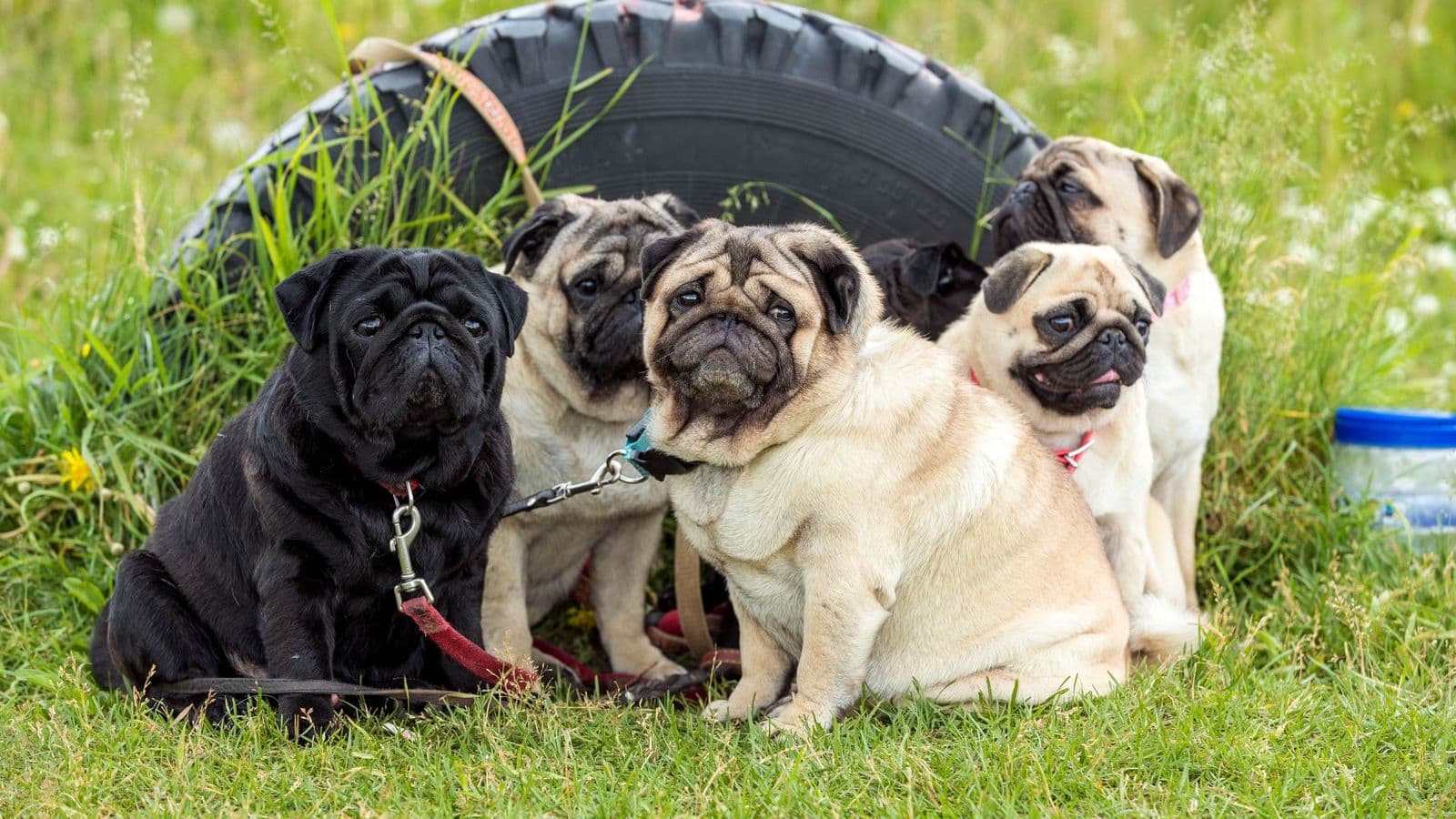
Pugs are affectionate, comical, and will work for food with a dedication most breeds reserve for squirrels. That combination makes them genuinely easy to train, and genuinely easy to harm through well-meaning mistakes, because with this breed, most errors are not behavioral. They are physical.
The Pug's flat, brachycephalic face and its legendary food obsession sit behind nearly every problem owners create. Getting the seven points below right is a welfare issue as much as a training one : the difference between a Pug that thrives for 14 years and one that struggles to breathe through a shortened life. Here is what matters most, and what to do instead.
1. Overfeeding through training treats
Pugs will do anything for food, which makes treat-based training feel effortless, and that is precisely the trap. Obesity is the breed's single biggest health threat, and every extra pound presses directly on an airway that is already compromised : an overweight Pug is, quite literally, a Pug that can barely breathe. Train generously without paying the weight tax :
- Use pea-sized treats, a Pug values frequency, not volume.
- Subtract every training calorie from the daily meals, measured, not guessed.
- Use part of the regular kibble ration as training currency.
- Weigh the dog monthly, the coat and build hide gain until it is advanced.
The food drive is your best training asset. Managed, it builds skills. Unmanaged, it builds a medical problem.
2. Exercising in the heat
Said plainly : heat kills Pugs, every summer, and most of those deaths were preventable. The brachycephalic airway cannot move enough air to cool the body, so a Pug overheats at temperatures and durations that would barely warm another breed, and heatstroke escalates from panting to emergency in minutes. The rules are absolute :
- No walks, training, or play in warm or humid conditions, full stop.
- Exercise in the early morning and late evening during warm seasons.
- Water and shade available always; air conditioning is a genuine welfare tool.
- Know the distress signs : frantic panting, a wide gape, bluish gums, wobbling, collapse, and treat any of them as an emergency.
On hot days, replace exercise with indoor brain games. A scent game tires a Pug with zero thermal risk.
3. Using a collar instead of a harness
A Pug's airway is already doing its best. Clipping the leash to a neck collar loads pressure exactly where the breed can least afford it, worsening breathing during walks and risking real injury on a dog that lunges or pulls. The fix is the cheapest piece of preventive medicine you will ever buy : a well-fitted Y-shaped harness that distributes pressure across the chest and shoulders and leaves the throat completely alone. Leash always on the harness; collar, if any, only as an ID-tag holder. If your Pug gags or honks after leash pressure, that is the airway telling you the equipment was wrong.
4. Running long training sessions
Pug attention is a sprint, not a marathon. After a few minutes of drilling, the breed's focus dissolves into snuffling, sitting, and comic refusal, and owners who push on teach exactly one thing : training is boring and long. Work with the attention span instead of against it. Keep sessions under five minutes, upbeat, and well-paid, and run two or three short sessions a day rather than one long one. End each session while the Pug still wants more, that appetite is what brings tomorrow's enthusiasm. The breed learns quickly in the right format; the format is just shorter than most owners expect.
5. Giving up on house training
Pugs house train slowly : the bladder is small, the weather standards are high (many Pugs regard rain and cold as personal insults and refuse to go), and the accidents are small enough to miss. Owners who read the slow progress as impossibility, and quietly give up around month two, guarantee a lifetime of unreliability. The dog can absolutely learn; it just needs the full protocol for longer :
- Strict schedule : out after waking, after meals, after play, before bed.
- Big rewards at the spot, within two seconds of finishing.
- Supervision or cozy confinement between trips during the learning months.
- Calm, enzymatic cleanup of accidents, punishment teaches hiding, not holding.
- A realistic timeline : 4 to 6 months of consistency to full reliability.
Patience plus structure gets there. Giving up never does.
6. Rewarding begging
Pug begging is a professional operation : the head tilt, the tragic eyes, the strategic sigh at exactly plate height. Feed from the table once and you have signed a lifelong contract, the food drive that makes the breed easy to train makes it relentless the moment begging pays even occasionally. And every begging success feeds the obesity threat from mistake number one.
Hold a clean line : food happens in the bowl and in training sessions, never from plates or counters, and attention flows to the Pug settling calmly on its mat during meals, not to the one performing hunger at your elbow. The theater stops within weeks once the box office closes.
7. Ignoring breathing distress
Pugs snore, snort, and grumble as a factory setting, and that normal soundtrack teaches owners to tune out breathing noise, which is how genuine distress gets missed. Learn the difference. Normal : snoring at rest, snorting at excitement, the reverse-sneeze party trick. Not normal : labored breathing during mild activity, exercise refusal, gagging, blue-tinged gums, collapsing episodes, or noisy struggle that does not settle with rest.
Severe brachycephalic airway syndrome is a medical condition, sometimes requiring corrective surgery that dramatically improves quality of life. "It's just a Pug thing" has delayed a lot of needed vet visits. When in doubt, have the airway assessed.
What works with Pugs
Tiny treats subtracted from meals, exercise only in cool conditions, a harness for every walk, sessions under five minutes, house-training patience measured in months, a zero-tolerance begging policy, and real attention to the breathing.
The common thread : protect the airway and govern the food drive, and the rest of Pug training is nearly automatic, this is an eager, human-focused, endlessly amusing companion that wants exactly what you want, provided you keep it healthy enough to enjoy it. Most Pug problems are not the Pug. They are the management.
TailorPup's Pug plan calibrates every session to breathing safety, uses calorie-aware reward planning, and includes the dedicated house-training protocol the breed needs.
Frequently Asked Questions
Are Pugs easy to train?
Yes, in the right format : the food drive makes them eager students, but only in short, fun, five-minute sessions. The real challenges are physical management, heat, weight, airway, rather than the learning itself.
Why is my Pug so food-obsessed?
It is bred-in : the Pug's appetite is famously bottomless, and it never self-regulates. That drive is your best training tool and the breed's biggest health risk at once. Measure everything, and never free-feed a Pug.
Can Pugs go on walks in summer?
Only in the cool hours, early morning or late evening, and briefly. Warm or humid midday walks are genuinely dangerous for a brachycephalic breed. On hot days, swap the walk for indoor games.
Is my Pug's snoring normal?
Resting snoring and excited snorting are normal for the breed. Labored breathing during mild activity, exercise refusal, or episodes of collapse are not, they warrant a veterinary airway assessment.
Start your Pug's plan at tailorpup.com →
Related: How to Train a Pug · Recall Training · Leash Pulling