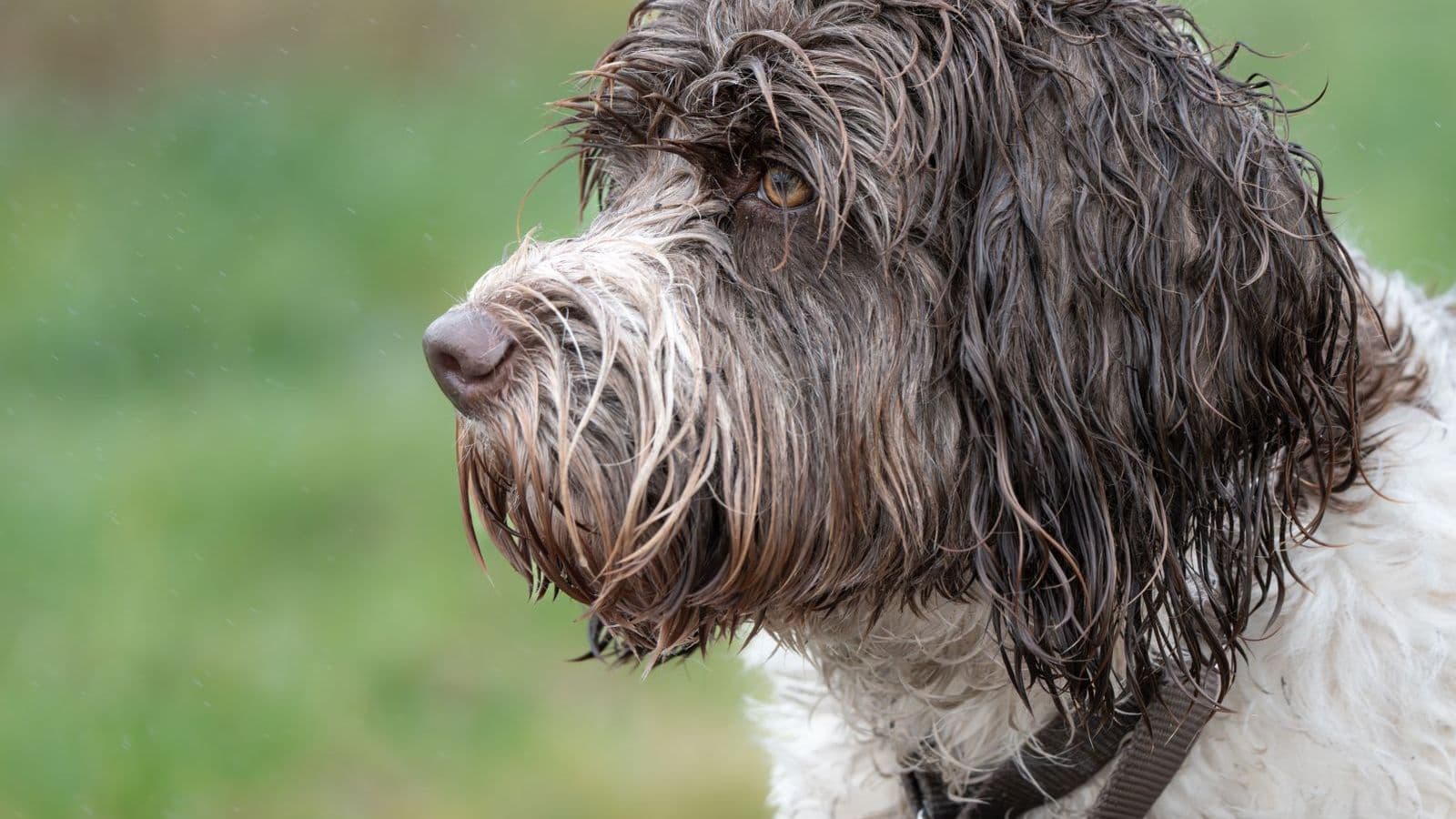
The Portuguese Water Dog is a brilliant, energetic working breed developed to herd fish into nets, retrieve gear, and crew fishing boats along the Portuguese coast. It is highly intelligent and eager, excelling at training, but it comes with a serious working drive, a close bond to its people, and a mouthy, water-loving nature. Almost every PWD problem comes from underestimating the working dog behind the curly coat. Here are the six mistakes that cause the most trouble, and what to do instead.
1. Underestimating exercise and mental needs
PWDs are working dogs needing 60 to 90 or more minutes of vigorous daily exercise plus mental work, ideally including swimming, and an under-stimulated one becomes destructive. Owners charmed by the teddy-bear look are caught out. Provide both real physical exercise and brain work every day, and the same dog is settled and pleasant, because the working drive must be met rather than ignored.
2. Skipping independence training
The people-focused PWD bonds closely and is genuinely prone to separation anxiety, and owners who keep it constantly at their side create the problem. The devotion tips into distress when alone. Start independence work in puppyhood with short, calm absences, build them up gradually, and teach the dog that being alone is safe before the strong attachment hardens into anxiety.
3. Punishing mouthing and chewing
PWDs explore with their mouths and chew, especially as adolescents, and owners who punish this confuse the dog without removing the behavior. The mouthing is normal exploration. Redirect to appropriate chews, teach "drop it" and "leave it," and provide good alternatives, and the behavior decreases with maturity, so manage it constructively rather than treating it as defiance.
4. Providing no job
The intelligent PWD needs purposeful work, and without it the drive turns destructive. Owners who offer only walks leave a capable mind unoccupied. Give it a genuine job, swimming, dock diving, agility, advanced obedience, or scent work, and channel the working intelligence into something structured, so the cleverness becomes an asset rather than a household problem.
5. Harsh handling
The intelligent, sensitive PWD responds beautifully to rewards and poorly to corrections, growing anxious or shut down under harshness. Owners who try to be firm undercut the eager nature. Reward-based training is fast and effective with this breed, so make cooperation rewarding, keep your tone upbeat, and the PWD gives you focused, enthusiastic engagement.
6. Long daily isolation
The bonded PWD struggles alone for long periods, becoming anxious and destructive. Owners with long absences and no plan create real distress. PWDs suit homes where they are not isolated all day, so arrange company, exercise, and enrichment around any absences rather than leaving this attachment-driven breed alone for long stretches.
What this looks like at home
The scene. The Portuguese Water Dog empties the laundry basket, mouths your hand every time you walk in, and drags you to the nearest puddle. Left alone for an afternoon, it chews a chair leg.
What to do instead. Give the mouth a job: a retrieve game where the dog brings the toy and sits before it is thrown again. Keep a rotating basket of chews and tugs so it always has something legal to carry. Add water play where it is safe and a daily training session, such as scent work or tricks. Build alone time in small steps, starting with ten minutes with a stuffed toy, so a dog that bonds closely does not fall apart when it is by itself.
What works with PWDs
Provide substantial exercise and mental work, front-load independence training, redirect mouthing, give the breed a job, use reward-based methods, and avoid long isolation. The common thread is respecting a brilliant working dog: meet the drive, build independence, and keep the dog engaged and included, and the PWD is a brilliant, athletic, devoted companion.
TailorPup's PWD plan schedules adequate exercise, front-loads independence training, channels the working drive with a job, and leverages the breed's intelligence.
Start your Portuguese Water Dog's plan at tailorpup.com →
Related: How to Train a Portuguese Water Dog · Recall Training · Leash Pulling