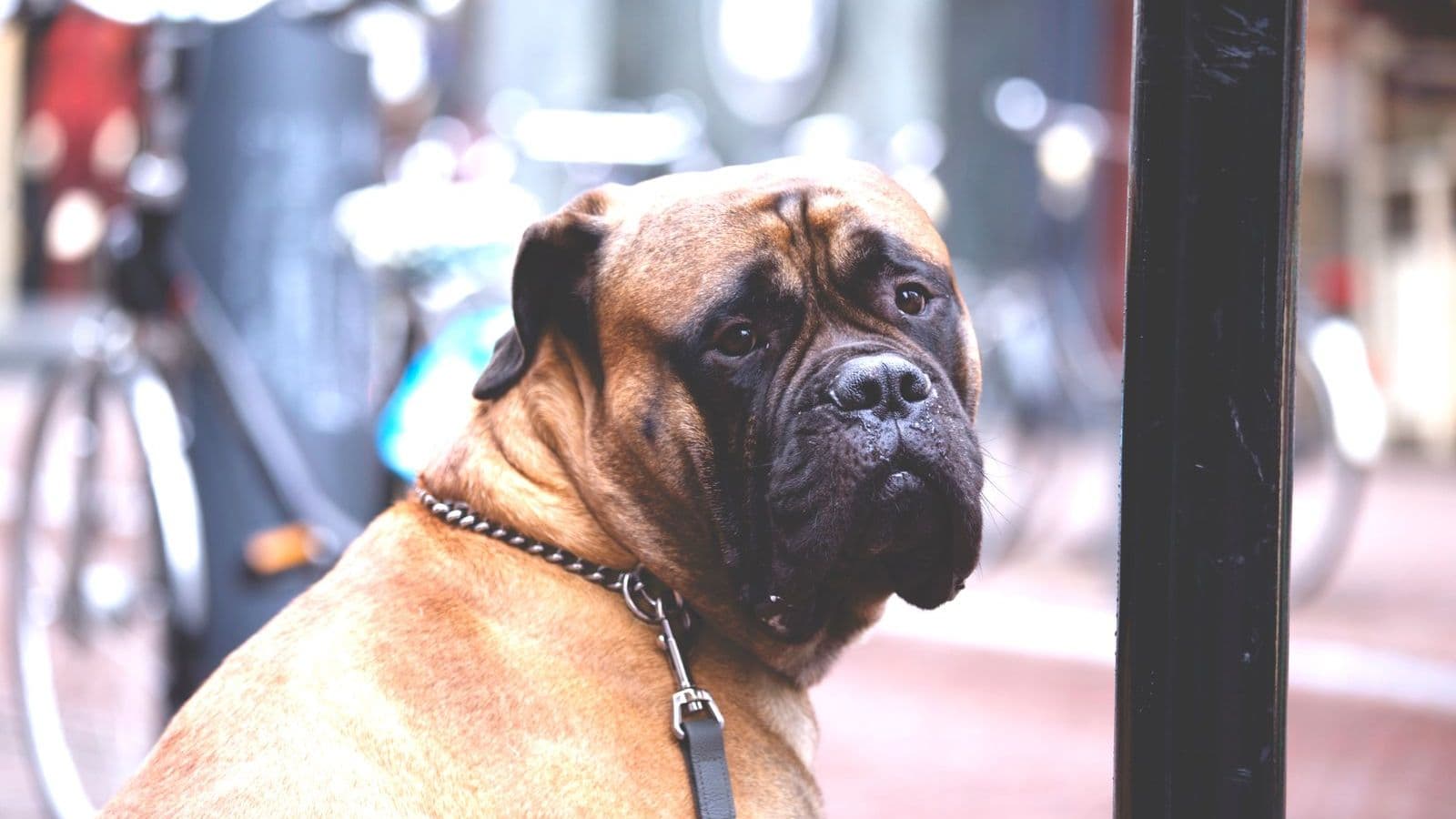
The Mastiff reaches 160 to 230 pounds, one of the heaviest dogs in existence, an animal that can outweigh its owner and absolutely outweighs every child, grandparent, and guest it will ever greet. At that scale, a training mistake stops being an inconvenience and becomes a genuine safety problem : the same jumping habit that annoys a Beagle owner puts someone on the ground when a Mastiff does it.
By nature the breed is a calm, dignified, deeply loyal guardian, one of the easiest giant temperaments to live with. But its rapid growth, orthopedic vulnerability, and sheer mass mean the seven errors below matter more for the Mastiff than for almost any other breed. Here is what goes wrong, and what to do instead.
1. Waiting to train
With a 200-pound adult on the schedule, the early window is everything. A behavior not addressed in puppyhood, jumping, pulling, leaning, door-crowding, becomes physically impossible to correct once the dog has its full mass, because at that point every lesson is a negotiation you lose on weight class alone. The math is simple : you can guide a 30-pound puppy through manners with one hand; nothing short of full commitment moves an unwilling adult Mastiff. Start at eight weeks : greetings, leash basics, handling, wait-at-doors, settle. The manners must be finished before the dog is, and with this breed "finished" arrives fast.
2. Over-exercising during growth
Mastiffs are among the largest, fastest-growing dogs on earth, a puppy can gain over 100 pounds in its first year, and that growth makes the skeleton extremely vulnerable. Growth plates stay open until 18 to 24 months, and high-impact activity before then causes permanent damage and worsens the breed's predisposition to hip and elbow dysplasia :
- No running on pavement or hard surfaces.
- No stair repetitions as exercise.
- No jumping from cars, furniture, or anything else.
- No long forced marches, however willing the puppy seems.
What a growing Mastiff needs is free play on soft ground at its own pace, short sniffy walks, and mental work. The five-minutes-per-month-of-age guideline for structured exercise is a sensible ceiling. Joint health spent in puppyhood never comes back, and this breed has none to spare.
3. Under-training because they are calm
The Mastiff's mellowness is the most expensive trap on this list. Owners look at the sleepy, gentle puppy and conclude training is optional, and then live with a 200-pound dog that has opinions about doorways and no trained way to express them. Calm is a temperament, not a skill set : it includes neither loose-leash walking, nor recall, nor stay, nor get-off-the-couch, and every one of those is a safety system at this scale.
A gentle untrained Mastiff is still a serious problem, gentleness does not steer. Train the placid giant exactly as thoroughly as you would a demanding breed : short daily sessions, leash skills as a priority, manners as non-negotiables.
4. Allowing jumping and leaning
A Mastiff that leans its full weight into people or jumps up in greeting can injure an adult and seriously hurt a child or an elderly relative, with zero bad intent involved, physics does the damage. What is endearing at 50 puppy pounds is dangerous at 200, and the habit is nearly impossible to remove at maturity. Set the boundary in puppyhood and hold it absolutely :
- Four paws on the floor is the only greeting that earns attention.
- Jumping or crowding turns people into silent statues.
- Sit-to-greet is taught, rewarded, and required with every guest.
- The lean happens on invitation only, against braced adults who asked for it.
The giant adult then defaults to safe manners, which is the entire game with this breed.
5. Harsh handling
The size and the guardian history tempt people toward heavy-handed methods, and the breed's actual temperament makes that both cruel and stupid. Mastiffs are gentle, emotionally sensitive dogs that bond deeply and take harshness hard : corrections produce anxiety, and an anxious animal of this power is precisely what nobody wants. There is also the practical dead end, you cannot physically force a Mastiff to do anything, so a relationship built on pressure fails the moment the dog declines.
Reward-based training with calm, fair leadership is the only approach that scales to this size. Build trust and the Mastiff gives you everything; provoke resistance and you lose by tonnage.
6. Skipping socialization
An under-socialized guardian breed at 200 pounds is a genuine public danger, fearful or blanket-suspicious behavior that would be a nuisance in a small dog is a liability in a Mastiff. Owners shelter the calm puppy assuming the famously steady nature needs no shaping, but steadiness is genetics plus exposure, never genetics alone. During the 8-to-16-week window, bank heavy positive experience : varied people, calm dogs, town environments, sounds, surfaces, and lots of handling, which also matters enormously for a dog whose vet care will always require its cooperation.
The payoff is the classic Mastiff : confident, tolerant, and able to tell a genuine threat from a delivery driver.
7. Attempting amateur protection training
The Mastiff needs no protection training, three thousand years of guardian breeding installed the software, and a well-socialized Mastiff protects its family appropriately with zero specialized work. Amateur "guard training", teasing to provoke barking, rewarding suspicion, encouraging aggression at the fence, does not sharpen the instinct, it destabilizes it, producing a dog that has lost the judgment that made the breed safe.
At this size, that is how tragedies happen. The rule is absolute : never attempt protection work outside a qualified professional setting, and for a family companion, do not attempt it at all. Socialize heavily, train manners, and trust the breed's innate, balanced protectiveness.
What works with Mastiffs
Train from eight weeks while the dog is still manageable, protect the growing joints like the irreplaceable asset they are, train thoroughly despite the calm, forbid jumping and uninvited leaning from day one, keep every method gentle, socialize heavily, and leave the guarding instinct exactly as the centuries built it.
The common thread : size makes everything matter more. Do the work early, and you get what Mastiff people quietly know is one of the best-kept secrets in dogs, a calm, dignified, devoted gentle giant that mostly wants to be near you. Skip it, and even sweetness becomes a problem at 200 pounds.
TailorPup's Mastiff plan front-loads the manners that matter most at giant scale, structures every week of exercise around the growth-plate timeline, and runs on the gentle, reward-based methods the breed requires.
Frequently Asked Questions
Are Mastiffs easy to train?
Temperamentally yes : calm, willing, and eager to be near you. The difficulty is logistical, everything must be trained early and gently, because once the dog reaches full size, you cannot physically enforce anything it was never taught.
How much exercise does a Mastiff puppy need?
Much less than owners assume : free play on soft ground, short walks, and brain work, roughly five structured minutes per month of age. No running, stairs, or jumping until growth plates close around 18 to 24 months.
Should I train my Mastiff to guard the house?
No. The protective instinct is innate and reliable in a well-socialized Mastiff, and amateur protection work destabilizes it. Socialization plus manners produces a better guardian than any backyard guard training ever will.
Why does my Mastiff lean on people?
It is the breed's signature affection, contact-seeking from a dog bred to live close to its family. Enjoy it on your terms : invite the lean for people who want it, and train sit-to-greet as the default for everyone else, because 200 pounds of love still knocks people over.
Start your Mastiff's plan at tailorpup.com →
Related: How to Train a Mastiff · Leash Pulling · Recall Training