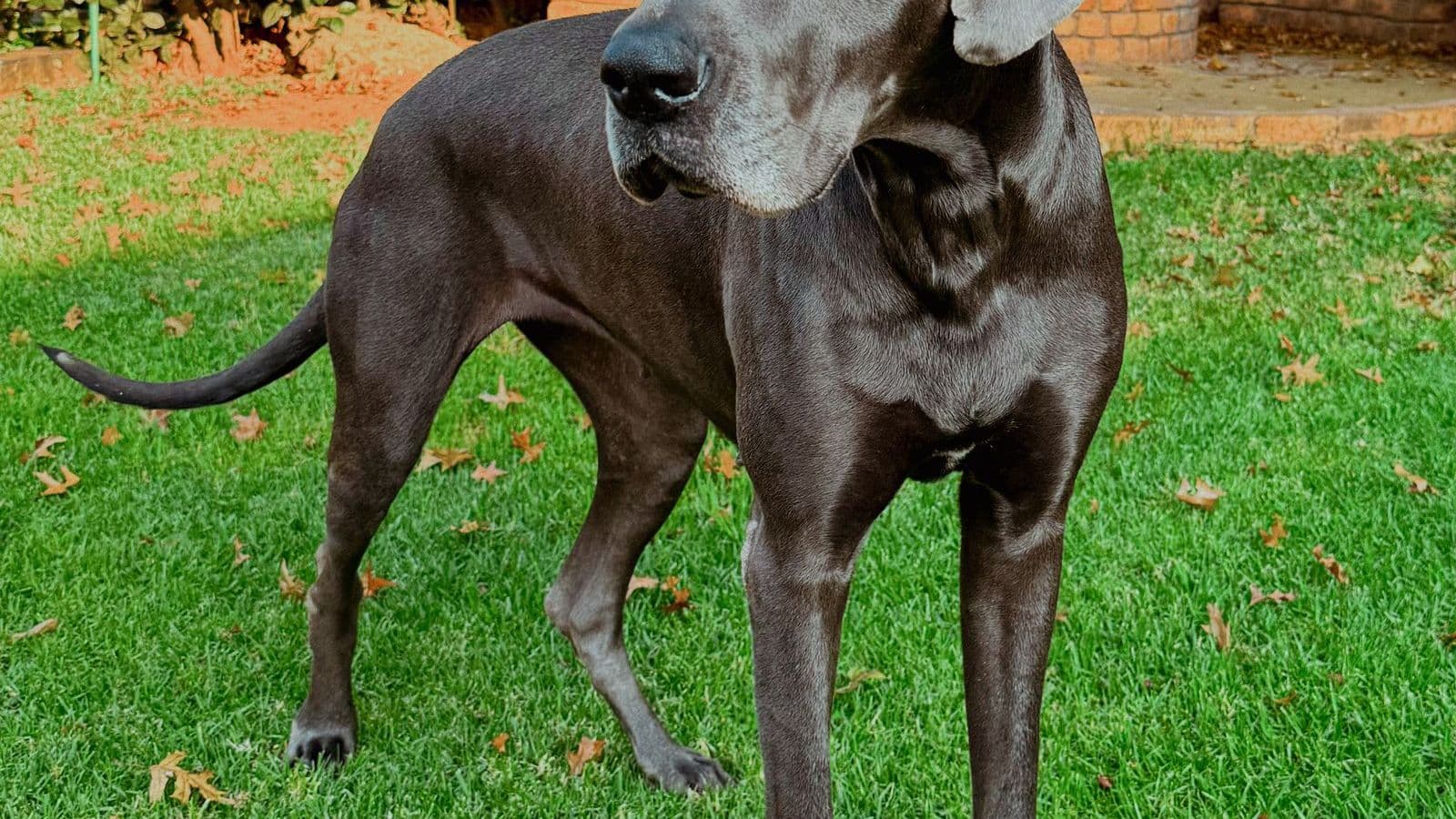
With most breeds, a training mistake is an inconvenience you fix later. With a Great Dane, the same mistake grows into a 150-pound problem that can knock a child over, drag an adult off their feet, or wreck the dog's own joints before its second birthday. Everything about this breed's training is governed by scale, because every habit you tolerate in the puppy grows right along with the dog.
Bred in Germany to hunt wild boar and later refined into the gentle "Apollo of dogs," the Great Dane matures into a 110 to 175 pound adult and lives only 7 to 10 years. The owners who struggle are rarely lazy. They misjudge the timeline, and by the time a problem is obvious, the dog is too big to muscle through it. These are the eight mistakes that do the most damage.
1. Waiting to start training
The most dangerous mistake with this breed is treating the young puppy like it has time. A Great Dane can gain 100 pounds in its first year, and the behaviors you ignore at 30 pounds are the same behaviors you cannot physically stop at 150. Owners who wait until the dog is "older" discover that older means stronger than they are. Start at 8 weeks with name recognition, sit, down, and calm greetings. The goal is simple: every essential manner should be installed while the dog is still small enough to lift off the couch.
2. Allowing jumping
A bouncing 30-pound Dane puppy greeting you at the door is adorable, which is exactly why the habit survives. That same greeting at 150 pounds can hospitalize a child or an elderly relative. Four-on-the-floor greetings must be non-negotiable from the first week home. Ignore the puppy when it jumps, reward heavily the instant all four paws touch the ground, and brief every guest to do the same. One visitor who squeals and pets the jumping puppy undoes a week of work, and with this breed you do not have weeks to spare.
3. Over-exercising during growth
Great Dane growth plates do not close until 18 to 24 months, and the breed's rapid growth makes the joints exceptionally vulnerable during that window. Running on pavement, repeated stairs, jumping from cars, and rough high-impact play cause damage that lasts a lifetime, including early arthritis. Well-meaning owners who try to "tire out" a giant puppy with mileage are the usual culprits. Keep exercise to flat-ground walking, gentle play, and free movement on soft surfaces until maturity. A bored Dane puppy needs mental work and training games, not distance.
4. Skipping leash training
An adult Great Dane that pulls does not have a walking problem, it has a physics problem. The dog outweighs many of its handlers and can pull an adult off their feet or break free entirely. At that point walks simply stop happening, which makes every other behavior worse. Loose-leash walking has to be solid before 12 months, while you can still win a disagreement. Use stop-and-stand the moment the leash tightens, pay generously for slack, and fit a front-clip harness early. Owners who skip this end up with a dog they cannot safely exercise.
5. Letting leaning become knocking over
Danes lean. It is one of the breed's signature affections, a full-body press against your legs. At 40 pounds it is sweet, at 150 it staggers adults and flattens children, and the dog cannot tell the difference between you and your frail visitor. Decide your rule early and hold it. If you allow leaning, accept that the adult will lean its entire weight on everyone. If not, teach an incompatible default like sitting beside you for affection, and reward it every time. Ambiguity is the real mistake, because the dog will always resolve ambiguity in favor of leaning.
6. Using harsh methods on a sensitive giant
People assume a dog this size needs a heavy hand. The opposite is true. Great Danes are among the most emotionally sensitive large breeds, and harsh corrections produce anxiety rather than obedience. An anxious 150-pound dog is genuinely difficult to live with, and the fallout includes fear of the very handler the dog should trust. The breed responds beautifully to calm, confident, reward-based training. If your Dane is not listening, the answer is better rewards, shorter sessions, and clearer criteria, never intimidation.
7. Neglecting socialization because the puppy seems easygoing
Great Danes carry guardian heritage, and an under-socialized giant can become fearful of strangers, dogs, or new places. Fear in a dog this size is a serious liability: a spooked Dane can bolt through a fence or knock down whatever stands between it and the exit. The socialization window closes around 16 weeks, long before the dog looks anything like its adult self, which lulls owners into postponing. Expose the puppy positively to varied people, surfaces, sounds, and calm vaccinated dogs early and often, so the adult becomes the stable, confident giant the breed should be.
8. Ignoring the counter-surfing reach
A standing Great Dane reaches kitchen counters, dining tables, and most shelves without jumping, so every unattended plate is a training session in stealing. Once the dog learns that counters pay, the habit is nearly impossible to extinguish, because the reward is enormous and arrives at random. Prevention beats cure here: never leave food accessible during the first two years, train a rock-solid "leave it" and "off," and feed the dog before family meals. Management is not cheating. With this much reach, it is the only strategy that works.
What works with Great Danes
The counter-program to all eight mistakes is the same: front-load everything. The breed is gentle, biddable, and genuinely wants to cooperate, so the training itself is not hard. The timing is.
- Start at 8 weeks and treat the first six months as your only real window.
- Install four-on-the-floor greetings, loose-leash walking, "off," and "leave it" before the dog reaches half its adult weight.
- Protect the joints until 18 to 24 months: flat ground, soft surfaces, no forced running.
- Socialize heavily before 16 weeks.
- Use reward-based methods only, in short, upbeat sessions.
- Set the leaning rule on day one and enforce it with everyone.
Do this and the payoff is enormous: a calm, mannerly, magnificent companion whose size becomes a delight instead of a hazard. TailorPup's Great Dane plan front-loads exactly these behaviors, structures exercise around growing joints, and paces the whole program to the giant-breed timeline.
Frequently Asked Questions
When should I start training a Great Dane puppy?
At 8 weeks, the day it comes home. The giant-breed window is shorter than it looks: a Dane can pass 100 pounds by 10 months, so manners must be installed while the dog is still physically manageable. Waiting for maturity is the single most common cause of unmanageable adults.
How much exercise does a Great Dane puppy need?
Less than most owners think. Two or three moderate flat-ground walks plus gentle free play is plenty before maturity. Avoid running on hard surfaces, stairs, and jumping until 18 to 24 months, when the growth plates close. Fill the gap with training games and scent work instead.
Are Great Danes hard to train?
No. They are attentive, food-motivated, and eager to please. The difficulty is not the learning, it is the consequence of skipping it. An untrained small dog is an annoyance. An untrained Great Dane is a safety issue, which is why early, consistent training matters so much.
Start your Great Dane's plan at tailorpup.com →
Related: How to Train a Great Dane · Leash Pulling · Recall Training