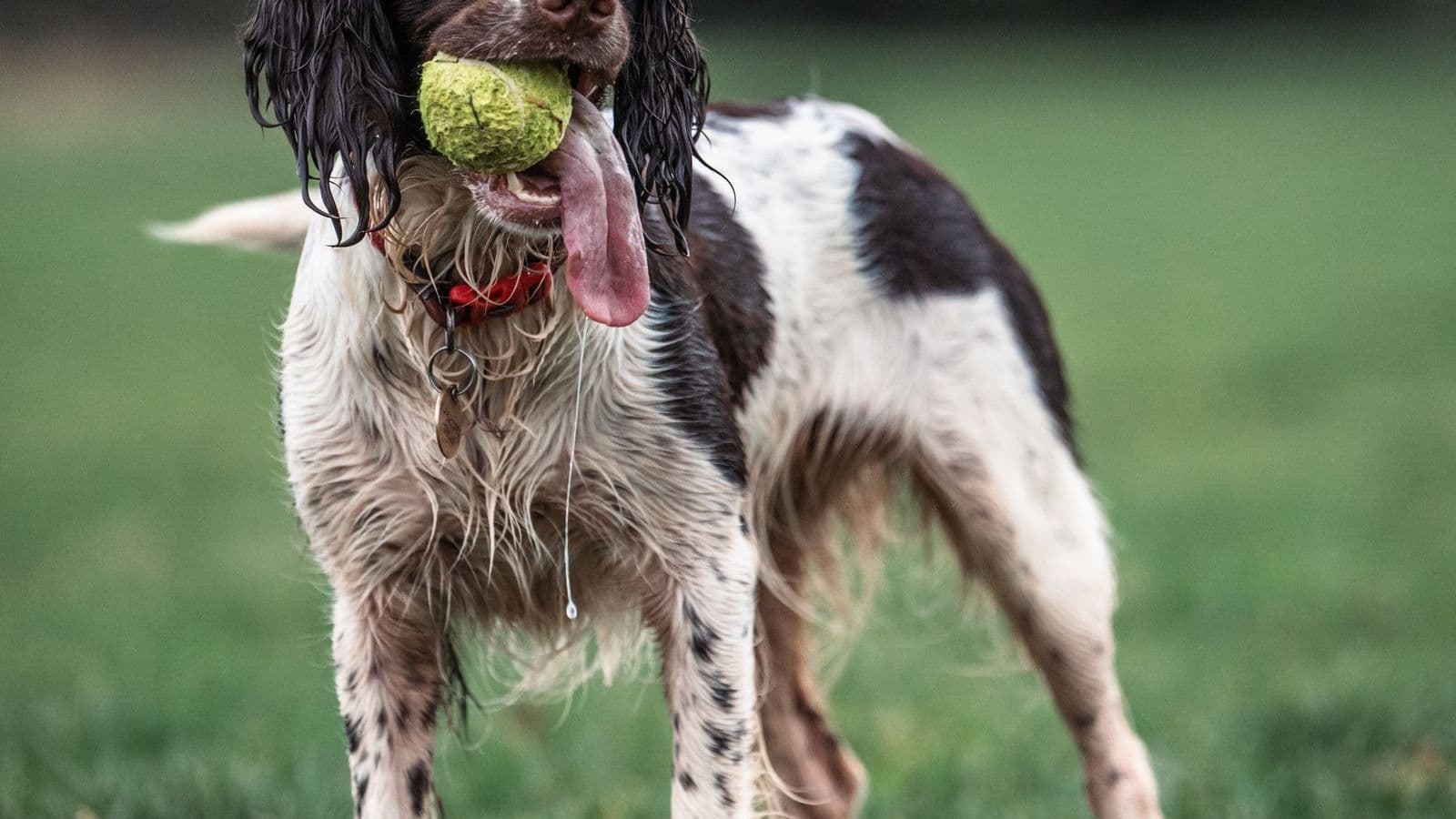
The English Springer Spaniel is a biddable, eager-to-please flushing gundog that is genuinely easy to train when its needs are met. It is affectionate and bright, but it is a working dog with real energy, a strong bird-and-scent drive, and a close bond that can tip into separation anxiety. Most problems come from underestimating the working-dog side of this friendly breed. Here are the six mistakes that cause the most trouble, and what to do instead.
1. Underestimating exercise needs
Springers are working gundogs needing 60 to 90 or more minutes of vigorous daily exercise, and field lines need even more, while an under-exercised Springer becomes destructive, anxious, and may develop obsessive behaviors. Owners who picture a calm family pet are caught out. Provide real daily activity, because walks alone are not enough, and the same dog is settled and pleasant at home.
2. Skipping independence training
The people-focused Springer is genuinely prone to separation anxiety, and owners who keep it constantly at their side create the problem. The devotion tips into distress when alone. Start independence training in puppyhood, calm alone time gradually extended, build tolerance before the attachment hardens into anxiety, and teach the dog that being left is safe and ordinary.
3. Harsh handling
Springers are sensitive and bond closely, and harsh corrections cause distress and can create lasting fearfulness. Owners who try to be firm damage a soft-natured dog. Reward-based training is essential and far more effective, so keep your tone warm and encouraging, make cooperation rewarding, and protect the trusting nature that makes the Springer such a willing partner.
4. Not managing the bird and scent drive
As flushing dogs, Springers chase birds and follow scents, which overrides recall, and owners who trust off-leash too early lose the dog. The drive outcompetes a half-built cue. Use a long line in open areas for months, allow scheduled sniff breaks to satisfy the nose, and build recall patiently before granting any real off-leash freedom.
5. Confusing field and show lines
Field-bred Springers have much higher drive and energy than show-bred ones, and owners who get a field-line dog expecting a calm companion are quickly overwhelmed. The mismatch is severe. Know which line you have, match the exercise and engagement accordingly, and plan for a serious working dog if you have a field Springer rather than a mellower show one.
6. Long daily isolation
The bonded Springer struggles alone for long periods, becoming anxious and destructive. Owners with long absences and no plan create real distress. Springers suit active homes where they are well-exercised and not isolated all day, so arrange company, exercise, and enrichment around any absences rather than leaving this attachment-driven breed alone for long stretches.
7. Overexcitement at greetings and walks
Springers are enthusiastic by nature, and a dog that jumps, spins and pulls gets rewarded whenever you react. The excitement builds on itself. Wait calmly for the dog to settle before clipping the lead or opening the door, reward four paws on the floor, and keep greetings low-key. Practice at the door and at the start of walks until calm becomes the habit.
8. Letting the nose take over
A Springer on a scent can ignore you completely, and a half-trained recall will not hold. The dog is not being disobedient, it is following instinct. Build recall on a long line with high-value rewards and practice around increasing distractions. Give the nose legitimate work through scent games so the dog has an outlet.
9. Skipping ear and coat handling
Springers have long drop ears and a feathered coat that need regular checks and brushing. A dog not used to handling will resist. Start in puppyhood with short, rewarded sessions, so grooming and vet checks are easy.
10. Under-exercising a working spaniel
A Springer is built for hours of activity, and a dog with too little exercise becomes restless, destructive or noisy. Provide daily runs, retrieve games and scent work, plus short training sessions. Mental exercise matters as much as physical.
A realistic weekly routine
A Springer week should include a long walk or run most days, plenty of chances to use the nose, and two or three short training sessions focused on recall, loose-leash walking and settling. Add a retrieve game, a scent search or a puzzle feeder, and practice calm separations so the dog is comfortable being left.
What works with Springers
Provide substantial daily exercise, front-load independence training, use gentle methods, manage the bird drive with a long line, know your dog's line, and avoid long isolation. The common thread is respecting a sensitive, high-energy gundog: meet the energy, build independence, and go gently, and the Springer is a brilliant, affectionate, capable companion.
TailorPup's Springer plan schedules adequate exercise, front-loads independence training, and channels the bird drive productively.
Start your Springer's plan at tailorpup.com →
Related: How to Train an English Springer Spaniel · Recall Training · Leash Pulling