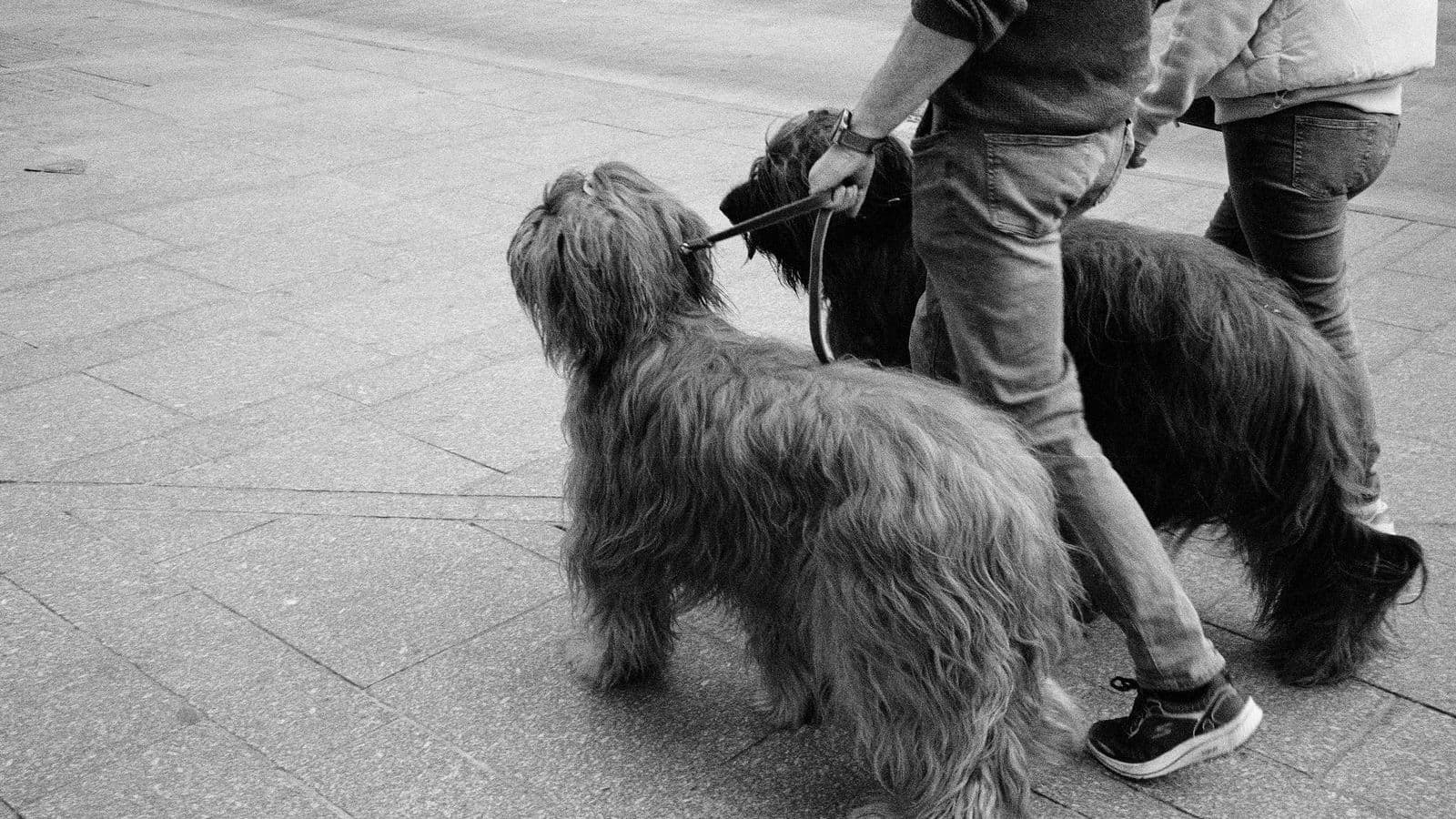
The Briard is an ancient French herding dog, famously described as "a heart wrapped in fur": intelligent, deeply devoted, and quietly protective of its family. Those last two traits, the guardian instinct and a working dog's energy, are behind almost every training problem owners run into. Get socialization and stimulation right and the Briard is a loyal, capable partner. Here are the five mistakes that cause the most trouble, and what to do instead.
1. Under-socializing the guardian instinct
The Briard is naturally watchful and protective, and without heavy early socialization that instinct curdles into suspicion and reactivity toward strangers and other dogs. Owners charmed by a confident, aloof puppy often skip the work, then face a large herder that barks and lunges on walks. Socialize broadly and positively throughout puppyhood, and keep exposing the adult to new people and places. Our reactivity guide covers counter-conditioning if wariness has already set in.
2. Underestimating exercise and mental needs
This is a true working breed with stamina and a busy mind, and the calm house dog only appears once both are satisfied. A Briard left under-exercised and under-stimulated invents its own jobs: herding the family, chewing, barking, patrolling. Give it a solid hour or more of real daily activity plus training, puzzle work, or a dog sport, and the same dog settles beautifully.
3. Suppressing the herding drive
Briards were bred to move and guard livestock, so they may circle, nip at heels, and chase moving children, bikes, and pets. Owners who simply punish this drive end up with a frustrated, sneaky dog. Channel it instead into structured games, herding-style activities, and a reliable "leave it" cue, so the instinct has a legitimate outlet rather than being bottled up.
4. Skipping grooming desensitization
The Briard's long, profuse coat mats quickly and needs regular brushing, and a dog that was never taught to accept handling turns grooming into a wrestling match. Owners who skip this end up with a matted, stressed dog and painful sessions. From puppyhood, pair brushing and paw handling with treats in short sessions, so grooming stays a calm lifelong routine.
5. Harsh handling
Beneath the bulk and the boldness, the Briard is sensitive and shuts down under harsh corrections or a frustrated handler. Pressure damages the trust this devoted breed offers and makes it anxious rather than obedient. Use reward-based methods only, keep sessions upbeat, and the Briard's intelligence and loyalty do the rest.
What works with Briards
Socialize heavily to keep the guardian instinct sensible, meet the real exercise and mental needs, channel the herding drive into games and sport, condition grooming early, and handle gently. The throughline is respecting an intelligent, protective working dog: cover those bases and the Briard becomes the devoted, loyal, capable companion the breed is famous for, a heart wrapped in fur.
TailorPup's Briard plan front-loads socialization and counter-conditioning, channels the herding drive, schedules adequate exercise, and includes grooming desensitization.
Start your Briard's plan at tailorpup.com →
Related: How to Train a Briard · Reactivity Training · Recall Training