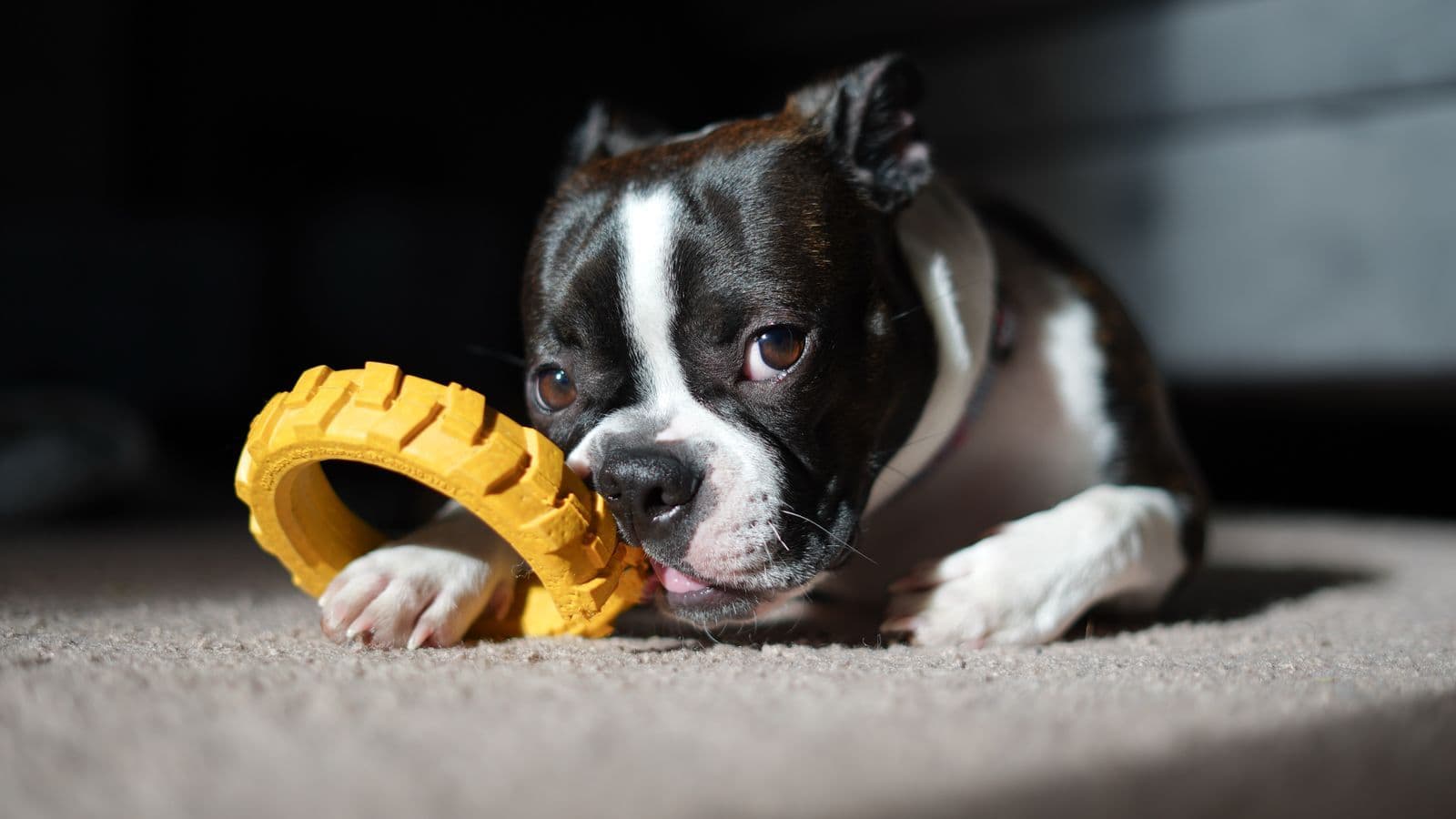
The Boston Terrier is among the easiest small breeds to train : intelligent, eager to please, and famously friendly, the dapper "American Gentleman" of the dog world. Unusually, most mistakes with this breed are health-related rather than behavioral. The Boston's brachycephalic face, milder than a Pug's but real, means the airway shapes how you must train, exercise, and equip this dog, and forgetting that is where owners go wrong.
The rest of the list is management : a handful of small errors that can turn an easy, cheerful dog pushy or bored. Almost every Boston problem comes from one of two roots, forgetting the airway, or under-engaging a bright, playful mind. Here are the six mistakes that cause the most trouble, and what to do instead.
1. Exercising in the heat
The Boston's shortened muzzle restricts its cooling system : dogs cool by panting, and a compromised airway cannot move enough air to shed heat efficiently. That makes warm-weather exercise a genuine medical risk, heat stress escalates quickly in brachycephalic breeds and can become an emergency in minutes. Build the safety habits from day one :
- Exercise in the cool hours only, early morning and evening, in warm seasons.
- Watch for the warning signs : heavy panting, a wide gape, slowing, seeking shade.
- Keep water available during any activity, and stop early rather than late.
- Swap hot-day exercise for indoor brain work, it tires the dog safely.
This is not pampering. For a Boston, heat management is a core part of responsible training, twelve months a year in warm climates.
2. Using a collar instead of a harness
An airway that already works harder than average should never take leash pressure. A Boston that pulls into a flat collar, or gets a habitual leash correction on one, is loading strain directly onto a compromised throat, and the coughing, gagging, and wheezing that follow are the airway complaining. The fix costs twenty dollars : a well-fitted Y-shaped harness that spreads pressure across the chest and shoulders and leaves the neck alone. Keep a collar for the ID tag if you like, but the leash clips to the harness, every walk, for life. Pair it with loose-leash training and the equipment question disappears entirely.
3. Inconsistent house training
Bostons house train more easily than most small breeds, the trainability is real, but a small bladder still sets the physical constraints, and inconsistency still produces the classic small-dog failure pattern : tiny accidents that go unnoticed, a schedule that drifts, and a habit that half-installs. Run the protocol properly and the breed's cooperativeness does the rest :
- A strict schedule : out after waking, after meals, after play, before bed.
- Supervision or confinement between trips during the learning weeks.
- A party-level reward at the spot, within two seconds of finishing.
- Calm, odor-neutralizing cleanup of accidents, never punishment.
Treat house training as seriously as you would with a Great Dane, and the Boston finishes it faster.
4. Harsh handling
The Boston is intelligent and genuinely sensitive, it reads tone and body language closely, and harsh corrections buy you nothing but shutdown. A scolded Boston does not become obedient, it becomes worried, and the eager, sunny temperament that defines the breed dims fast under pressure. Owners who "get firm" with this soft-natured dog are solving the wrong problem with the wrong tool.
Reward-based training is both more effective and what the breed emotionally needs : warm tone, treats and play as payment, short cheerful sessions. Handled this way, a Boston brings honest enthusiasm to training for its whole life, which is exactly the resource you want to protect.
5. Under-stimulating a smart, playful breed
The tuxedo and the compact size read as "low-maintenance apartment dog", and the Boston is apartment-friendly, but low-maintenance it is not. This is an energetic, clever, comedy-driven breed, and without enough activity and mental work it invents its own programming : demand barking, chewing, and mischief engineered to make you react. Budget 30 to 60 minutes of daily activity plus real brain work.
Bostons are outstanding trick dogs, spin, roll over, fetch by name, and love puzzle feeders and find-it games. Ten minutes of trick training does more for evening calm than an extra walk. A stimulated Boston is the settled gentleman of the brand image; a bored one is a small chaos engine.
6. Allowing demand behaviors
Boston friendliness has a failure mode : pushiness. This is an enthusiastic, people-oriented dog that will absolutely bark at you for attention, paw at your leg during dinner, and pester guests, if any of it works. Every "okay fine" installs the demand deeper, and the breed is smart enough to build an entire repertoire of successful nags. Hold the line kindly : demands earn nothing, not even annoyed eye contact, while calm behavior makes attention and treats appear. Ask for a simple sit before anything the dog wants, attention, the leash, the food bowl, so politeness becomes the currency. The friendliness stays; the pushiness never installs.
What works with Boston Terriers
Protect the airway in everything, cool-hours exercise, a harness instead of a collar, and honest heat vigilance. Then engage the mind : consistent house training, reward-based methods only, a daily budget of activity and brain games, and a polite no to demand behaviors.
The common thread is a breed that is easy everywhere except the two places owners forget to look, the airway and the boredom. Cover both, and the Boston delivers exactly what the nickname promises : a well-mannered, funny, endlessly companionable American Gentleman.
TailorPup's Boston Terrier plan calibrates every session to breathing safety, includes a full house-training protocol, and feeds the clever mind with the trick-training the breed loves.
Frequently Asked Questions
Are Boston Terriers easy to train?
Yes, among the easiest small breeds : smart, eager, and handler-focused. Reward-based methods produce fast results. The genuine challenges are health management (heat, airway) rather than the training itself.
Can Boston Terriers handle hot weather?
Poorly. The shortened muzzle limits cooling, so warm-weather exertion is a real risk. Exercise in the cool hours, watch for heavy panting, and switch to indoor mental work on hot days.
Should a Boston Terrier wear a collar or a harness?
Harness, always, for leash work. Neck pressure strains an already-restricted airway. A Y-front harness protects the throat; the collar can stay as jewelry for the ID tag.
Why does my Boston Terrier bark at me?
Almost always demand barking that has been rewarded : barking earned attention, so barking continued. Stop paying it, reward quiet and calm instead, and require a sit before anything the dog wants.
Start your Boston Terrier's plan at tailorpup.com →
Related: How to Train a Boston Terrier · Recall Training · Leash Pulling