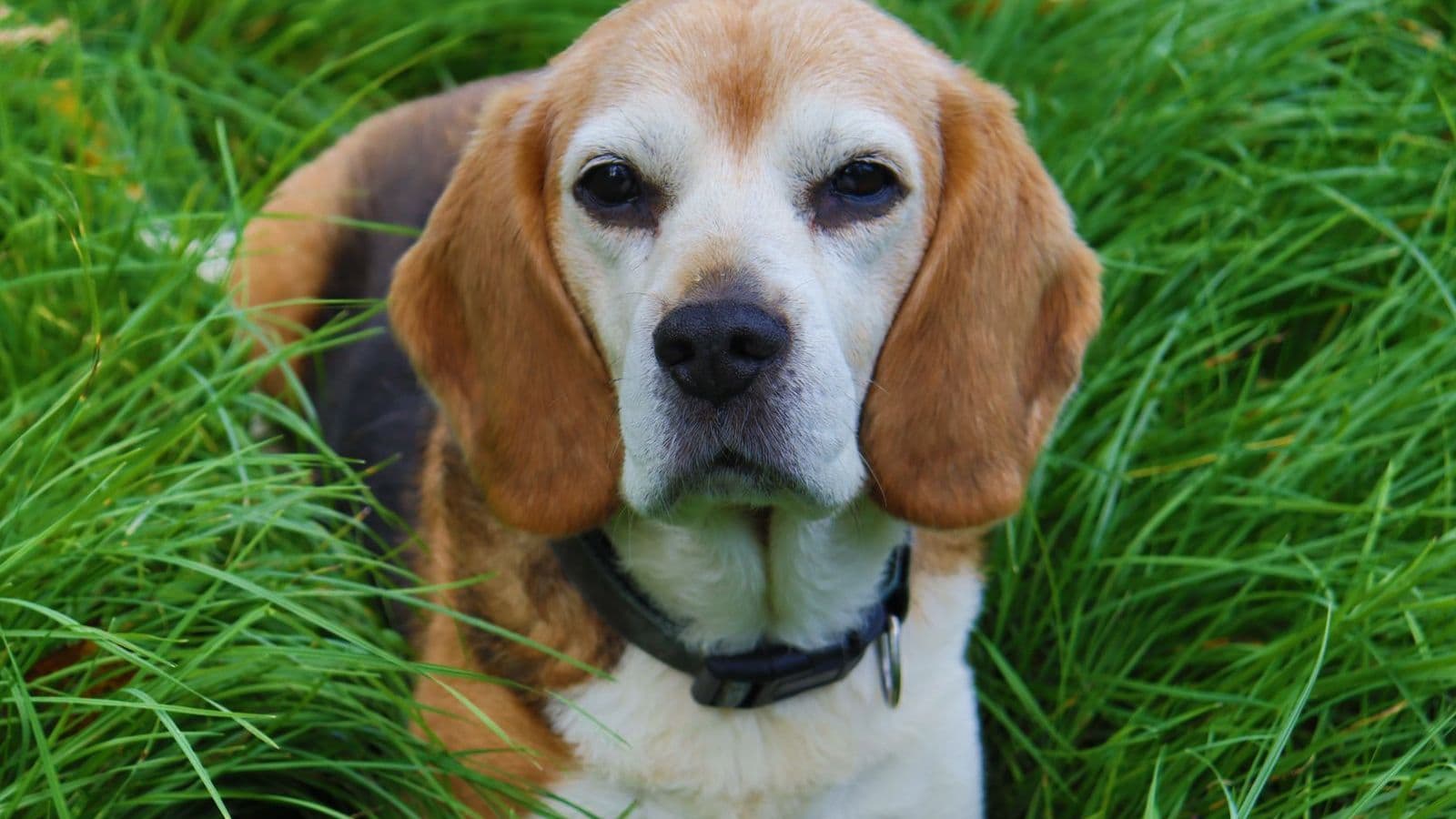
If you've ever called your Beagle at the park while they followed a smell trail in the opposite direction, you understand the breed. Beagle training failures are rarely about defiance or stupidity. They're about working against 600 years of selective breeding for scent trailing in pack environments. The mistakes below are the consistent patterns that produce unmanageable Beagles, and the fixes that actually work.
1. Trying to train off-leash reliability in open areas
Most Beagles cannot be safely off-leash in unfenced spaces, regardless of how much training you do. The breed's scent drive is genetic. When a Beagle's nose locks onto a trail, processing of auditory information (including your voice) is measurably reduced. You're not competing with disobedience. You're competing with hardwired neural priority.
Accept this. Use a 30-foot long line in any open area. Off-leash freedom in fenced spaces is achievable. Off-leash in parks, trails, or open fields is a safety risk for most Beagles. Owners who try to push past this lose their dogs. Beagle rescue organizations exist largely because of owners who refused to use long lines.
2. Using praise as the primary reward
Beagles work for food, not for "good boy." The breed was bred to trail without constant handler interaction, the reward was the hunt itself. They don't share the Labrador's eagerness to please.
Use small, high-value food rewards during training (cheese, freeze-dried liver, chicken). Praise is fine as a secondary reinforcer but won't drive learning by itself. Owners who try to praise-train a Beagle make minimal progress and conclude the breed is untrainable. The fix is reward type, not effort.
3. Calling them for negative outcomes
Beagles are smart enough to learn that "come" predicts bath, vet, end of fun, going inside. Once they associate recall with negative outcomes, they actively ignore it. The scent drive then becomes the perfect excuse to disengage.
Never use the recall word for anything negative. Walk over to your Beagle for ending play, baths, or end of outdoor time. Use a different word entirely. Reserve "come" or your chosen recall word for jackpot rewards: best treat in your pocket, every time. See our recall training guide for the full method.
4. Insufficient nose work
A bored Beagle finds a job. Usually the job is destruction, escape attempts, or howling. The breed needs to use their nose daily, not as enrichment but as a basic need.
15-20 minutes of nose work daily. Hide treats around the house, add a "find it" cue, build up to formal nose work. Scatter feeding (sprinkling meals in grass to forage) tires a Beagle effectively. Without nose work, you're suppressing a genetic drive. With it, you're working with the breed.
5. Letting them pull on leash with no plan
Beagles pull because their nose pulls them. Every interesting smell becomes a reason to drag you sideways. Yelling "heel" accomplishes nothing because you're competing with the scent drive.
The stop-and-stand method works: the instant the leash tightens, you freeze. Wait for slack. Resume when loose. Combine with permitted "sniff breaks" during walks (5 minutes structured walking, 2 minutes free sniffing) to honor the breed's needs. A front-clip harness helps mechanically. Full method in our leash pulling guide.
6. Punishing the howl
Beagles bay. They were bred to. The Beagle vocalization alerted distant hunters during scent trails. You cannot eliminate the behavior entirely without significant suppression damage.
You can reduce it. Address triggers (windows, neighborhood sounds, alone time). Teach a "quiet" cue. Provide adequate exercise and mental work (a tired Beagle barks less). But expecting silence is unrealistic and trying to enforce it through punishment damages the dog without solving the issue.
7. Free-feeding
Beagles are food-driven and prone to obesity. Free-feeding combined with their food motivation produces overweight Beagles, which compounds into joint problems (the breed is short-legged and prone to back issues), reduced lifespan, and diabetes risk.
Measured meals only. Twice daily. Use a portion of the daily ration as training rewards. A Beagle 15% overweight is dramatically less healthy than a Beagle at proper weight, and weight loss in the breed is harder than weight prevention.
8. Skipping crate training
Beagles are escape artists. They dig, climb, slip out doors, and follow scent trails for miles. A Beagle loose in a house without supervision will find counter food, raid trash, and destroy household items. A Beagle loose in a yard will dig under fences.
Crate training is essential. Feed meals in the crate. Use it for naps. Never as punishment. By 6 months, most Beagles tolerate or prefer the crate when given the option. Owners who skip this end up with adult Beagles who cannot be left unsupervised, ever.
9. Expecting personality changes with training
Beagles are sociable, food-driven, nose-led, vocal scent hounds. Training does not change these traits. It channels them. Owners who expect their Beagle to become a quiet, off-leash-reliable, indifferent-to-smells dog after 12 weeks of training will be disappointed.
Successful Beagle ownership accepts the breed for what it is. A trained Beagle is a Beagle whose drives have appropriate outlets, whose food motivation is channeled into reward-based work, whose vocal needs are managed, and whose recall works in fenced areas but isn't trusted in open spaces. Trying to make a Beagle into a Lab produces frustration on both sides.
What works with Beagles
Pattern across all 9 mistakes: Beagles need food-based positive reinforcement, structured nose work, realistic off-leash expectations, and acceptance that the breed has hardwired drives that cannot be eliminated. Owners who work with these drives have devoted, sociable, surprisingly trainable companions. Owners who fight them have unmanageable scent hounds.
TailorPup's Beagle training plan front-loads recall work with appropriate expectations, builds daily nose work into the schedule, uses food-based reinforcement throughout, and treats the long line as a permanent safety tool rather than a temporary aid.
Start your Beagle's plan at tailorpup.com →
Related: How to Train a Beagle · Recall Training · Leash Pulling Solutions