Chewing · Updated June 2026
How to stop a dog
chewing everything.
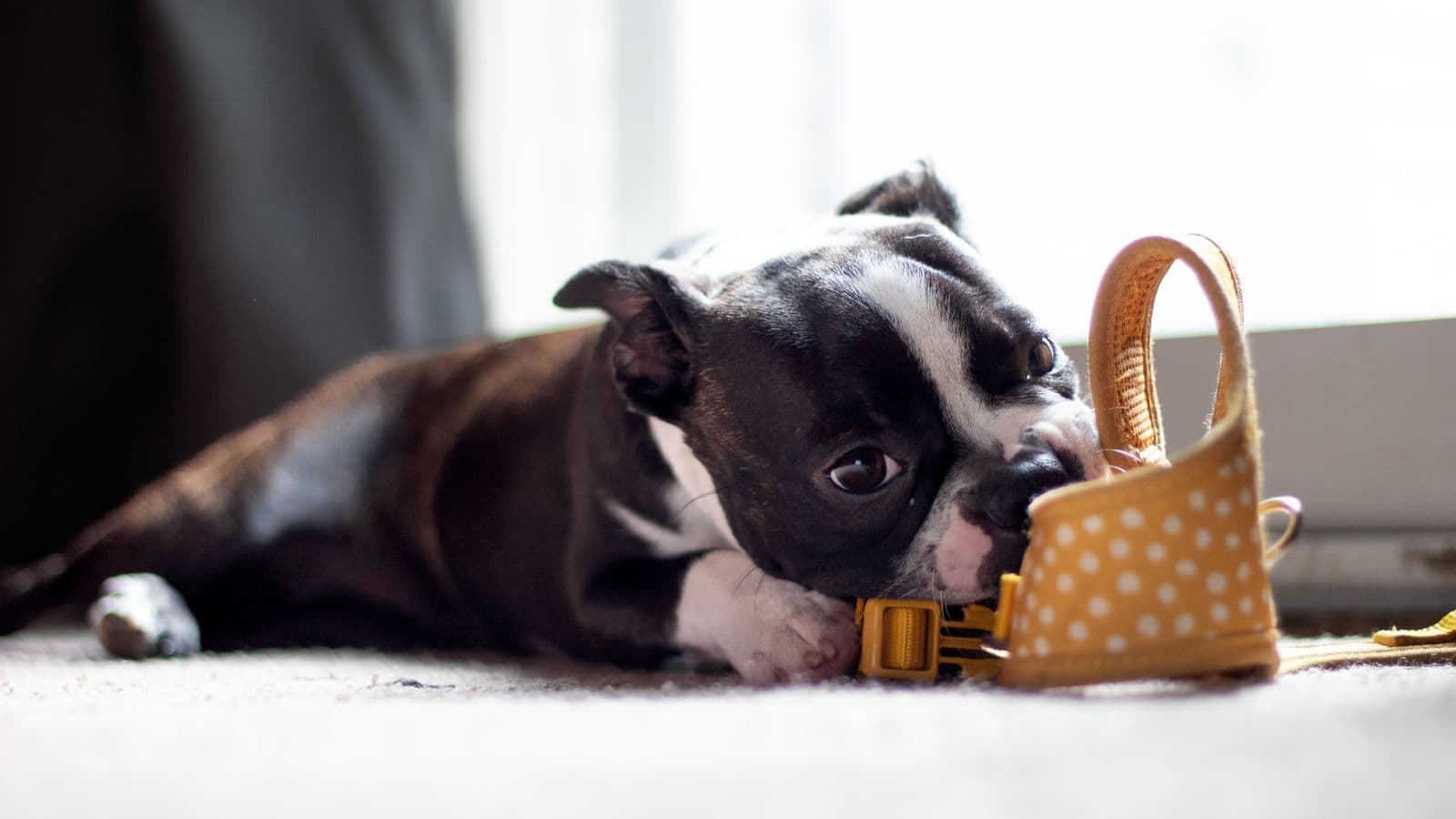
Chewing is normal, necessary dog behavior, puppies teethe and adult dogs chew to relax and explore. The job is not to stop chewing, it is to move it onto the right things. Here is how, without a daily battle over the furniture.
Quick answer
To stop a dog chewing the wrong things, manage the environment, redirect to legal chews, and meet the dog's needs, rather than punishing after the fact. Put away anything you do not want chewed, and use a crate or puppy pen when you cannot supervise so the dog cannot rehearse chewing the sofa.
Provide a rotation of safe, appealing chew toys and reward the dog for using them. When you catch the dog chewing something wrong, calmly swap it for a legal chew and reward the swap, do not chase or scold, which can turn it into a game or trigger guarding.
Puppies chew hardest while teething, up to around six months, so expect it and offer cooling chews. Most chewing problems come down to boredom or too little exercise, so add a proper walk, training and food puzzles. Punishing chewing after you find the damage does not work, the dog cannot connect the telling-off to an act that is long over.
01 · The method
Seven steps to save
your furniture.
You will not train a dog to stop chewing, it is a biological need. You will train them to chew the right things, by controlling what they can reach and making legal chews the best option in the room.
01
Know why dogs chew
Puppies chew to soothe teething gums, and dogs of all ages chew to relieve boredom and stress and to explore the world with their mouths. It is normal and necessary, not spite. Pinpointing the reason, teething, boredom, or anxiety, tells you which of the steps below to lean on.
02
Manage and dog-proof
The fastest fix is preventing access. Pick up shoes, cables, remotes and anything chewable, and use a crate, pen or closed door when you cannot supervise. A dog that never gets to chew the table leg never builds the habit in the first place.
03
Provide better chews
Offer a rotation of safe, durable chew toys and edible chews suited to the dog's size, and swap them every few days so they stay novel. The legal chews need to be more appealing than the furniture, variety and the right texture do that.
04
Reward chewing the right things
Catch the dog chewing a toy and praise or reward it, so the behavior you want gets reinforced rather than ignored. Many owners only react to wrong chewing, train the dog by noticing and paying the right chewing too.
05
Redirect, never punish
When you find the dog chewing something off-limits, calmly trade it for a legal chew and reward the swap. Do not chase the dog (it becomes a game) or punish after the fact (the dog cannot link it to the act, and it can create resource guarding). Trade up, do not tell off.
06
Burn the energy
A huge share of destructive chewing is simply boredom and unspent energy. Add a real walk with sniffing, a few minutes of training, and food puzzles or a stuffed toy. A satisfied dog chews to relax, a bored one chews to cope.
07
Ride out teething
Puppies chew hardest from around 3 to 6 months as adult teeth come in. Expect it, manage tightly, and offer cooling chews like a wet frozen flannel or a chilled toy to soothe sore gums. It passes, your job is to get through it without the puppy rehearsing bad targets.
Most-searched questions
The questions people
actually ask.
Why does my dog chew everything?
Because chewing is a normal need, not bad behavior. Puppies chew to ease teething, and dogs of any age chew out of boredom, stress, or to explore. If the chewing is heavy, it usually points to too little exercise and enrichment, so the fix is part management, part meeting the dog's needs.
How do I stop a puppy chewing while teething?
You manage it rather than stop it, teething chewing is unavoidable from about 3 to 6 months. Puppy-proof the space, supervise or pen the puppy, and provide cooling chews like a frozen wet flannel or a chilled rubber toy to soothe the gums. Redirect to legal chews every time, and it passes.
How do I stop my dog chewing furniture?
Prevent access first: block off rooms or crate the dog when you cannot watch, so the furniture is never an option. Make legal chews more appealing, reward the dog for using them, and add exercise. Trade, do not punish, when you catch them, punishment after the fact does not work.
Do bitter sprays stop chewing?
Bitter deterrent sprays can help on specific items like cables or table legs, but they are a support, not a solution. Some dogs ignore them. They work best combined with managing access, offering better chews, and meeting the dog's exercise and enrichment needs.
How do I stop my dog chewing when left alone?
First make sure the dog is exercised and has a long-lasting legal chew before you leave, and restrict them to a dog-proofed space. If the chewing only happens when alone and comes with other signs of distress like pacing or barking, it may be separation anxiety, which needs a gradual alone-time plan rather than more chews.
Our method & sources
Every TailorPup plan and guide uses reward-based training (positive reinforcement), the approach the American Veterinary Society of Animal Behavior (AVSAB) recommends for all dog training. Read the full science and source list on our training method page.
TailorPup is not affiliated with, endorsed by, or certified by the AVSAB. References are provided for informational purposes only and are not a substitute for advice from your veterinarian or a qualified trainer.
Get the plan built
for your dog.
Answer a few quick questions and get a personalized 12-week plan, tuned to your dog's breed, age and the behaviors you're seeing. Preview before you pay, no card.
Build my dog's planFrom $9.99/month · cancel anytime · 90-day refund