Crate training · Updated July 2026
How to crate train a dog,
the kind way.
Done right, a crate is not a cage, it is a den your dog chooses. It is the single fastest way to house-train, it prevents destruction when you can't supervise, and it gives your dog a safe place to settle. Here is the calm, reward-based method, step by step.
Quick answer
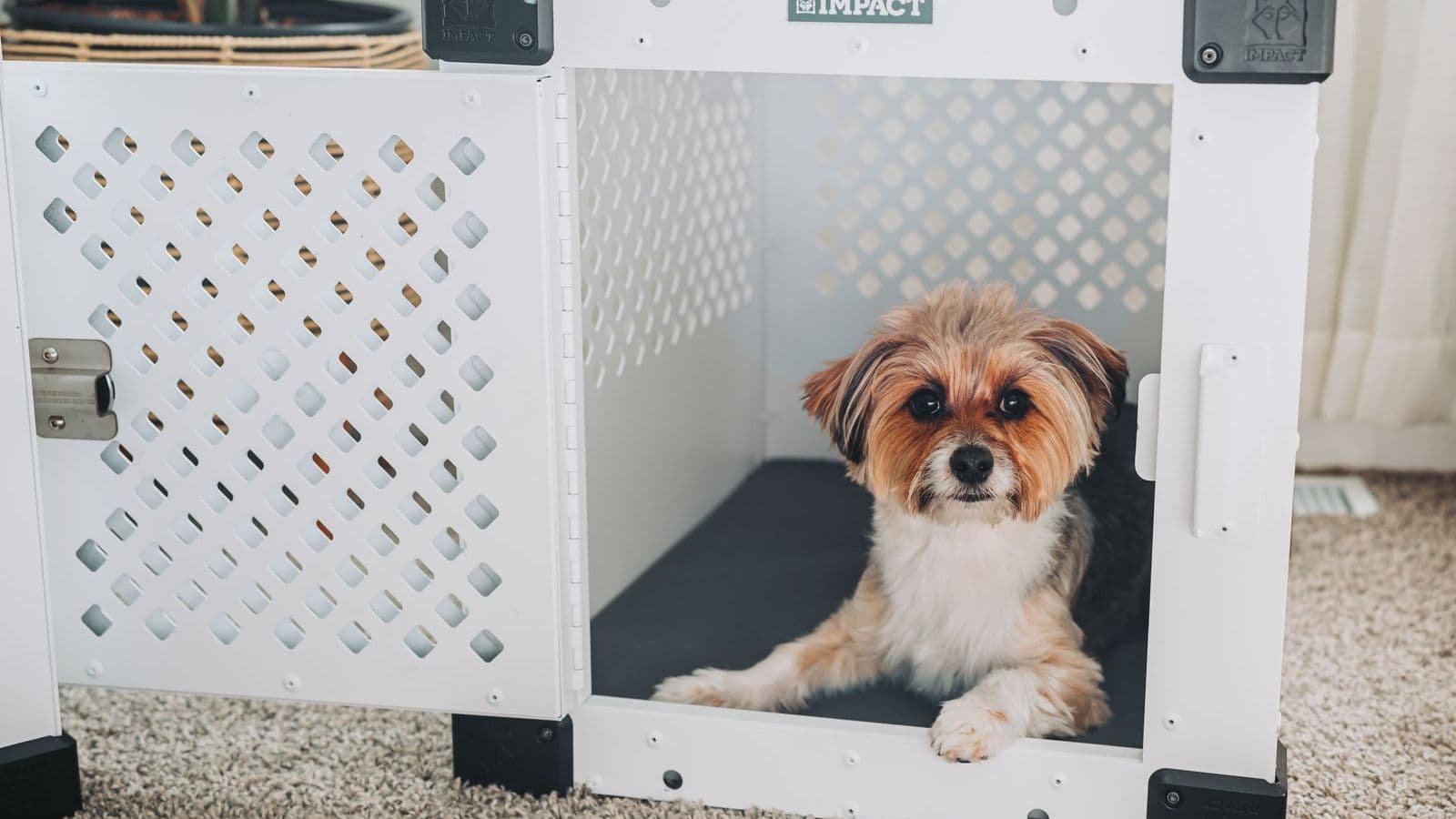
To crate train a dog, make the crate a place good things happen and never a punishment. Choose a crate just big enough for the dog to stand up, turn around and lie down. Feed every meal inside it with the door open, toss treats in throughout the day, and add a comfortable bed.
Once the dog walks in happily, close the door for a few seconds while they eat, then build duration slowly: a minute, then five, then with you briefly out of sight. Pair a calm cue like 'crate' with a treat. At night, put the crate next to your bed so a puppy is not isolated, and take young puppies out once or twice to toilet.
Keep daytime crating short, a rough guide is the puppy's age in months plus one, in hours, and never use the crate to punish. Most dogs settle within one to three weeks.
01 · The method
Seven steps to a dog
that loves its crate.
Go at the dog's pace. If they show stress at any step, back up to the previous one and spend another day or two there. Rushing is the only thing that reliably breaks crate training.
01
Pick the right size and spot
Get a crate the dog can stand, turn and lie down in, no bigger, or a puppy will toilet in one end. Use a divider that grows with the puppy. Place it in a calm corner of a room the family uses, and move it next to your bed at night so the dog is never isolated.
02
Make it inviting, never forced
Leave the door open and let the dog explore on their own. Put a soft bed inside and drop treats in when they are not looking, so the crate magically produces good things. Never push or lure a worried dog all the way in, let curiosity do the work.
03
Feed every meal inside
Put the food bowl at the back of the crate and let the dog eat with the door open. This builds a strong, daily positive association. Once they stroll in happily for dinner, you have the foundation for everything that follows.
04
Close the door for seconds
While the dog is eating or chewing, close the door for a few seconds, then open it before they finish. Slowly extend to a minute, then a few minutes, always opening before they get anxious. Calm in, calm out.
05
Add a cue and short absences
Say 'crate' as the dog goes in, then reward. Start stepping a few feet away, then out of the room for seconds, then minutes, returning while the dog is still relaxed. A stuffed food toy makes alone time in the crate feel like a treat, not a punishment.
06
Build to real, longer stays
Stretch duration gradually over one to three weeks until the dog rests calmly with the door shut while you are home, then while you are out for short trips. Always exercise and toilet the dog first, a tired dog settles, a full-of-energy dog protests.
07
Keep it positive for life
Never crate a dog as a telling-off, and respect the time limits, a rough guide is the puppy's age in months plus one, in hours, with a hard ceiling for adults of around four to six hours in the day. The crate should stay the dog's safe place, not a place they dread.
Go deeper on the hard parts
Most-searched questions
The questions people
actually ask.
How long can a dog be left in a crate?
For puppies, a rough guide is their age in months plus one, in hours, so a three-month-old can hold on for about four hours. For adult dogs, aim for no more than four to six hours during the day, with plenty of exercise, toileting and company around it. Overnight is different, most dogs sleep through once house-trained.
Should I crate my puppy at night?
Yes, and put the crate next to your bed at first. The puppy feels safe near you, you hear them stir when they need to toilet, and the closeness prevents the lonely crying that makes night one miserable. You can move the crate further away over the following weeks.
My puppy cries in the crate, what do I do?
First rule out a real need: a young puppy crying at night usually needs to toilet, so take them out calmly, then back to bed. If the need is met and they are simply protesting, avoid rewarding the noise with attention, but do not leave a distressed puppy to scream for hours. Back up a step, shorten the duration, and build it more slowly.
Is crate training cruel?
Not when it is done properly. A correctly sized, positively introduced crate taps a dog's natural den instinct and most dogs come to choose it as their safe spot. It becomes cruel only if it is too small, used for too long, or used as punishment.
How long does crate training take?
Most dogs are comfortable resting in a closed crate within one to three weeks of short, daily, positive sessions. Anxious or older rescue dogs can take longer, the pace is set by the dog, not the calendar.
What is the best way to crate train a dog?
Positive association plus tiny steps: feed meals in the crate, reserve a special chew for crate time only, keep the door open at first, then close it for seconds before minutes, and never use the crate as punishment. The best method is the one that never pushes the dog past its comfort point, going slower at the start is what makes crate training fast overall.
How do you crate train a rescue dog?
The same positive method, but slower and with more choice. A rescue may have crate history you know nothing about, so start with the door removed or tied open, let the dog discover food and chews inside on its own terms, and only add the closed door once the dog naps inside voluntarily. If the dog panics rather than protests, stop and work with a trainer, a truly crate-phobic dog can have a pen or gated room instead.
Should I crate train my dog?
For most dogs, yes, it is worth it: a positively trained crate speeds up house-training, prevents destructive habits when unsupervised, and makes travel and vet stays far less stressful. It is not mandatory though, the real requirement is a safe, defined space. If you choose not to crate, a puppy-proofed pen or room does the same job.
How do I crate train a puppy while working from home or away?
Split the day: crate sessions stay short and positive while you build tolerance, and a pen or puppy-proofed room covers the longer stretches you are busy or out. A young puppy cannot hold its bladder through a workday (age in months plus one, in hours), so plan a midday break, a dog walker, or a neighbor until the puppy is older.
Do I need a crate at all?
No, a crate is a tool, not a requirement. It speeds up house-training and prevents destruction, but a securely puppy-proofed room or pen can do a similar job. What matters is giving the dog a safe, defined space and never leaving them somewhere they can rehearse bad habits or hurt themselves.
Our method & sources
Every TailorPup plan and guide uses reward-based training (positive reinforcement), the approach the American Veterinary Society of Animal Behavior (AVSAB) recommends for all dog training. Read the full science and source list on our training method page.
TailorPup is not affiliated with, endorsed by, or certified by the AVSAB. References are provided for informational purposes only and are not a substitute for advice from your veterinarian or a qualified trainer.
Get the plan built
for your dog.
Answer a few quick questions and get a personalized 12-week plan, tuned to your dog's breed, age and the behaviors you're seeing. Preview before you pay, no card.
Build my dog's planFrom $9.99/month · cancel anytime · 90-day refund