How to Proof a Dog Training Cue in Any Environment
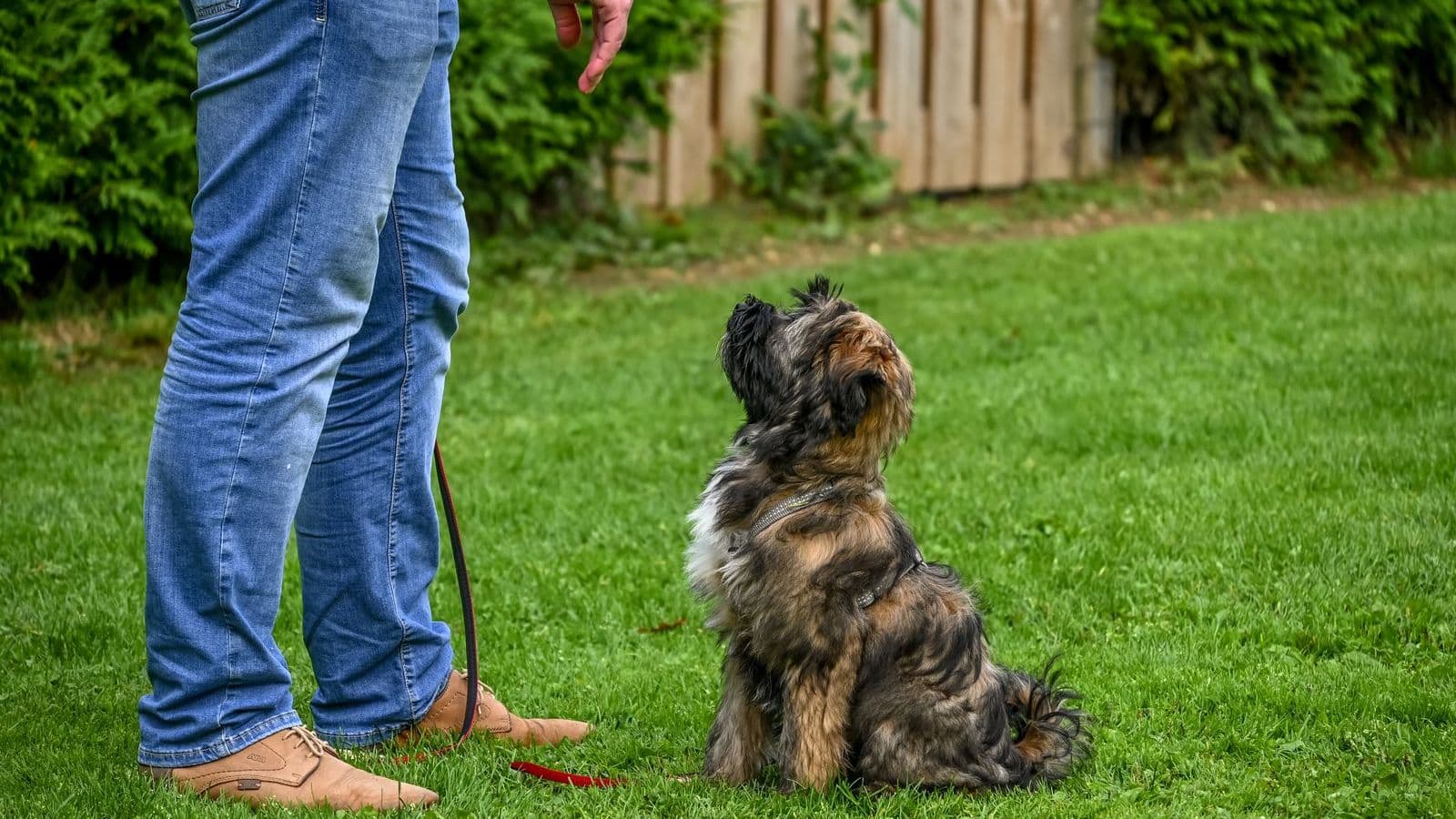
A dog that sits at home but ignores you at the park has not learned sit, it learned a place. Proofing is the process of teaching a cue to work in new places, with new distractions and from a distance. This guide gives you a clear protocol.
Written by the TailorPup team, updated October 2026. See our editorial approach.
In this article · 12 sections+
01
Why a known cue falls apart in a new place
Dogs do not generalize as well as people expect. The cue was learned along with a room, a smell, a lighting condition and your body position. In a new place, the whole picture changes.
02
The 3D framework: distance, duration, distraction
Every cue gets stronger when you raise these three variables, but one at a time.
- Distance: how far you are from the dog.
- Duration: how long the dog holds the behavior.
- Distraction: how interesting the environment is.
03
The location ladder
Move up only when the current level works nine times out of ten.
- Living room.
- Another room.
- Garden.
- Front of the house.
- Quiet street.
- Quiet park.
- Busier park, then places with dogs and people.
04
Raise the reward as you raise the difficulty
A harder place needs a better reward. Use common treats in easy places, and your dog's favorite in the hardest ones. Occasionally jackpot a great response with several treats.
05
What to do when it fails
A failure means the step was too big. Go back one rung, make it easier and rebuild. Do not repeat the cue louder or add pressure.
- Move away from the distraction or closer to the dog.
- Ask for an easy behavior and reward it.
- Try the original task again, in a slightly easier version.
06
A realistic timeline
Basic reliability across a handful of places often takes two to four weeks of regular practice. Strong distractions, such as other dogs, can take months. Progress is not a straight line, and a bad day is normal.
07
A weekly proofing plan
Choose one cue and follow it for a week.
- Day 1: three short sessions at home with new positions.
- Day 2: garden, same cue, easy distraction.
- Day 3: new room with distance of two steps.
- Day 4: front of the house, quick sessions.
- Day 5: quiet street with a high-value reward.
- Day 6 to 7: repeat the hardest level and rest.
EXAMPLE
A worked example: Maple and the stay
Maple could hold a stay for 30 seconds in the kitchen but broke it in two seconds in the garden. Her owner moved the stay to the garden with just one second of duration and no distance, rewarded generously and built up slowly.
Once the stay worked in the garden, she introduced distance in the kitchen and then moved to the street. After six weeks, Maple could stay for 20 seconds at five steps' distance in a quiet park. At each new place, she began again at the easy end.
IF IT STALLS
Troubleshooting
What to do when proofing stalls.
- The dog fails when you raise duration: go back to a shorter time with the dog closer.
- The dog fails with distance: use a longer leash and reward at the dog's position.
- The dog fails with distractions: lower the intensity and increase the reward.
- The dog succeeds at home but not outside: you skipped a rung. Add another location in between.
10
How dogs actually generalize
Dogs pay attention to the whole picture, including smells, sounds, places and your posture. A cue learned in one context may not transfer to another until the dog has experienced it in several. That is why practice in many places works better than many repetitions in one.
Generalization improves with variety: different rooms, different people, different times of day and different objects nearby. The more variation, the more flexible the behavior becomes.
11
A six-week proofing plan
Choose one cue and follow this plan, adjusting the pace to your dog.
- Week 1: practice in three rooms and with two people, with generous rewards.
- Week 2: move outside to the garden and the front of the house.
- Week 3: add distance, two to five steps, in the easiest place.
- Week 4: add duration, from a few seconds to 20 or 30 seconds, close to you.
- Week 5: practice in a quiet park with a long line.
- Week 6: add mild distractions, such as a toy or a distant person, then test in a new location.
12
A proofing checklist
Before moving on, make sure the cue is solid in these areas.
- Works in at least five different places.
- Works when you stand, sit or turn away.
- Works with a person other than you.
- Works at three different distances.
- Works with a small distraction nearby.
FAQ
Common follow-ups.
How do I know my dog is ready for the next step?+
When it responds correctly about nine out of ten times at the current level, without long delays.
Should I use treats forever?+
Not necessarily, but reward often. Over time, use treats less predictably, and use life rewards such as a walk or a toy.
What if my dog ignores treats outdoors?+
You are probably too close to the distraction. Increase the distance and try a more valuable treat.
Does this work for puppies?+
Yes. Keep sessions very short and fun, and go slowly through the ladder.
Glossary
Terms used in this article.
Proofing
Systematically testing and strengthening a known behavior across new locations, distractions, and distances.
Generalization
A dog's ability to perform a known behavior across different locations, people, and situations.
Distance, Duration, Distraction (the 3 Ds)
The three variables that determine how solid a trained behavior actually is.
High-Value Reward
A reward strong enough to compete with whatever is distracting the dog in that moment.