Dog Training Tips for Fireworks and Fourth of July
Fireworks are one of the most stressful nights of the year for many dogs. Loud, unpredictable noise is hard to avoid, but preparation helps. This guide covers what to do in the weeks before, how to set up a safe space, how to manage the night itself, and what to do if you are short on time.
Written by the TailorPup team, updated October 2026. See our editorial approach.
In this article · 11 sections+
01
Why fireworks scare dogs
Dogs hear a wider range of sound than we do, and fireworks are loud, sudden and unpredictable, with flashes and smells to match. A dog cannot know the noise will end, so the reaction is real fear, not bad behavior.
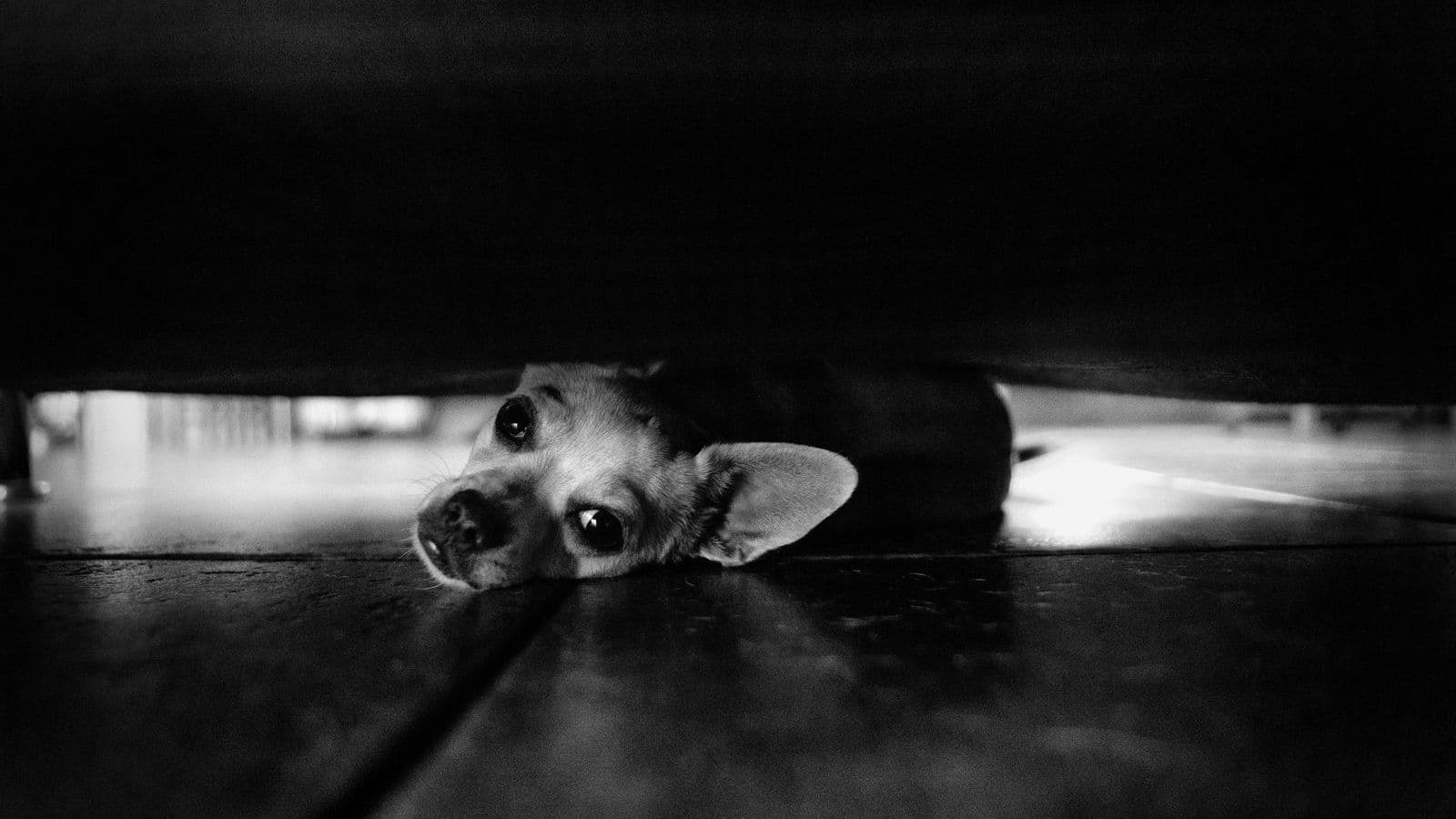
Signs of fear include panting, pacing, trembling, hiding, drooling, trying to escape or clinging to you. Treat these as signals to help, not to correct.
02
Start sound desensitization weeks before
Desensitization means playing recorded firework sounds quietly and pairing them with something good, so the noise starts to predict food. It works best over two to four weeks, not in an evening.
- Play a firework recording at a volume your dog barely notices, while it eats or plays.
- Give treats or a favorite chew for the whole length of the sound, then stop the treats when the sound stops.
- Raise the volume a tiny step only after three calm sessions in a row.
- If the dog stops eating, startles or leaves, lower the volume and go back a step.
03
Build a safe space before the noise starts
Choose a quiet interior room, ideally one without windows, and set it up a week early so it is already familiar. Dogs that like a crate can have it covered with a blanket on three sides.
- A bed or crate the dog already likes.
- White noise, a fan or calm music to mask the bangs.
- Long-lasting chews, a lick mat or a stuffed toy.
- Curtains closed, so flashes are less visible.
04
Plan the day itself
Exercise the dog earlier in the day with a longer walk and some sniffing, so it is tired before the evening. Feed dinner on time and keep the routine normal.
Walk the dog before dusk, so you are not outside when the first fireworks start.
- Take a long walk or play session in the afternoon.
- Do the toilet walk before dark.
- Bring the dog inside, close windows and curtains, and turn on the white noise.
- Make sure the collar fits and the ID and microchip details are up to date.
05
What to do during the fireworks
Stay with your dog if you can, and keep your own voice calm. It is fine to comfort a frightened dog: comfort does not reinforce fear. Offer a chew, play a gentle game or sit quietly nearby.
Never punish fear-based reactions, and do not force a dog out of its hiding place. Let the dog choose where it feels safest.
06
If you did not have time to prepare
Skip the training and focus on management: a safe room, white noise, an earlier walk and your calm company. Dogs do not need a perfect plan to get through one evening.
Afterward, start desensitization well before the next fireworks night, or for the next loud event such as thunderstorms.
EXAMPLE
A worked example: Luna and a three-week plan
Luna, a collie mix, used to shake and hide under the bed on fireworks night. Her owner started three weeks before with a recording at a volume Luna barely noticed, played during dinner. Each session ended with a chew.
After about ten days the volume was raised a little, and after three weeks the recording played at a moderate volume without Luna leaving her bed. On the night itself she still preferred her covered crate, but she ate her chew and slept through most of it. The safe space and the chew did as much as the training.
IF IT STALLS
Troubleshooting
If things do not go to plan, these adjustments help.
- The dog refuses treats during the recording: the volume is too high. Lower it by half and repeat.
- The dog hides in a different place every time: let it choose, and put a bed and a chew there.
- The dog barks at every distant bang: close windows, add white noise and avoid rewarding barking with attention.
- The dog tries to escape: keep it indoors with a secure collar, and consider calling your vet well in advance for advice.
09
How desensitization changes the fear response
Fear of noise is a learned emotional reaction. Desensitization with food works by pairing a very quiet version of the sound with something the dog loves, so the sound gradually predicts good things. The key is staying below the level that triggers fear: if the dog stops eating or looks worried, the volume is too high.
This takes weeks because each step must stay comfortable. Rushing is the most common reason it fails, and it can make a dog more sensitive.
10
A three-week countdown
Adjust the timing if you are further out or closer in.
- Three weeks before: choose and test a quiet room. Add a bed and a chew. Check the collar and microchip details.
- Two weeks before: start the sound recording at a very low volume during meals, five minutes a day.
- Ten days before: raise the volume one notch if the dog stays relaxed for three sessions in a row.
- One week before: practice the whole routine: white noise, curtains closed, dog in the safe room with a chew.
- Three days before: reduce stress elsewhere with regular walks and normal routines.
- The day itself: long walk early, dinner on time, toilet walk before dark, then settle in the safe room.
11
When to talk to your vet
Some dogs have a strong fear response that training alone cannot fully manage. Signs include trying to escape, injuring themselves, vomiting, severe shaking or hiding that lasts long after the noise ends.
In these cases, speak to your vet well before the next event. They can check for other causes and discuss options, which may include medication or a referral to a qualified behavior professional. Planning weeks ahead gives you the most choices.
FAQ
Common follow-ups.
Should I comfort my dog during fireworks?+
Yes. Comfort does not reinforce fear. Stay calm, stay close and offer chews or a quiet game. Do not force the dog to come out if it is hiding.
How early should I start preparing?+
Two to four weeks before is ideal for sound desensitization. A safe room can be set up a week early.
Are calming products worth it?+
Some owners find pressure wraps, pheromone diffusers or calming music helpful, though results vary. If your dog is very distressed, speak to your vet.
Can I leave my dog alone during fireworks?+
It is better not to. If you must go out, leave the dog in a prepared safe room with white noise and a chew, and ask someone to stay if possible.
Glossary