Crate Training Mistakes to Avoid
A crate can be a calm, safe den, or a place a dog learns to dread. The difference is almost always in how it is introduced. These six mistakes cause most crate problems, with a fix for each and a step-by-step introduction that works for most dogs.
Written by the TailorPup team, updated October 2026. See our editorial approach.
In this article · 12 sections+
01
Mistake 1: Closing the door before the dog is comfortable
A dog that is shut in before it likes the crate learns that the crate means being trapped. Build a positive association first, with the door open.
- Place the crate in a quiet area and leave the door open.
- Toss treats inside, and let the dog go in and out freely.
- Feed meals inside the crate, near the door at first.
- Close the door for a few seconds while the dog eats, then open it.
- Increase the time gradually.
02
Mistake 2: Using the crate as punishment
If the crate is where the dog goes when it is in trouble, it will not feel safe there. Keep it a place for rest, chews and calm.
03
Mistake 3: Crating for too long, too soon
Young puppies cannot hold their bladder for long, and any dog needs exercise and company. Leaving a dog crated for hours before it is ready can lead to stress and accidents.
- Build up gradually, from minutes to an hour or more.
- Give puppies regular toilet breaks.
- Do not use the crate as a place to leave a dog all day.
- Exercise your dog before crate time.
04
Mistake 4: Ignoring whining that signals a real need
Not all whining is attention-seeking. A puppy may need the toilet, or an adult dog may be uncomfortable. Check the basics first, then wait out the noise if nothing is wrong.
- Check if the dog needs the toilet, water or a change of position.
- If it is a real need, take it out calmly and return it afterward.
- If nothing is wrong, wait for a short pause in the whining before opening the door.
05
Mistake 5: Skipping the crate on travel or at the vet
A dog that is comfortable in its crate at home copes better in the car, at the vet or at a hotel. Practice short trips and keep a familiar blanket inside.
06
Mistake 6: Giving up after one bad night
The first nights are often noisy. Dogs usually settle within a week or two if the routine is consistent. Going back and forth teaches that persistence pays.
- Keep the same bedtime routine.
- Place the crate near your room at first.
- Provide a safe chew and a warm bed.
- Stay consistent for at least two weeks.
07
What a good crate looks like
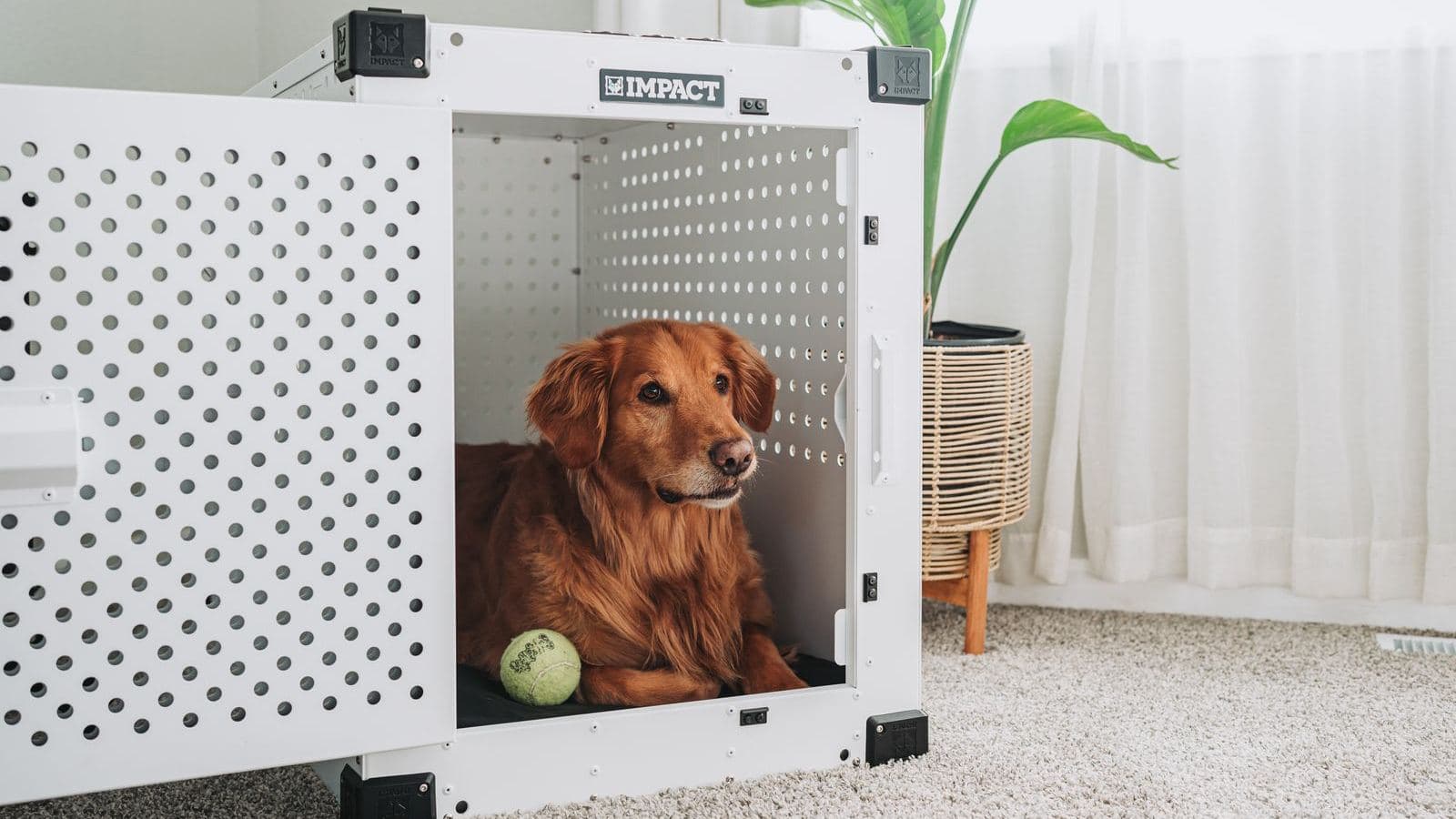
The crate should be large enough for the dog to stand, turn around and lie down comfortably, but not much bigger. Add a soft bed, and keep it away from drafts and direct sun.
EXAMPLE
A worked example: Hazel, a nervous rescue
Hazel hated her crate and howled whenever the door closed. Her owner went back to the beginning: crate in the living room, door open, treats thrown inside. Meals were served there for a week.
Then the door was closed for a few seconds at a time, then a minute, then five. After three weeks Hazel chose to sleep in the crate with the door open. The mistake had been closing the door before she trusted the space.
IF IT STALLS
Troubleshooting
If the crate is still a problem, try these adjustments.
- The dog whines when the door closes: go back to a shorter time and use a better chew.
- The dog barks at night: check for toilet needs and move the crate nearer to your bed.
- The dog has accidents in the crate: shorten the time and increase toilet trips.
- The dog refuses to go in: make the crate more inviting with a soft bed and treats.
10
Why a crate can feel like a den
Dogs descended from animals that rest in sheltered spaces, and many like a small, quiet, enclosed spot. A crate can meet that need, but only when it is associated with safety and good things. If it is associated with isolation or punishment, the same crate becomes a source of stress.
This is why introduction matters more than the crate itself. A dog that chooses to enter, eats there and rests there will see it as its own place.
11
A ten-day introduction plan
Go at your dog's pace. Repeat any day that feels hard.
- Day 1 to 2: crate in a social room with the door open. Toss treats inside and let the dog explore.
- Day 3 to 4: feed meals in the crate with the door open.
- Day 5: close the door for 10 seconds while the dog eats, then open it.
- Day 6 to 7: close the door for one to five minutes while you sit nearby.
- Day 8: practice stepping out of sight for a minute and returning calmly.
- Day 9 to 10: lengthen to 10 to 20 minutes, with a chew inside.
12
Choosing and setting up the crate
The right setup makes a big difference.
- Size: the dog should stand, turn and lie down comfortably.
- Divider: for puppies, use a divider so they do not have too much space.
- Bedding: soft, washable and chew-safe.
- Location: a quiet area, close to the family, away from drafts and direct sun.
- Safety: no collars or tags inside the crate, to avoid snagging.
FAQ
Common follow-ups.
How long can a dog stay in a crate?+
It depends on age and training. Puppies need frequent breaks, and adult dogs should not spend all day in a crate.
Should I cover the crate?+
Many dogs like a cover on three sides. Make sure there is airflow and that the dog is comfortable.
Should I put water in the crate?+
For short periods it is not essential. For longer ones, use a spill-proof bowl.
What if my dog hates the crate?+
Go back to the first steps, use better treats and shorter sessions, and seek help from a trainer if the dog panics.
Glossary