Puppy training · Behavior · Updated June 2026
How to stop
puppy biting.
Needle-teeth and nipping are normal puppy behavior, not aggression. The aim isn't to punish it away, it's to teach a soft mouth and redirect the energy. Done right, most puppies grow out of it by five or six months.
Quick answer
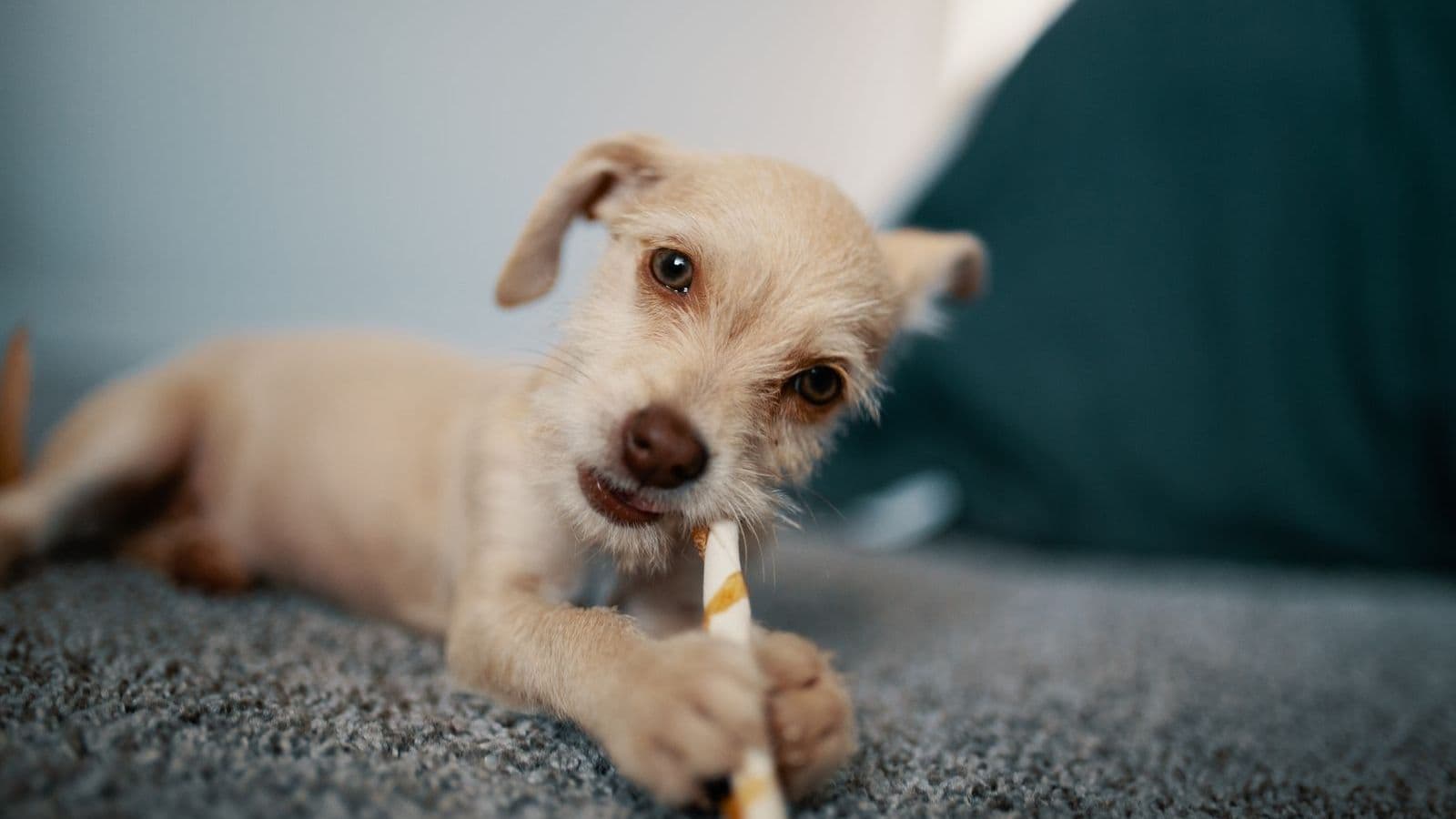
Puppy biting is normal and peaks between 8 and 16 weeks, so the goal is bite inhibition, a soft, controlled mouth, not zero contact. When your puppy's teeth pinch too hard, give a short, high-pitched "ouch" and calmly disengage for a few seconds, then redirect to a chew toy and reward gentle play.
Crucially, an over-tired or over-aroused puppy bites far more, so enforce rest and meet exercise and chewing needs. Never use physical punishment, smacking, or holding the mouth shut, it raises arousal, damages trust, and usually makes biting worse. Most puppies grow out of it by five to six months with consistency.
01 · The method
Teach a soft mouth,
not fear.
Bite inhibition is a skill the puppy learns from feedback, yours replacing the littermates'. Consistency from everyone in the home is what makes it click.
01
Mark the hard bites, then disengage
When teeth pinch too hard, give a short, calm "ouch" or "ow" and immediately stop play, stand up, fold your arms, look away for three to five seconds. You're teaching that hard mouthing ends the fun, exactly as a littermate would.
02
Re-engage and reward gentle play
After the brief pause, calmly resume. Soft mouthing continues the game; teeth on skin ends it again. Over many reps the puppy learns to soften its bite to keep playing.
03
Always offer an alternative
Puppies bite to explore and to soothe teething gums, so keep a toy or chew in reach and redirect onto it. Reward the puppy for choosing the toy over your hands.
04
Manage arousal and enforce rest
This is the piece most owners miss: an over-tired puppy bites hardest, like an overtired toddler. If the nipping is frantic, it's usually nap time, not naughtiness. Build in regular rest in the crate or a quiet space, and the worst biting often disappears.
05
Meet the needs behind it
Give enough physical and mental exercise and plenty of appropriate chew outlets, especially during teething (roughly 3-6 months). A puppy with an outlet for its mouth and energy has far less reason to use your hands.
06
Get the whole household consistent
Everyone must respond the same way, and no one should use hands as toys or encourage rough wrestling, that directly trains biting. Children especially need a simple rule: if the puppy mouths, become a boring statue and call an adult.
Keep going
How to train a puppy (full guide)
Where bite inhibition fits in the bigger picture.
Puppy training schedule by age
When biting peaks and fades.
How to potty train a puppy
The other big puppy headache.
Reactivity & big feelings
When arousal tips past play.
Puppy training basics
Read →
When to start training a puppy
Read →
Most-searched questions
The questions people
actually ask.
At what age do puppies stop biting?
Mouthing usually peaks between 8 and 16 weeks and fades as the adult teeth settle in, with most puppies growing out of it by 5 to 6 months. Consistent bite-inhibition work and adult teething ending move it along; the behavior lingering past 6 months usually means it's been accidentally reinforced through rough hand play.
Does yelping work, or does it make biting worse?
For many puppies a short, calm "ouch" plus disengaging works well. For some excitable puppies a high-pitched yelp ramps them up further, if that's yours, drop the sound and simply go still and end the game silently. The disengagement is the real lesson, not the noise.
Why does my puppy bite my children so much?
Kids move fast, squeal, and wave their hands, all of which trigger chase-and-grab play. Coach children to stand still and "be a tree," supervise every interaction, and never let the puppy practice biting on them. Give the puppy a toy outlet and enforce rest before play with kids.
Is my puppy biting aggression?
Almost always no, normal puppy mouthing is loose, wiggly, and play-driven. Genuine warning signs are different: a stiff body, hard stare, growl with frozen posture, or biting around food or being handled. If you see those, or any bite that breaks skin in an adult-like way, consult a qualified trainer or veterinary behaviorist.
Should I hold my puppy's mouth shut or use a spray bottle?
No. Holding the mouth shut, scruffing, alpha-rolls and spray bottles raise the puppy's arousal and fear and can damage your relationship, often making biting worse. Reward-based bite inhibition plus managing arousal is both kinder and more effective.
My puppy bites my feet and pant legs on walks. What do I do?
Movement triggers it. Stop moving the instant the puppy grabs, so motion never rewards the bite, and redirect to a toy you carry. Tiring the puppy mentally beforehand and keeping walks short at this age both reduce the grabbing.
Our method & sources
Every TailorPup plan and guide uses reward-based training (positive reinforcement), the approach the American Veterinary Society of Animal Behavior (AVSAB) recommends for all dog training. Read the full science and source list on our training method page.
TailorPup is not affiliated with, endorsed by, or certified by the AVSAB. References are provided for informational purposes only and are not a substitute for advice from your veterinarian or a qualified trainer.
Get the plan built
for your dog.
Answer a few quick questions and get a personalized 12-week plan, tuned to your dog's breed, age and the behaviors you're seeing. Preview before you pay, no card.
Build my dog's planFrom $9.99/month · cancel anytime · 90-day refund