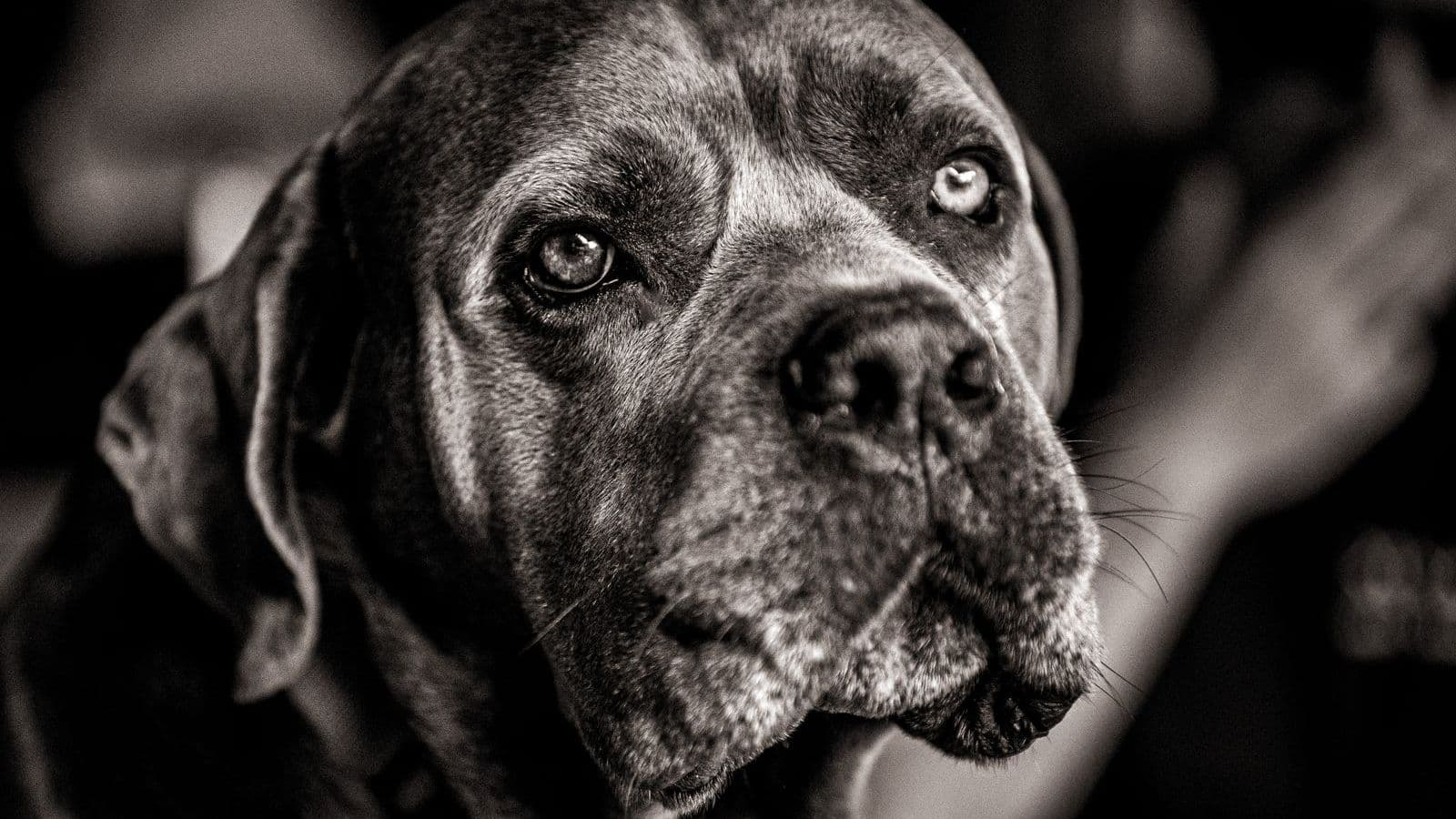
The Cane Corso is a 100-plus pound Italian mastiff descended from Roman guardian dogs, bred to protect property and hunt large game on the farms of southern Italy. That heritage produces an intelligent, deeply loyal dog with a genuine protective instinct, and it means training mistakes carry different stakes than they do with other breeds. A badly trained Labrador is annoying. A badly trained Corso is dangerous, to visitors, to other dogs, and eventually to the dog itself.
Most Corso problems follow the same script: an owner underestimates the guardian genetics, delays the socialization work, and then tries to fix the resulting reactivity with force. Every step of that script makes the dog worse. Here are the eight mistakes that show up again and again with this breed, and what experienced guardian-breed owners do instead.
1. Delaying socialization on a guardian breed
Waiting for the full vaccine series, a calmer week, or "until the puppy settles in" is the most expensive mistake a Corso owner can make. The socialization window closes around 16 weeks, and a guardian breed that misses it defaults to suspicion of everything unfamiliar. In a 25-pound puppy that looks like shyness. In a 110-pound adult it is fear-reactivity with the power to cause real harm. Between 8 and 16 weeks the puppy needs calm, positive exposure to many people, dogs, places, sounds, and surfaces, using sensible health precautions like carrying the puppy in busy areas rather than waiting behind a fence.
2. Praising the guarding
New owners love it when the puppy barks at the doorbell or stands stiff at a stranger. It feels like the dog doing its job, so they praise it. Six months later they own an adult that decides on its own who is a threat, and its threshold keeps dropping. A well-bred Corso needs zero encouragement to protect; the instinct is in the genetics and activates when genuinely needed. Your training job is the opposite: reward calm, neutral responses to visitors and strangers so the dog learns that most people are background noise, not assignments.
3. Meeting hardness with hardness
The Corso is confident and will test boundaries, and owners often conclude that a hard dog needs a hard hand: alpha rolls, leash pops, intimidation. With a guardian breed this backfires in the worst way, because force adds fear and conflict to a powerful dog bred to act on perceived threats. Fear-aggression in a Corso is a genuine emergency. Serious working kennels build their dogs with calm, consistent, reward-based handling because it produces stability under pressure. Confidence in the handler, not conflict with the handler, is what this breed respects.
4. Letting size do the training
Owners of large breeds often skip real manners work because they can physically manage the puppy: hauling it back on leash, blocking it with a knee, lifting it off furniture. Then the dog reaches 100-plus pounds and physical management stops being possible for anyone in the household. Leash manners, door waits, leave it, and calm greetings must be trained and solid before the dog reaches full size, roughly by 8 to 10 months. A Corso that learned impulse control as a puppy never needs to be out-muscled as an adult, which is good, because it cannot be.
5. Skipping counter-conditioning
Left unshaped, the guardian instinct becomes indiscriminate wariness of strangers and other dogs, and many Corsos add same-sex dog assertiveness on top. Counter-conditioning is the fix: from puppyhood, strangers and dogs appearing at a distance predict excellent food, so the emotional response to novelty becomes anticipation instead of suspicion. Start it before there is a problem and maintain it for life. If your Corso is already stiffening, barking, or lunging at people or dogs, begin the protocol in our reactivity guide now, because the pattern only entrenches with rehearsal.
6. Inconsistent leadership across the household
Corsos respect calm, fair, consistent handling and will quietly take over decision-making from anyone who does not provide it. If one person enforces the rules while the rest of the family negotiates, the dog obeys one person and manages everyone else, and a guardian breed making its own decisions about visitors is exactly what you cannot afford. Every adult in the household should train the dog regularly, use the same cues, and enforce the same rules. Leadership for a Corso means predictability and fairness, not dominance displays.
7. Attempting amateur protection training
Some owners buy a Corso for protection and try sleeve games, agitation, or online bite-work tutorials in the backyard. This is how unstable, dangerous dogs are made. Real protection sport is built on rock-solid obedience and carefully evaluated temperament, developed with qualified decoys and handlers over years. A pet Corso needs none of it: a socialized, stable Corso is naturally imposing and will act if a genuine threat ever appears. If you want to do bite sport, join an established club. If you want a family guardian, the socialization and obedience work is the protection training.
8. Stopping socialization after puppyhood
With most breeds, a well-socialized puppy stays sociable. Guardian breeds are different: suspicion of the unfamiliar strengthens as the dog matures, particularly through adolescence at 12 to 24 months, and a Corso that stops meeting new people and places drifts back toward wariness. Socialization for this breed is lifelong maintenance, not a puppy checkbox. Keep regular, positive, controlled exposure going for the dog's whole life, a few new experiences each week with rewards for calm neutrality. The owners of stable adult Corsos are the ones who never stopped doing the work.
What works with Cane Corsos
The Corso rewards experienced, committed ownership with one of the most stable, capable guardian companions in the dog world, and everything that works with the breed follows one logic: shape the guardian instinct early, keep the dog under calm control, and never add fear to power.
- Socialize heavily from 8 weeks and continue for life, with neutrality around strangers as the goal
- Train manners and impulse control while the dog is small enough that mistakes are cheap
- Use reward-based methods delivered with calm confidence, and walk away from anyone who talks about dominating the dog
- Give the intelligent Corso a job: advanced obedience, scent work, structured exercise
- Manage dog-to-dog introductions carefully, especially same-sex, for life
- Leave protection work to qualified professionals or skip it entirely
None of this is complicated, but all of it is non-negotiable, because with 100-plus pounds of protective dog the margin for error is thin. TailorPup's Cane Corso plan front-loads intensive socialization, builds counter-conditioning and impulse control from the first week, and paces the manners work to land before the dog's full size arrives.
Frequently Asked Questions
Is a Cane Corso a good first dog?
No. The size, power, guardian instinct, and precision the training requires make the Corso a breed for owners who have already raised and trained large dogs successfully. First-time owners inherit stakes they cannot yet judge.
When should Cane Corso socialization start?
The day the puppy comes home, typically at 8 weeks. Use sensible health precautions, carrying the puppy in busy places and arranging controlled meetings with vaccinated dogs, because the behavioral window closes around 16 weeks and does not reopen.
Does a Cane Corso need protection training to guard the family?
No. A well-socialized, well-trained Corso is naturally protective when a genuine threat appears and needs no encouragement to do it. Amateur protection work creates unstable dogs; treat it as a professional sport or leave it alone.
Why is my adult Corso suddenly wary of strangers?
Guardian-breed suspicion strengthens with maturity, especially between 12 and 24 months, and returns if socialization stopped after puppyhood. Resume regular positive exposure at a comfortable distance and reward calm; if the dog is lunging or growling, start a structured counter-conditioning program immediately.
Start your Cane Corso's plan at tailorpup.com →
Related: How to Train a Cane Corso · Reactivity Training · Recall Training