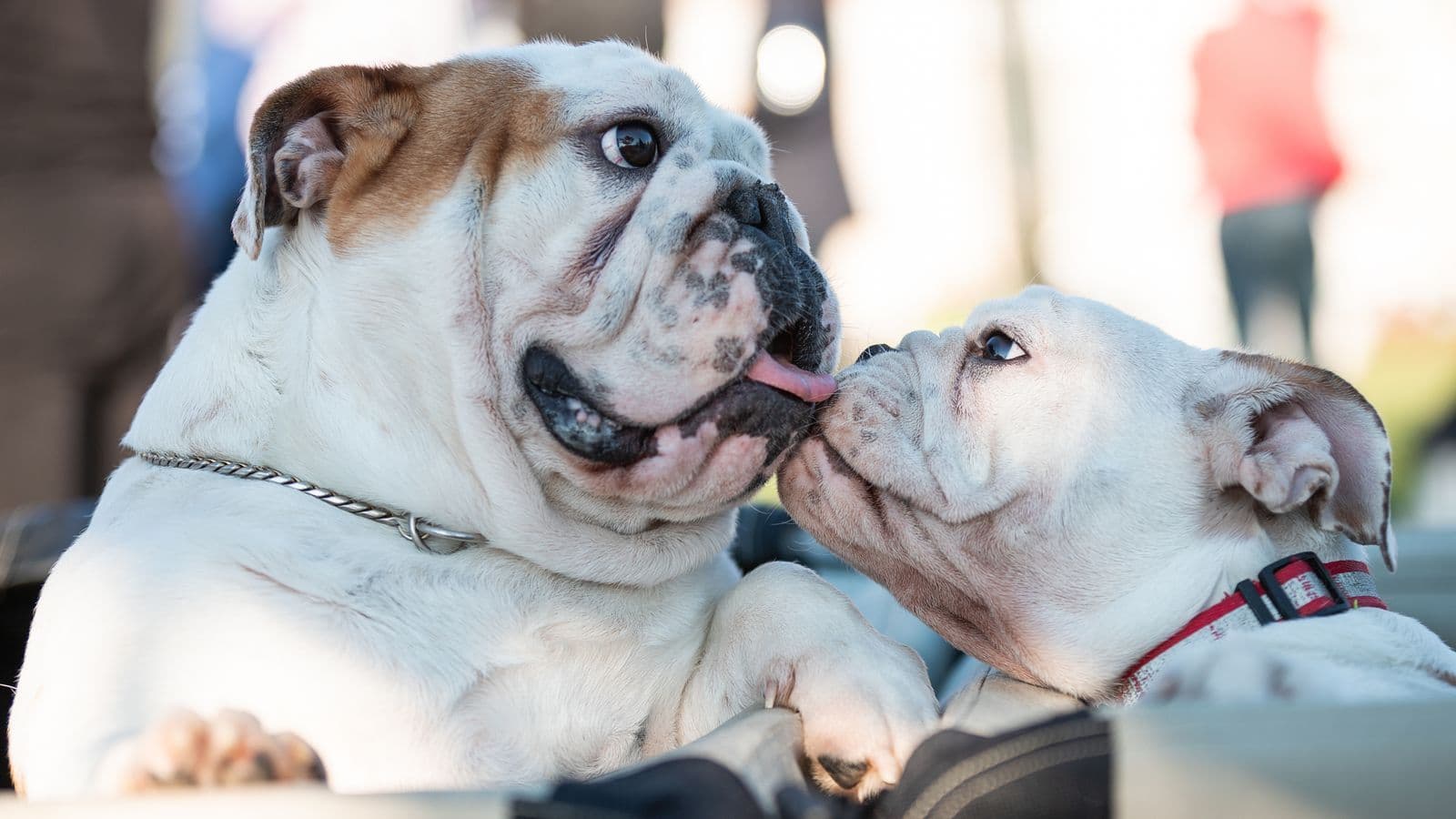
If you've owned a Bulldog before, you know the breed's specific brand of frustration: you ask them to do something, they evaluate the request, and they decide whether your reward is worth their effort. Sometimes the answer is no, and they sit and stare at you like you've insulted them.
That's not a training failure. It's a breed feature. The problems come when owners try to handle Bulldogs the way they'd handle a Labrador, push through resistance, or apply generic training methods without accounting for the breed's specific biology. Here are the 8 mistakes that consistently produce frustrated owners and shut-down dogs.
1. Long training sessions
Bulldogs disengage after 5-8 minutes. A 15-minute session does not produce better results than three 5-minute sessions. It produces a Bulldog who learns to dread training and shuts down when they see the treat bag.
Multiple short sessions outperform one long session for almost every dog, and especially for this breed. Three sessions of 5-7 minutes spread across the day will install commands faster and more reliably than one extended session.
2. Training in heat
Bulldogs have BOAS (brachycephalic obstructive airway syndrome) to varying degrees. Their breathing is restricted even at rest. Warm temperatures, humidity, or post-meal training all increase respiratory load.
Always train in cool conditions. Indoor with AC during summer. Avoid mid-day training in warm months. Water always available. A Bulldog showing heavy panting during training is a Bulldog approaching respiratory crisis. End the session immediately and cool the dog.
3. Using corrections
The wrinkled face and stocky body suggest a tough dog. Bulldogs are not tough emotionally. They're sensitive, and they read your tone instantly. A frustrated voice will shut down training for the rest of the day. A sharp leash correction can damage the relationship for weeks.
Reward-based training is the only effective method for the breed. The American Veterinary Society of Animal Behavior recommends positive reinforcement universally, and for Bulldogs specifically, aversive methods produce withdrawal and learned helplessness, not better behavior.
4. Skipping mental stimulation
The "lazy Bulldog" stereotype leads many owners to skip mental work entirely. The result is destructive behavior: chewed baseboards, raided trash, demand barking, and stubborn refusal of training.
Bulldogs need 10-15 minutes of daily brain work. Puzzle feeders, scent games, simple trick training, mat work. Without it, the breed gets bored, and bored Bulldogs find ways to entertain themselves that you won't enjoy.
5. Free-feeding
Bulldogs gain weight easily. Excess weight compounds with BOAS to make breathing worse, accelerates joint problems (already common in the breed), and reduces lifespan. Free-feeding almost guarantees obesity.
Measured meals twice daily. Treats count toward the daily calorie budget, not on top of it. Use small treats during training (a piece of cheese the size of a pea, not a chunk). A Bulldog 15% overweight is dramatically less healthy than a Bulldog at proper weight, and weight loss is exponentially harder than weight maintenance.
6. Trying to push through the "Bulldog plant"
The Bulldog plant is the breed's signature move: stopping mid-walk, sitting down, and refusing to budge. Most owners try to drag the leash or escalate verbal pressure. Both make it worse.
The correct response is to assess: too hot, too tired, joint pain, or just not interested? If the temperature is reasonable and the walk is short, the issue is motivation. Walk a few feet ahead, call the Bulldog enthusiastically, reward generously when they catch up. Never drag a Bulldog on a leash, which can damage their airway and joints.
If the planting is consistent in cool weather and short walks, see a vet. Bulldogs are prone to hip dysplasia, elbow issues, and arthritis. The behavior may have a physical cause.
7. Letting puppy behaviors slide
"He's just being a puppy" stops being valid at 6 months. Bulldogs are powerful. A behavior you tolerate at 4 months (jumping, mouthing, nipping at heels) becomes a real problem in a 50-pound adult.
Address behaviors the moment they appear. Bulldogs don't grow out of bad habits, they grow into them. Adult Bulldogs with poor manners are dramatically harder to retrain than puppies because the breed's stubbornness reinforces the established pattern.
8. Expecting fast learning
Bulldogs are not Border Collies. They learn at their own pace, which is slower than working breeds. Comparing your Bulldog to a Lab puppy on the same training timeline will produce frustration.
The breed's intelligence is real but expressed differently. They think before complying. They evaluate the request. They make sure the reward is worth the effort. Once they decide to comply, they tend to retain the training well, but the installation phase takes longer than for eager breeds. Patience and short sessions produce better results than escalating expectations.
What experienced Bulldog owners do
Pattern across all 8 mistakes: the breed needs slow, gentle, reward-based training in short sessions, with cool temperatures, calorie management, and realistic expectations about pace. Owners who fight the breed's nature get nowhere. Owners who work with it get a calm, devoted, surprisingly trainable companion.
TailorPup's Bulldog training plan uses short 5-7 minute sessions, BOAS-aware exercise protocols, calorie-aware reward planning, and pacing matched to how the breed actually learns. Daily structure, weekly adjustments based on your dog's progress.
Start your Bulldog's plan at tailorpup.com →
Related: How to Train a Bulldog · Recall Training · Leash Pulling Solutions