Single-skill lesson · Updated September 2026
How to teach name
recognition & attention.
Before recall, before "leave it," before anything else, your dog needs to reliably turn toward you when you say their name. This is a full, staged lesson plan for building real name recognition and the "look at me" attention cue.
Written by the TailorPup team, updated September 2026. See our editorial approach.
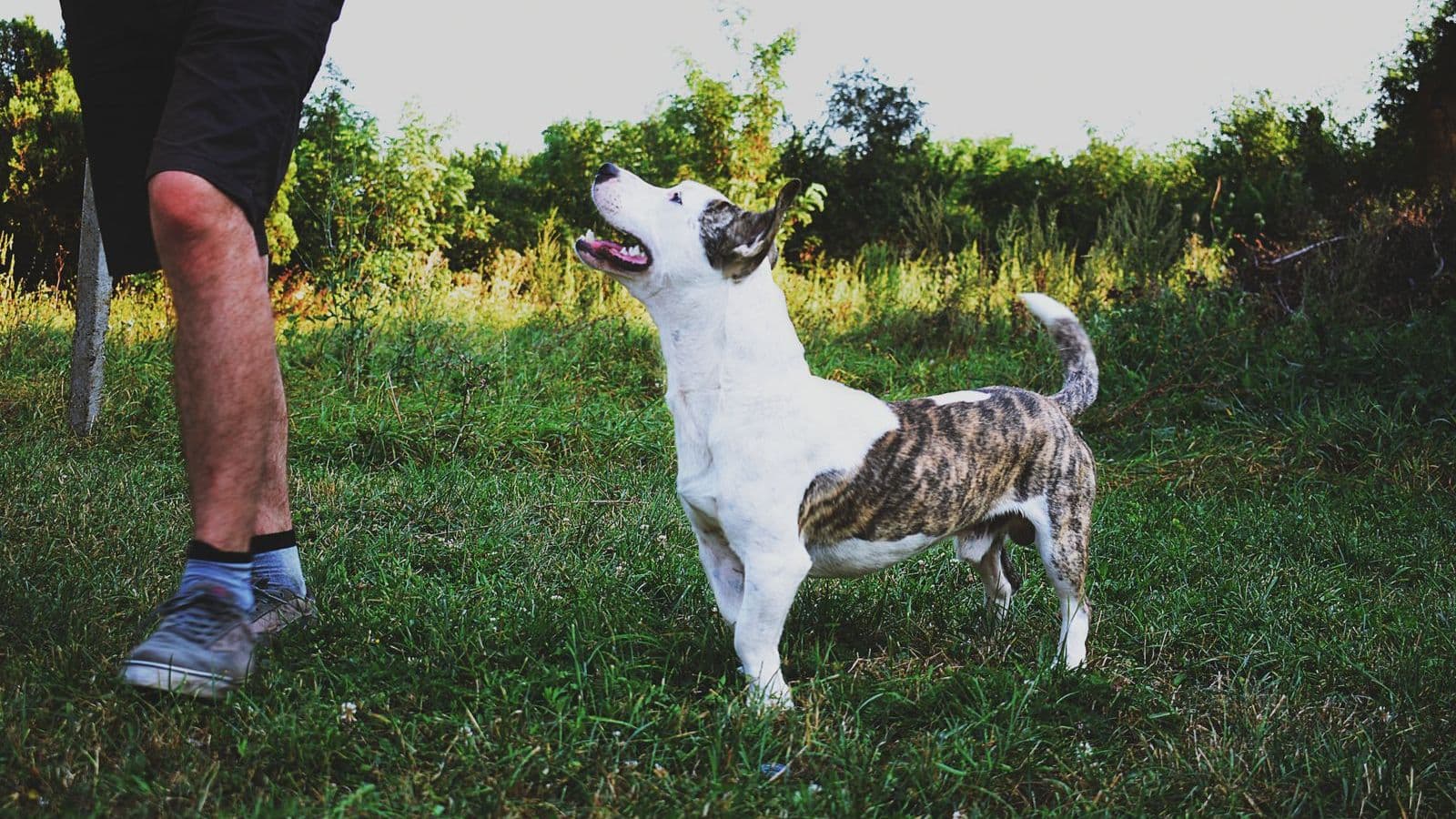
What you'll need
- Small, high-value treats for a fast, frequent reward rate
- A quiet room with minimal background activity for stage 1
- A marker word or clicker to pinpoint the exact moment of eye contact
- A leash for outdoor proofing, so distance from distractions is easy to manage
Step by step
Attention is foundational, so it's worth building it carefully through the site's distance, duration, and distraction framework before relying on it for harder skills.
Stage 1 — name means "look, and something good happens"
In a quiet room, say your dog's name once in a normal, upbeat tone. The instant they look toward you, mark and reward. If they don't respond within a couple of seconds, make a small noise to draw attention rather than repeating the name over and over, which teaches dogs to ignore it until the third or fourth repeat.
Stage 2 — building duration with "look at me"
Introduce a separate cue, "look at me," and reward for holding eye contact slightly longer each rep — one second, then two, then three. This separates a quick glance from sustained attention, which matters more once you need your dog focused on you rather than a distraction nearby.
Stage 3 — adding distance and movement
Practice while standing farther apart, and while your dog is moving around the room rather than sitting in front of you. Say the name once and reward the moment they reorient toward you, mimicking the more chaotic conditions of real life where you and your dog aren't face to face.
Stage 4 — proofing around real distractions
Test the name and "look at me" cue outdoors, starting somewhere low-key like a quiet yard, then a calm street. Reward generously any time your dog disengages from a distraction to look at you — this is the exact skill that later makes recall and loose leash walking possible around real-world temptations.
Common problems and fixes
I say my dog's name constantly and they've stopped responding to it
Overusing a name without consistently rewarding the response teaches a dog it's just background noise. Go back to stage 1 in a quiet room and rebuild the name-means-something-good association before using it in daily life again.
My dog looks at me for a split second then immediately looks away again
Your reward timing may be too slow, letting the look end before the treat arrives. Mark the exact instant of eye contact with a clicker or word, then deliver the treat, so the dog learns holding attention is what earns the reward, not just glancing.
My dog responds at home but completely blanks outdoors near other dogs
This is a distraction jump that's too big. Increase distance from the other dog until your dog can respond to their name at all, then very gradually decrease that distance over many sessions.
FAQ
Why does my dog know its name but still ignore me?
Recognizing a name and responding with real attention are different skills. Many dogs learn to associate their name with general chatter rather than with looking at their owner, which is why a dedicated exercise matters.
Is "look at me" the same as recall?
No. "Look at me" only asks for eye contact, not for your dog to come toward you. It's a foundational building block that makes recall and most other cues easier to teach.
Should I ever use my dog's name in a scolding tone?
It's best avoided. If a name sometimes predicts something unpleasant, dogs can start to hesitate to respond to it. Keep the name consistently positive and use a separate, calm interrupter word instead.
One skill down.
Now build the whole plan.
TailorPup turns skills like this into a personalized, week-by-week training plan for your dog's breed and age.