Digging · Updated June 2026
How to stop a dog
from digging.
Digging feels great to a dog and serves a real purpose, so the trick is not to ban it but to understand why your dog does it and redirect it. Here is how to read the cause and fix it without a daily war over your lawn.
Quick answer
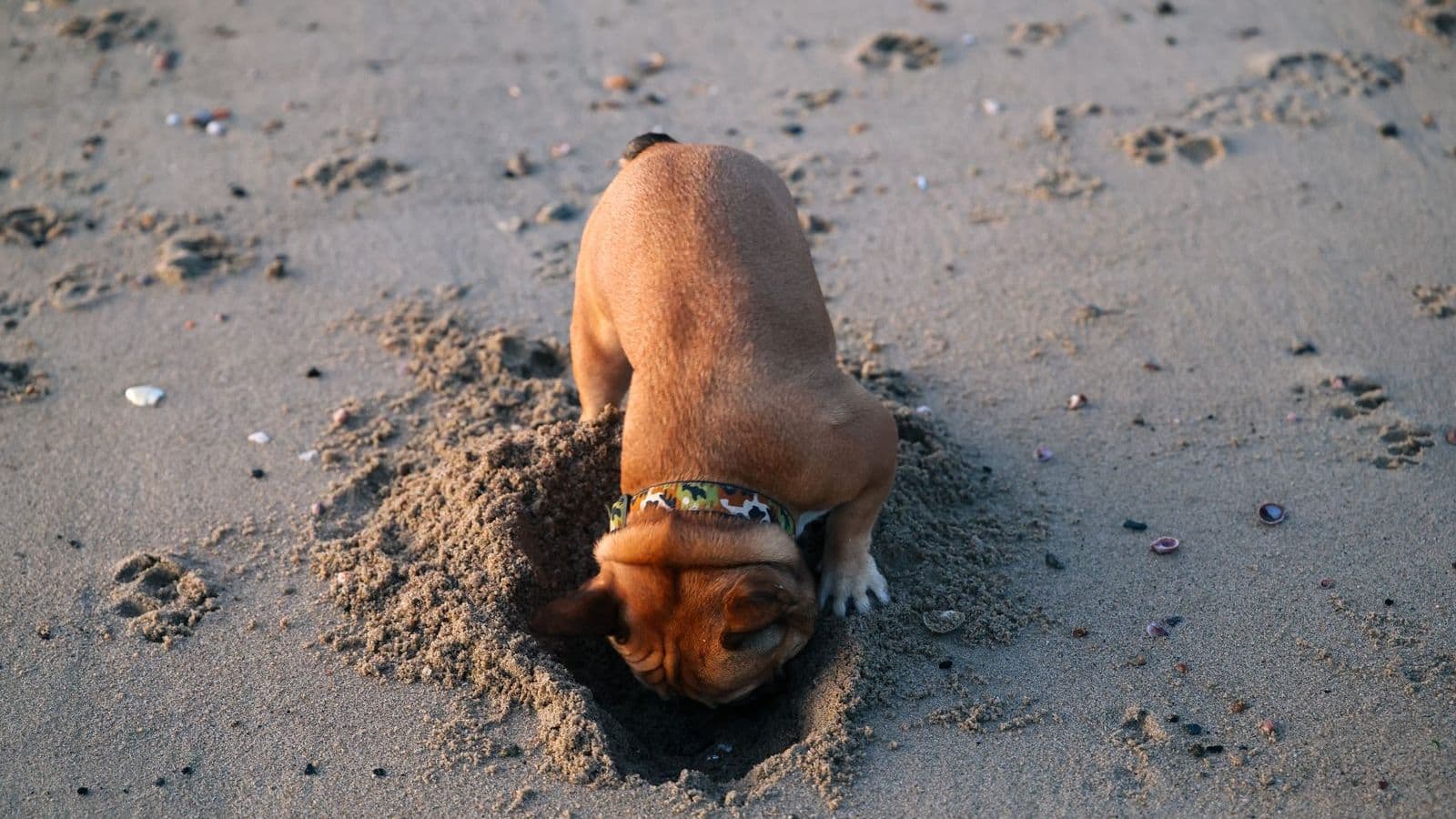
To stop a dog digging, work out why it digs and address that, rather than punishing the holes. Dogs dig from boredom and excess energy, to chase prey or scents, to cool down in hot weather, to escape, or simply because the breed was built to dig.
Match the fix: add real exercise, sniffing walks and food puzzles for boredom; give a legal digging spot like a sandpit or a corner, and bury toys there to make it the best place to dig; provide shade and water if the dog is digging to cool off; and secure the boundary plus meet the underlying need if it is digging to escape.
Manage the yard by supervising and calmly interrupting then redirecting to the dig spot, and make favorite holes unrewarding by filling them. Never punish after the fact, the dog cannot connect it to the act.
Most digging drops fast once the real cause is met, with breed-driven diggers like terriers and Nordic breeds needing an ongoing legal outlet.
01 · The method
Seven steps to save
your garden.
Digging is a need, not defiance. You will not switch it off, but you can point it at a spot you choose and shrink it by meeting the reason behind it.
01
Work out why the dog digs
Watch where and when. Random holes after being left point to boredom or energy. Digging at the fence line is usually escape. Focused digging at one spot can be prey or scent. Shallow pits in hot weather are cooling. Frantic breed-typical digging is instinct. The cause picks the fix.
02
Meet the exercise and enrichment need
Most yard digging is unspent energy and boredom. Add a proper walk with sniffing, a short training session, and food puzzles or a stuffed toy. A tired, satisfied dog has far less drive to excavate the flowerbed.
03
Give a legal dig spot
Set up a sandpit or a marked corner where digging is allowed, and make it brilliant by burying toys and treats for the dog to find. Reward digging there. Channeling the urge to one spot is far more realistic than trying to ban it everywhere.
04
Make the wrong spots unrewarding
Fill in favorite holes, and supervise so the dog cannot keep rehearsing them. You can make a particular area less appealing, but the heavy lifting is redirecting to the legal spot, not booby-trapping the whole yard.
05
Rule out cooling and comfort
In hot weather some dogs dig to reach cool earth. If that is the cause, give shade, fresh water and a cool surface or a raised bed, and keep the dog in during the heat of the day. Solve the discomfort and the digging stops.
06
Supervise, interrupt, redirect
When the dog starts digging somewhere off-limits, calmly interrupt with a happy sound and lead them to the legal dig spot or another activity, then reward the switch. Avoid yelling or punishing, which can just teach the dog to dig only when you are not looking.
07
Address digging to escape
Digging under the fence is its own problem: secure the boundary (buried wire or a concrete footer), and just as importantly fix the reason the dog wants out, usually boredom, loneliness or an unneutered dog seeking a mate. Escape digging is a safety issue, so manage it tightly while you train.
Most-searched questions
The questions people
actually ask.
Why does my dog dig holes in the yard?
Usually boredom and excess energy, but also to chase prey or scents underground, to cool down in heat, to try to escape, or simply because the breed was bred to dig. Watching where and when your dog digs tells you which it is, and the fix follows from the cause.
How do I stop my dog digging in the yard?
Meet the need first: more exercise, sniffing and enrichment kill most boredom digging. Then give a legal dig spot (a sandpit with buried toys) and reward digging there, supervise and redirect from the wrong spots, and fill in old holes. Punishing the holes after the fact does not work.
Does a dedicated digging pit really work?
Yes, for many dogs. A sandpit or marked corner with toys and treats buried in it gives the urge a legal outlet, and most diggers happily switch to it once it becomes the most rewarding place to dig. It works best alongside enough exercise so the drive is not sky-high.
How do I stop my dog digging under the fence?
Secure the boundary with buried wire or a footer so digging out is not possible, and fix the reason the dog wants out, commonly boredom, loneliness, or an intact dog seeking a mate. Because escape risks the dog's safety, manage it closely (supervision, a secure run) while you address the underlying need.
Is digging a breed thing?
Often, yes. Terriers were bred to dig quarry out of the ground and Nordic breeds dig dens, so for them the urge is strong and lifelong. You will not train it away entirely, but a legal dig spot plus plenty of exercise channels it so your garden survives.
Our method & sources
Every TailorPup plan and guide uses reward-based training (positive reinforcement), the approach the American Veterinary Society of Animal Behavior (AVSAB) recommends for all dog training. Read the full science and source list on our training method page.
TailorPup is not affiliated with, endorsed by, or certified by the AVSAB. References are provided for informational purposes only and are not a substitute for advice from your veterinarian or a qualified trainer.
Get the plan built
for your dog.
Answer a few quick questions and get a personalized 12-week plan, tuned to your dog's breed, age and the behaviors you're seeing. Preview before you pay, no card.
Build my dog's planFrom $9.99/month · cancel anytime · 90-day refund