Socialization · Updated June 2026
How to socialize a puppy,
while the window is open.
The weeks between 8 and 16 are a one-time window when a puppy's brain is wired to accept new things as normal. Positive experiences now create a confident adult, and missed ones are hard to undo later. Here is exactly what to do, and how to do it safely.
Quick answer
To socialize a puppy, give them many short, positive, low-pressure experiences with the world during the 8-16 week sensitive period, when the brain most readily accepts new things as safe.
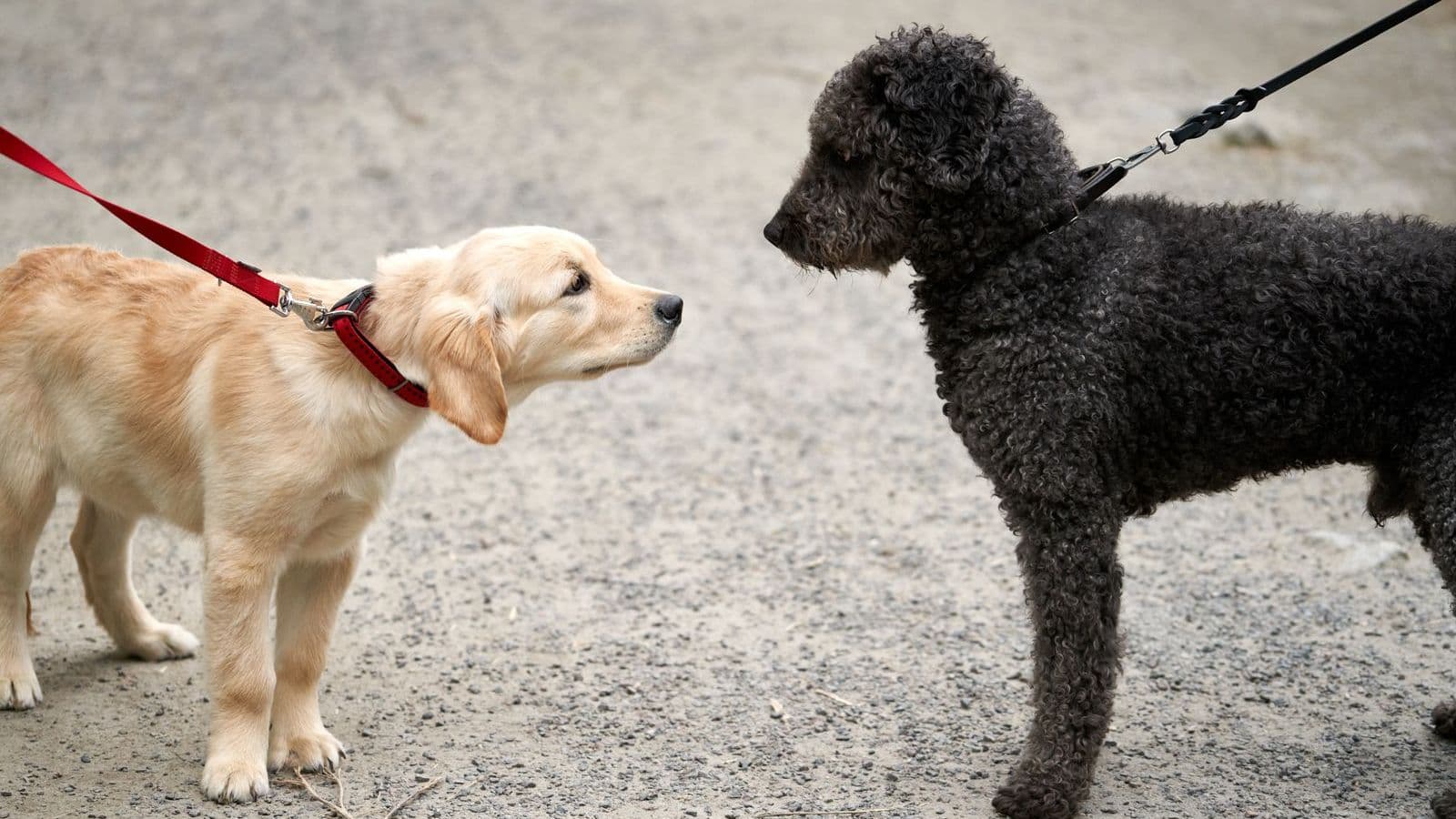
Gently expose them to different people, friendly vaccinated dogs, sounds, surfaces, handling, car trips and everyday sights, always pairing each new thing with treats and praise and letting the puppy choose how close to get. Quality beats quantity: one calm, happy meeting teaches more than a chaotic crowd.
You can socialize safely before vaccinations are complete by carrying the puppy in public, taking car rides, inviting healthy vaccinated dogs and varied visitors home, and joining a puppy class that requires proof of vaccination. Never force a frightened puppy, fear learned now tends to last.
For an adult or under-socialized dog the same approach works with more patience and distance, it just takes longer.
01 · The method
Seven rules of
good socialization.
The aim is not to expose the puppy to everything, it is to make everything feel safe. Go at the puppy's pace, keep it positive, and stop before they get overwhelmed.
01
Start now, the window is closing
The prime window runs from about 8 to 16 weeks and does not reopen. Begin the day the puppy comes home and treat these weeks as the priority, ahead of any obedience training. What the puppy meets calmly now, they accept for life.
02
Make every new thing predict treats
Pair each new sight, sound or person with something the puppy loves. A skateboard rolls past, treats rain down. A stranger appears, good things happen. You are teaching the puppy that novelty equals reward, which builds optimism instead of fear.
03
Let the puppy choose the distance
Never drag or force a worried puppy toward something. Let them approach in their own time and retreat if they want, and reward brave choices. Forcing a scared puppy can create the exact fear you are trying to prevent.
04
Socialize safely before full vaccination
Do not wait for the last vaccine to start, the behavioral risk of under-socialization usually outweighs the disease risk. Carry the puppy in public, take car trips, invite vaccinated dogs and varied people home, and use vetting-required puppy classes. Avoid dog parks and unknown dogs until your vet clears full vaccination.
05
Cover the whole checklist, not just dogs
Socialization is far more than meeting dogs. Expose the puppy to people of all kinds (hats, beards, wheelchairs, children), surfaces (grass, metal, stairs), sounds (traffic, vacuum, thunder recordings), handling (paws, ears, mouth), and places (the vet, the car, town). Breadth is what builds a steady adult.
06
Quality over quantity
A few calm, happy repetitions beat one overwhelming outing. Watch the puppy's body language, lip licking, yawning, freezing or trying to leave mean it is too much, so add distance or end on a good note. Flooding a puppy backfires.
07
Keep going through adolescence
Socialization is not finished at 16 weeks. Dogs can develop new fears during the adolescent period (roughly 6 to 18 months), so keep up positive, varied outings and gentle exposure well into the first year to lock the confidence in.
Most-searched questions
The questions people
actually ask.
When should I socialize my puppy?
Start the day they come home, around 8 weeks, and prioritize it through 16 weeks, the sensitive period when the brain most easily accepts new things as safe. Keep going with positive outings through adolescence, up to about 18 months, to maintain the confidence.
Can I socialize my puppy before vaccinations are complete?
Yes, safely. Carry the puppy in public, take car trips, invite vaccinated dogs and varied people to your home, and use puppy classes that require proof of vaccination. Avoid dog parks and unknown dogs until your vet clears full vaccination, but do not wait to start, the window is closing.
What should be on a puppy socialization checklist?
People of all kinds (children, hats, beards, wheelchairs, uniforms), friendly vaccinated dogs, surfaces (grass, tile, metal, stairs), sounds (traffic, vacuum, fireworks recordings), handling (paws, ears, mouth, nails), objects (umbrellas, bikes), and places (the car, the vet, town). Pair each with treats.
Is it too late to socialize my dog at 6 months or as an adult?
It is harder but not too late. The prime window has passed, so progress is slower and you work at a greater distance from triggers, but adult and adolescent dogs can still learn that the world is safe with patient, positive, gradual exposure.
How do I know if my puppy is overwhelmed?
Watch the body language. Lip licking, yawning, a tucked tail, freezing, trying to hide or leave, or refusing treats all mean it is too much. Add distance, lower the intensity, or end the session calmly, and never force them to stay.
Our method & sources
Every TailorPup plan and guide uses reward-based training (positive reinforcement), the approach the American Veterinary Society of Animal Behavior (AVSAB) recommends for all dog training. Read the full science and source list on our training method page.
TailorPup is not affiliated with, endorsed by, or certified by the AVSAB. References are provided for informational purposes only and are not a substitute for advice from your veterinarian or a qualified trainer.
Get the plan built
for your dog.
Answer a few quick questions and get a personalized 12-week plan, tuned to your dog's breed, age and the behaviors you're seeing. Preview before you pay, no card.
Build my dog's planFrom $9.99/month · cancel anytime · 90-day refund