How to Stop a Dog From Jumping on People
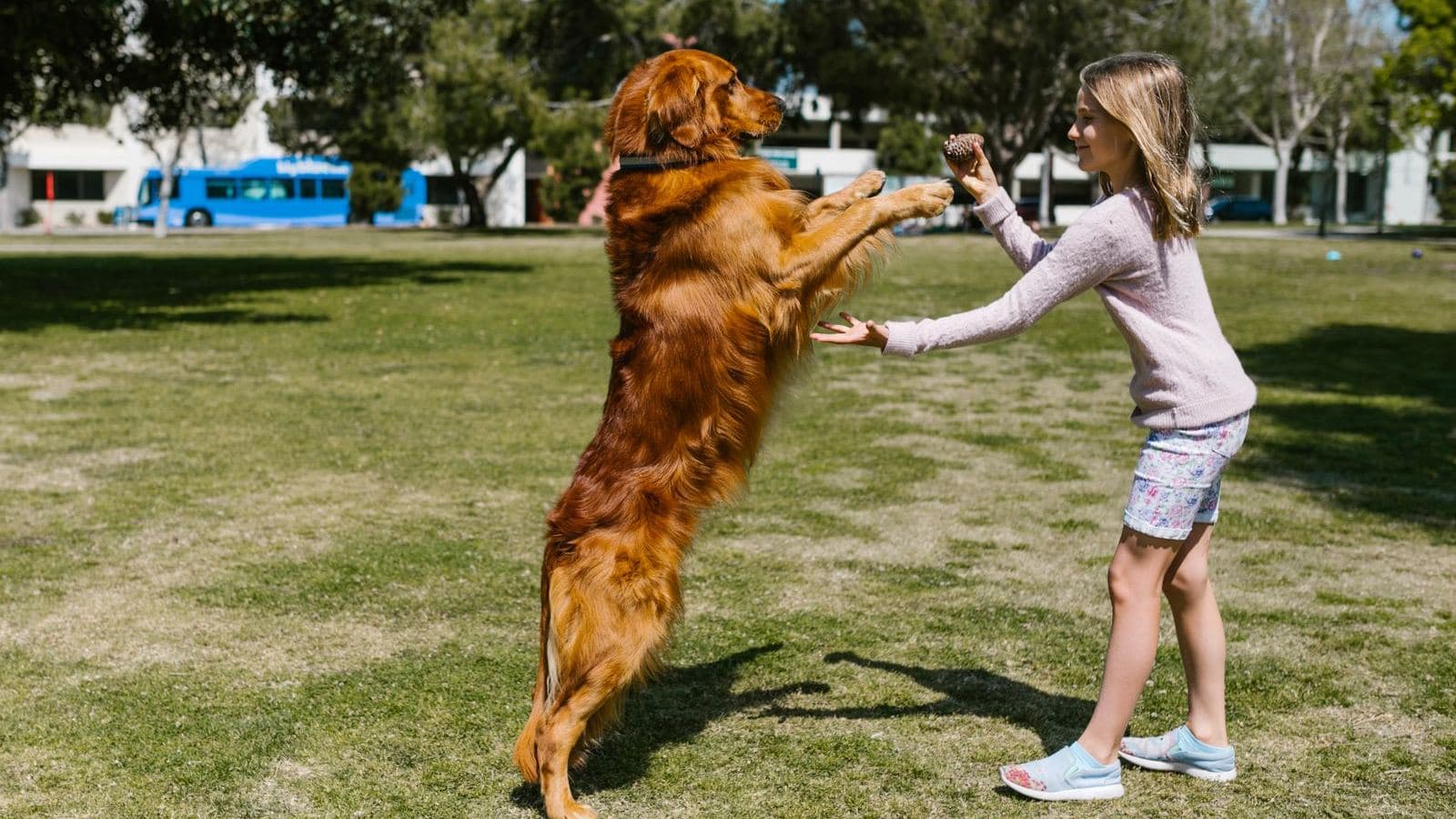
Jumping is one of the most common, most fixable, and most accidentally-reinforced behaviors in dog ownership. The fix is straightforward once you understand why it keeps happening in the first place.
Written by the TailorPup team, updated October 2026. See our editorial approach.
In this article · 9 sections+
01
Why dogs jump: it works
Jumping gets attention, even negative attention (pushing the dog off, saying "no," eye contact) counts as attention to most dogs, which reinforces the behavior rather than stopping it. Puppies jump to reach faces, since that's where the interesting stuff (eye contact, mouths, attention) is happening, and if it gets rewarded even inconsistently, it becomes a lasting adult habit.
02
Step 1: remove the reward completely
The moment paws leave the ground toward a person, that person turns away, crosses their arms, and gives zero attention, no eye contact, no talking, no pushing (pushing is still physical contact, which many dogs find rewarding). The instant all four paws are back on the floor, attention returns immediately. This has to be completely consistent, every jump that gets any attention at all slows the whole process down.
03
Step 2: teach an incompatible behavior
A dog can't jump and sit at the same time. Teach a rock-solid "sit for greeting": practice at the door with no visitors first, reward generously for a sit when you walk in, then gradually add real greeting scenarios. Many dogs learn to offer a sit automatically once it consistently produces the attention that jumping used to.
04
Step 3: manage the environment while training
Use a leash on excited greetings (stepping on the leash near the ground limits jump height without any pulling or correction) or a baby gate for especially excitable dogs during the first weeks. This prevents the jump from being rehearsed and reinforced (by a visitor who doesn't know the plan) while the new behavior is still being built.
05
The hardest part: getting visitors to cooperate
Most jumping training fails not because the method is wrong, but because one enthusiastic visitor undoes weeks of consistency in one excited greeting. Brief every visitor before they enter: ignore the dog until it's sitting, no exceptions, even if the dog seems irresistibly cute. A sign on the door asking guests to ignore the dog until it sits solves this for people who won't remember verbal instructions.
06
A ten-day plan
Practice with a family member first, then a friendly visitor. Keep sessions short.
- Day 1 to 2: reward the dog for sitting before you greet it, in a quiet room.
- Day 3 to 4: add a small distraction, such as someone walking in, and reward the sit.
- Day 5 to 6: practice at the front door with the leash on. Reward four paws down.
- Day 7 to 8: ask a calm friend to follow the same routine and ignore any jumping.
- Day 9 to 10: repeat on walks with people who want to say hello, always on a short leash.
07
A script for visitors
Visitors undo more training than any dog does, so give them clear, short instructions before they ring the bell.
- Do not talk to or touch the dog until all four paws are on the floor.
- If the dog jumps, turn away calmly and wait.
- Reward a sit with a quiet greeting or a treat.
- No pushing, kneeing or shouting: these count as attention.
EXAMPLE
A worked example: Bella and the courier
Bella, a young Labrador, launched herself at every delivery person. Her owner kept a jar of treats by the door, put Bella on a leash before opening it and asked for a sit. Treats went to the floor only when Bella's feet stayed down.
After three weeks of this routine, Bella waited at the door with a wagging tail and sat for the courier. The jumping did not vanish overnight, but each visitor who followed the script made it fade faster.
IF IT STALLS
Troubleshooting
Common problems and fixes.
- The dog jumps harder when you ignore it: this is a normal burst. Stay consistent and reward the first calm moment.
- The dog only listens to you: practice with other people, and ask them to follow the same rules.
- The dog jumps when excited at the start of a walk: ask for a sit before the leash goes on.
- The dog is large or strong: use a leash or a gate for safety until the habit holds.
FAQ
Common follow-ups.
How long does it take to stop a dog from jumping?+
With full household and visitor consistency, most dogs show clear improvement in 2-3 weeks and are reliably not jumping within 4-6 weeks. Inconsistent enforcement (some people allowing it) extends this significantly or prevents progress entirely.
Is it okay to knee my dog or push them down hard when they jump?+
Not recommended, physical pushing can be perceived as play or attention by the dog, reinforcing rather than stopping the behavior, and can occasionally cause injury with a small dog or a large one at an awkward angle. Turning away and removing attention is more effective and lower risk.
My dog only jumps on strangers, not family. Why?+
Often it's about excitement and novelty rather than affection specifically, new or infrequent visitors generate more arousal. Apply the same protocol with a specific focus on briefing those visitors, since family members are more likely to already be consistent without being told.
Should I knee my dog or push it away?+
No. Any contact is attention, which can reward the jump, and rough handling can scare or injure a dog. Turn away and reward the sit instead.
How long does it take to stop jumping?+
With consistent practice, many dogs improve in two to four weeks. Dogs that have been rewarded for years may take longer.