Can Dogs Eat Pasta? Plain Only, No Sauce
Plain cooked pasta is not toxic to dogs, but it is mostly refined carbohydrate. The sauce and seasoning are usually what cause trouble.
Written by the TailorPup team, updated October 2026. See our editorial approach.
In this article · 11 sections+
01
Plain pasta
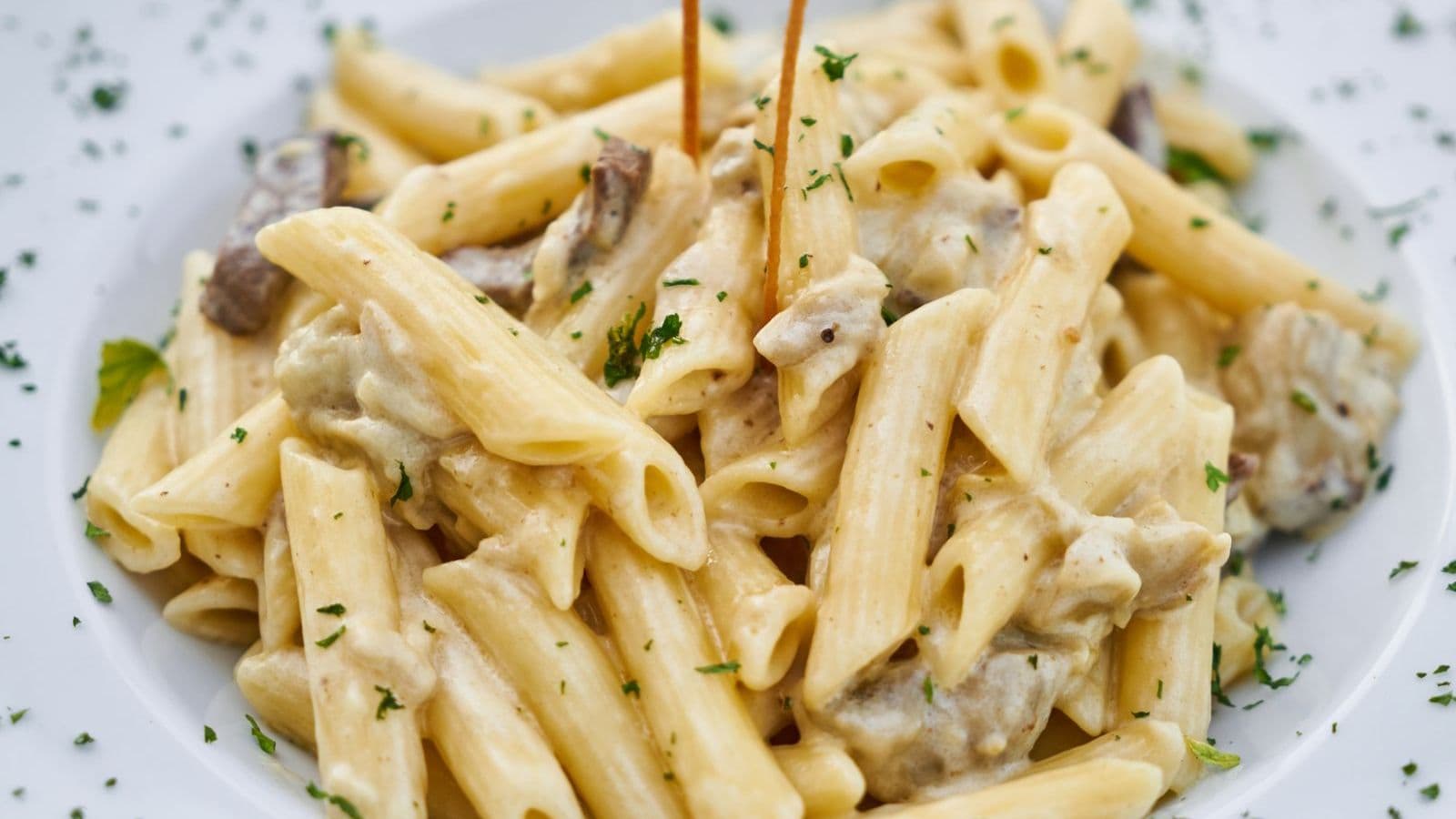
A few pieces of plain, cooked pasta are not harmful for a healthy dog. It does not offer much beyond carbohydrates, so it is not a useful treat.
02
Sauces and seasonings
Most pasta dishes include onion, garlic, salt, oil or cream. The ASPCA lists onion and garlic as harmful, and warns that excess salt can cause problems. Dishes with cheese and cream add fat that can upset the stomach.
03
Raw pasta
Dry pasta is hard and not suitable. Serve only cooked pasta.
04
How much?
A few pieces at most. Extras like this should stay a small part of the day's food. A common vet guideline is that treats and extras make up no more than about 10 percent of daily calories. This article is general information, not veterinary advice. Dogs differ by size, age and health, so ask your veterinarian if your dog has a medical condition, is a puppy, or is on a special diet.
05
Pasta and weight
Pasta is calorie dense and low in the nutrients dogs need. A few pieces are fine, but regular pasta can lead to weight gain. If your dog is overweight, choose lower-calorie rewards.
06
Tomato sauce and common additions
Tomato sauce often contains onion and garlic, which the ASPCA lists as harmful to dogs. Cream sauces and cheese add fat. If your dog ate pasta with sauce, watch for vomiting and diarrhea, and call your vet if a lot was eaten, especially with onion or garlic.
07
Serving a plain portion
If you want to share, set aside a few pieces before adding salt or sauce, let them cool, and serve.
08
Portions and dog size
A few pieces of plain cooked pasta is plenty. Pasta is mostly refined carbohydrate, so larger portions add calories without much benefit. For small dogs, one or two pieces are enough.
Keep it as a rare extra.
09
Common mistakes
Common mistakes include serving pasta with sauce, cheese or garlic bread, and sharing leftovers from the plate. Another is giving raw pasta.
If your dog ate pasta with a lot of garlic or onion, call your vet.
10
Puppies, seniors and health conditions
Puppies should rely on complete puppy food. Seniors with diabetes or weight problems should avoid it. Dogs with wheat or gluten sensitivities should avoid it.
If you are unsure, ask your vet.
11
Pasta, gluten and dogs
Plain cooked pasta is made from wheat, and some dogs are sensitive to wheat or other ingredients in their diet. True wheat allergy is not common in dogs, but signs such as itchy skin, ear problems, vomiting or loose stools can show up with food sensitivities. If your dog scratches a lot, ask your vet about a diet trial instead of guessing.
Because pasta is mostly starch, it adds calories without much protein or fat the way a complete dog food does. If your dog is overweight, use lower-calorie treats such as cucumber or green beans instead. Gluten-free pasta is not safer for dogs just because of the label, and it may include other ingredients such as legumes or flours, so read the list. If you want to include your dog at dinner time, a few plain cooked pieces from the pot are far better than a plate of sauced pasta.
FAQ
Common follow-ups.
Can dogs eat spaghetti?+
Plain, in small amounts.
Can dogs eat pasta with tomato sauce?+
Better not, because of onion and garlic.
Can dogs eat whole wheat pasta?+
Plain, in small amounts.
Is pasta safe for puppies?+
A small plain piece is usually fine.